


Closet organization is not about making your shelves look pretty for a Saturday afternoon. It’s about making your mornings easier, your bedroom calmer, and your home work the way you’ve needed it to for years. If your closet keeps spitting clothes onto a chair, swallowing shoes, and turning one top shelf into a graveyard of bags, the problem is probably not that you haven’t tried hard enough.
What “Closet Organization” Actually Means in Real Life
Real-life closet organization means building a storage system around your habits, not around whatever bins happened to be on sale. It starts with a simple question: what needs to happen in this space every single day without friction?
That sounds obvious, but most closets are set up like generic boxes. A rod. A shelf. Maybe a few drawers if you’re lucky. Then life moves in. Work clothes, casual clothes, laundry, bags, backup toiletries, the extra blanket, the shoes you wear twice a year but still need. Before long, the closet isn’t failing because you’re messy. It’s failing because it was never designed for the way you actually live.
A useful closet system should do three things well: help you see what you own, help you reach what you use most, and make it easy to put things back. If any one of those breaks, the whole setup starts slipping. That’s why a closet can look organized and still feel annoying every morning.
Think of it like a kitchen. Nobody wants the coffee mugs stored three steps away from the coffee maker. The same logic applies here. Your everyday clothes, shoes, bags, and accessories belong where your hand naturally reaches at 7:15 on a weekday morning, not where an organizer product happened to fit.
Why Most Closet Fixes Stop Working
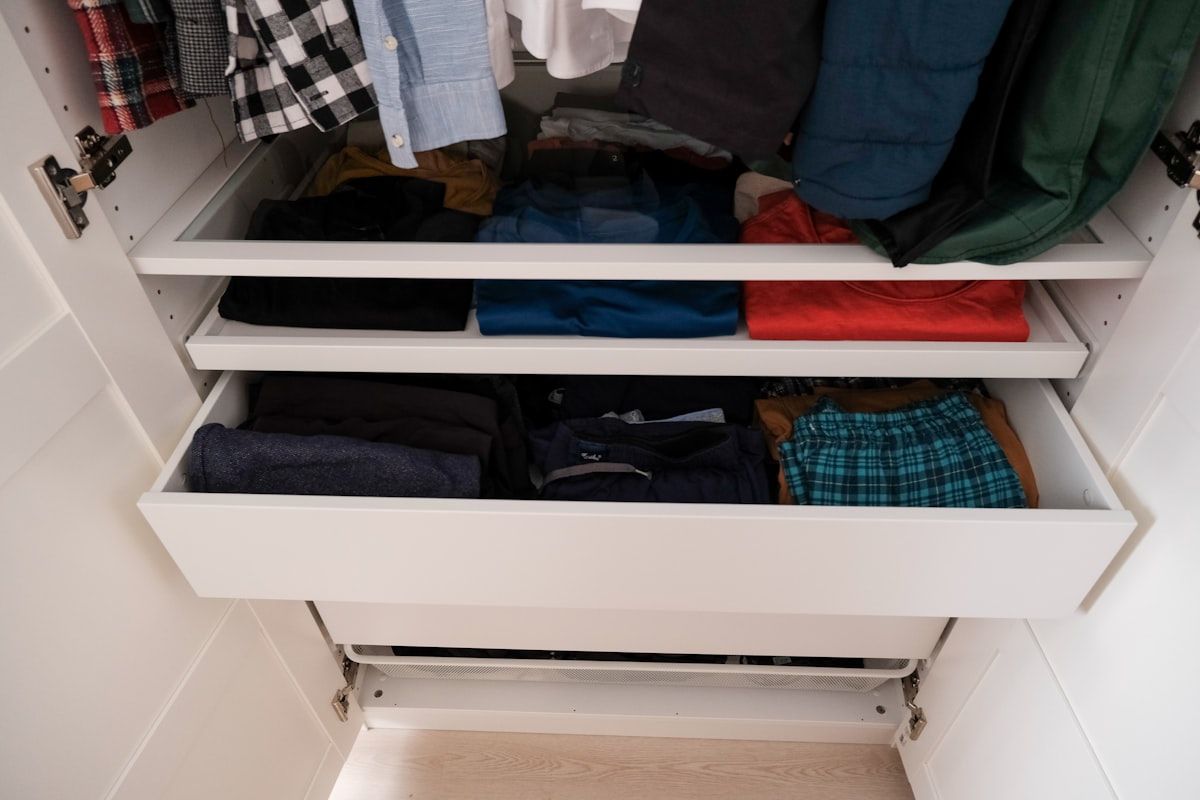
Most closet fixes fail for one reason: they add stuff without solving the layout. A new bin does not fix a bad system. A hanging organizer does not magically create usable space if the closet is already overloaded and badly zoned.
Here’s the thing: the problem usually is not your effort. It’s a setup that never matched your routines in the first place.
You’ve probably seen the pattern. A few matching baskets go on the top shelf. A shoe rack gets squeezed onto the floor. Maybe a shelf insert gets added for folded sweaters. For a week or two, it feels better. Then the same trouble comes back, because your favorite items are still hard to reach, your overflow still has nowhere to go, and the space still asks you to work harder than necessary.
That’s why closet organization has become such a big focus in home improvement. This is not some tiny niche hobby. Closet systems were the top-selling project category for surveyed storage firms in 2025, which tells you how many homeowners have hit the same wall.
The difference between “more storage” and “better storage”
More storage means stuffing in extra shelves, extra bins, or extra compartments. Better storage means your things are easier to use.
That difference matters. A shelf that holds twelve sweaters is not better if every stack collapses when you grab one from the middle. A deep basket is not helpful if it turns into a fabric black hole. Better storage puts function first. You can see it, reach it, and reset it in seconds.
In plain English, function-first organization means the closet supports your routine instead of slowing it down. You don’t need the maximum number of compartments. You need the right amount of accessible space for the right categories.
The usual trouble spots that create daily friction
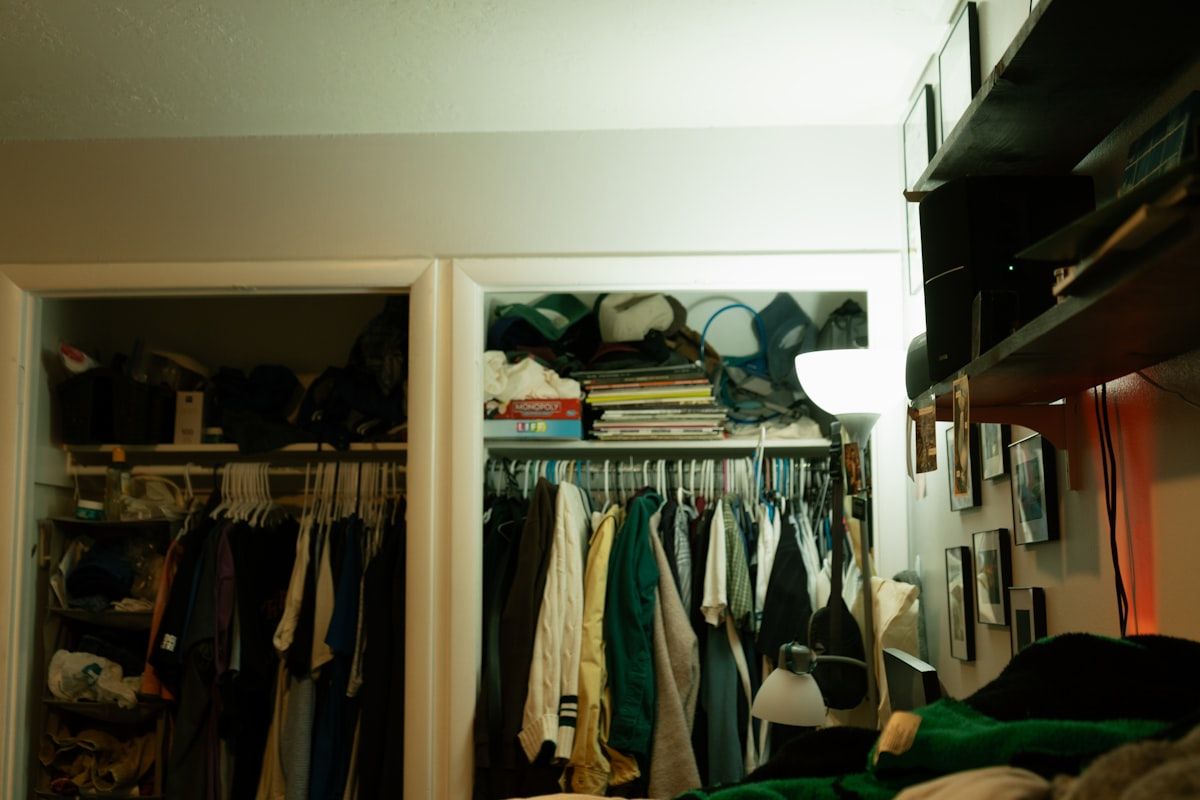
Certain closet trouble spots show up again and again because most standard closets leave them unresolved. The floor collects shoes, shopping bags, and random overflow because there’s no true home for them. Hanging rods get packed too tightly, so clothes wrinkle and hide behind each other. Top shelves fill with mystery totes because they’re large enough to catch clutter but not structured enough to control it.
Drawers become catch-alls for socks, chargers, receipts, belts, and whatever got dropped there during a rushed cleanup. Shelves turn into leaning towers of jeans and sweaters. Then comes that very specific moment: one shoe on, one shoe missing, half-zipped bag on the bed, and a blazer dragged from the back of a rod packed so tightly it might as well be shrink-wrapped. That moment is what bad closet organization actually costs you.
Start With How Your Closet Gets Used
The best organizing plan starts with behavior, not products. Before you think about shelf dividers, drawer inserts, or a full remodel, pay attention to how the closet functions in real life.
Do you get fully dressed there every morning, or do some things live in a dresser across the room? Is the closet shared? Do work clothes need better access Monday through Friday? Do coats, boots, or seasonal gear rotate in and out hard enough to change the whole system twice a year? What piles up first, laundry, shoes, handbags, folded clothes, dry cleaning?
Those questions matter because closet organization is really about flow. If two people use the same closet at the same time, the setup needs clear boundaries and enough breathing room. If your life has strong seasonal swings, the top shelf and secondary storage matter more. If you mostly wear the same 20 percent of your wardrobe, that 20 percent should get the best space.
Ask these questions before you buy anything
Before you buy a single organizer, get honest about what the closet needs to hold and what keeps going wrong. What do you reach for every day? What never fits comfortably? What falls over or slides into a mess? What’s living here only because there wasn’t another convenient spot? What needs to be visible, and what can live behind a drawer front or inside a bin?
That small planning step saves money because it keeps you from buying solutions for the wrong problem. It also reveals when the issue is capacity versus layout. Sometimes you need more structure. Sometimes you simply need fewer things in prime space. Sometimes you need a clearer picture of everything already living in the closet before any redesign makes sense.
Notice what your closet is already telling you
Your clutter patterns are useful. They’re not random.
If sweaters keep toppling over, the shelf opening is probably too tall or too wide for neat folded stacks. If laundry gathers on the floor, your closet is asking for a hamper zone. If bags disappear into corners, you likely need hooks, cubbies, or vertical dividers. If shoes end up outside the closet, the floor layout is not working. If items constantly come back wrinkled, your hanging section is too crowded or poorly split.
Closets leave clues. The trick is to stop reading those clues as personal failure and start reading them as design feedback.
Edit First, but Keep It Real
Decluttering helps, but not in the smug, ruthless, color-coded way the internet sometimes pushes. You do not need to become a minimalist to get a working closet. You just need enough room for your actual life to fit without constant overflow.
That means editing with purpose. If the closet must hold daily clothes, shoes, accessories, some seasonal rotation, and maybe backup linens, space has to be protected for those categories. Old dry-cleaning bags, half-used gift totes, duplicate beach hats, and jeans that have annoyed you since 2019 should not keep winning premium space.
What earns space in your main closet
Your main closet should hold daily-use items first. Clothes you wear often, shoes currently in rotation, the bags you actually carry, your most-used accessories, and anything that needs easy weekday access belong here.
Occasional-use pieces can stay, but only in secondary zones. Formalwear, travel items, spare bedding, and special-occasion shoes do not need eye-level placement. Seasonal items deserve storage, just not necessarily the best storage. Sentimental pieces usually need protection more than convenience, which often means another location.
A practical rule helps: if you haven’t worn or used something in a very long time and it has no near-term role, it should stop taking up your best closet real estate. That is not harsh. That is how you make room for what matters now.
What should live somewhere else
Satellite storage is one of the most useful ideas in closet organization, especially if your primary closet has been asked to do too much for too long. Off-season items can live under the bed, in a guest-room closet, in a hall closet, or in weatherproof bins if the storage area is less protected. Extra handbags, spare blankets, travel gear, and backup toiletries often work better in other zones of the house.
This matters because your bedroom closet does not need to be your home’s storage headquarters. It just needs to function well. If you’re dealing with a tighter footprint, making the most of a cramped setup often depends on moving low-priority categories somewhere smarter.
Build Zones That Match Your Routine
Zoning is what makes closet organization stick. Without zones, everything drifts. With zones, the closet starts making decisions for you.
A zone is simply a designated area for a category based on how and when you use it. Everyday wear near the center or easiest reach. Workwear together. Shoes together, but arranged by frequency. Folded items contained to specific shelves or drawers. Accessories grouped where they’re visible. Laundry given a home before it becomes a floor pile.
The benefit is mental as much as physical. When each type of item has a predictable place, getting dressed is faster and cleanup takes less energy. You stop making a dozen tiny decisions every morning.
Prime zone: the things your hand reaches for first
Your prime zone is eye level and easy reach. This is where your most-worn clothes belong, along with favorite shoes, your everyday bag, and quick-grab items like a robe, belt, or tomorrow’s outfit.
If you wear the same small rotation most often, honor that instead of pretending the closet needs to treat every item equally. It doesn’t. Your black work pants and go-to sneakers deserve better placement than the heels you wear to weddings.
Prime zone space is limited, so guard it. Do not let backup linens or rarely used handbags squat there.
Secondary zone: occasional but still important items
Secondary zones are for things you use, just not constantly. Event clothes, travel accessories, spare sheets, backup toiletries, or less-used bags fit well here. These items still need a real home. They just don’t need the best one.
This is also a good place for categories that are easy to forget if buried too deeply. Predictable placement matters more than perfection. If your travel pouch always lands in the same bin or shelf section, you’ll stop rebuying things you already own.
High and low zones: what belongs on the top shelf and floor
High shelves should hold lightweight, low-frequency items in containers that make sense. Think labeled seasonal bins, extra bedding, or keepsakes you don’t need weekly. The top shelf should not be an open dumping ground, because anything loose up there becomes invisible almost instantly.
The floor can work well for shoes, a hamper, or a low-profile bin, but only if those items are contained. Otherwise the floor becomes overflow territory, and once that starts, the rest of the closet follows. Items you use often should never live in hard-to-reach spots just because you managed to cram them there.

Use the Space You Already Have Better
Most closets have more usable potential than they seem to, but standard layouts waste height, ignore doors, and hide things in ways that almost guarantee clutter. This is usually the section where closet organization starts to feel less like a chore and more like relief.
And yes, there’s a reason so many homeowners are spending money here. North America leads this market in part because high housing costs push people to improve the space they already have instead of moving.
Go vertical instead of letting air take up half the closet
Look up. A lot of closets waste vertical space the same way a messy kitchen wastes counter space. Empty height feels harmless until you realize it could be doing real work.
Double hanging is one of the easiest upgrades for shirts, skirts, folded pants, and shorter items. Taller shelving can hold labeled bins or baskets. Narrow towers help with shoes or accessories. Hooks can grab bags, scarves, or robes. Even a simple extra rod can change the whole math of a reach-in closet.
This is why shelving remains such a dominant category in storage products. Shelving units hold the largest share because they’re flexible, easy to adapt, and useful in almost every closet type.
Don’t waste the closet door
The back of the closet door is valuable real estate, especially in smaller spaces. Over-the-door organizers can hold shoes, scarves, cleaning tools, belts, or seasonal accessories. Hooks can handle robes, bags, or tomorrow’s outfit.
The catch is that door storage works best when it stays shallow and selective. If it bulges, bangs, or turns into visual noise, it stops helping. The point is not to cover every inch. The point is to give loose items a home without crowding your main storage zones.
Make items visible so you can actually use them
If you can’t see it, you probably won’t use it. Or you’ll forget you own it and buy another one.
Visibility matters more than most people think. Clear bins help on high shelves. Open-front bins let you grab things without unstacking a whole tower. Shelf dividers keep folded items front-facing instead of sliding sideways into mush. Better lighting makes categories legible at a glance. Labels help, especially if more than one person uses the closet.
That’s also why smart add-ons are growing. Demand is shifting toward modular systems and smart features, including motion-activated lighting, because seeing what you own is not a luxury. It’s the foundation of a usable system.
Pick the Right Storage Tools for the Problem
Storage tools are helpful when they solve a specific problem. They’re unhelpful when they create extra steps, hide categories, or force you into habits you won’t keep up.
Start with the pain point, then match the tool. Clothes slipping off? Fix the hangers. Folded stacks collapsing? Add shelf dividers. Accessories disappearing? Use shallow trays or hooks. Shoes blocking the floor? Add a rack or cubbies. Loose items mixing together? Try labeled bins or drawer inserts.
That sounds simple, because it is. The best closet tools are usually boring. Boring is good. Boring works.
Hangers, shelf dividers, and drawer organizers
Matching slim hangers are worth it. Not because they look nice, though that helps, but because mixed hangers waste space, catch on each other, and make rods harder to scan. Thin velvet hangers are popular for a reason. They save room and keep clothes from slipping.
Shelf dividers are excellent for sweaters, jeans, handbags, and stacked tees because they keep piles from leaning into each other. Drawer organizers work best for smaller categories like socks, undergarments, belts, sunglasses, or workout gear. In drawers, inserts usually beat loose baskets because they stay in place and make the space easier to reset.
Shoe storage, hooks, and hanging organizers
Shoes need storage that matches both quantity and frequency. Daily shoes belong low and easy to grab. Occasion shoes can go higher or deeper. Racks work well on the floor if they don’t block access. Cubbies help if you want each pair visible. Hanging shelves can help in closets with good vertical room but limited floor space.
Hooks are tiny heroes. They work for bags, belts, robes, scarves, and tomorrow’s outfit. A valet hook, which is just a temporary hanging hook, can be especially useful if mornings feel rushed. Hanging organizers work best for soft or lightweight categories, not heavy, overstuffed items that stretch the structure.
Bins, baskets, and labeled containers
Use clear bins when visibility matters, especially on high shelves or for categories you forget easily. Use opaque baskets when the contents are not visually helpful and you want a calmer look. Open-front bins are great for quick access because you don’t have to unstack everything to reach the bottom one.
Labels matter most when categories are easy to mix up or multiple people share the space. Keep labels practical. “Scarves,” “travel,” “swimsuits,” “extra linens.” Not cute little words that make sense only in the moment. And skip cardboard. It breaks down, looks tired fast, and can attract pests.
Choose a Closet System That Fits Your Budget and Timeline
You do not need a luxury install to fix a frustrating closet. But you may need more than a few baskets from the big-box store. Most closet projects live in that middle space between tiny tweak and full renovation.
That lines up with the market itself. Most closet projects fall between $1,000 and $15,000, which is a wide range but a useful reality check. A real solution does not always mean a massive one.
Quick fixes under a modest budget
If you need relief fast, start with the upgrades that change daily use the most: matching hangers, a decent shoe rack, hooks, shelf dividers, better lighting, and one or two bins that actually fit the shelf depth. Add a hamper if laundry keeps landing on the floor. Add an extra rod if too much short-hanging clothing is wasting vertical space.
This route is the fastest way to reduce friction. It will not solve every layout problem, but it often creates a noticeable improvement without much commitment.
Modular systems: the middle ground that adapts
Modular means the parts can be adjusted, moved, or added to over time. Shelves shift. Rods can be reconfigured. Drawers or towers can be swapped as your needs change.
This option makes a lot of sense if you want a real fix without doing a full custom build. It’s especially practical in homes where routines shift, kids grow, wardrobes change, or one closet has to multitask. If flexibility matters, modular usually hits the sweet spot between cost and function.
Custom closets: when they make sense
Custom closets make sense when the layout is awkward, the storage shortfall is real, or you plan to stay in the home long enough to benefit from a more tailored solution. Shared closets are another strong case, because custom layouts can divide hanging, shelves, drawers, and hampers more fairly and more usefully than off-the-shelf pieces.
You’ll also see the value if your closet has odd angles, limited depth, low visibility, or too many categories fighting for the same few feet. A well-planned custom setup is built around your space and daily habits, not around a generic template. That’s the whole idea behind storage designed around your actual routine, especially when one-size-fits-all fixes have already failed.
Organize by Closet Type, Not Just by Product
Different closets need different strategies. That sounds basic, but it’s one of the biggest reasons generic organizing advice falls flat. A walk-in and a reach-in do not have the same problems, so they should not get the same plan.
Reach-in closets
Reach-in closets need discipline more than decoration. Double rods, shallow shelves, slim hangers, and careful door storage usually do more than bulky bins ever will. Every inch has to justify itself.
Keep categories tight. Do not fill the floor with oversized organizers. Use vertical space, but keep daily items reachable. If your setup is especially constrained, the ideas in closets that need every inch to work harder can help you avoid the usual traps.
Walk-in closets
A walk-in closet can fool you. More square footage feels generous, so clutter gets room to spread out and stay hidden longer. Without zones, a walk-in just becomes a larger mess.
Keep often-used items near the entrance or near your natural dressing path. Group by category, then by frequency. Use center space carefully. If there’s room for an island, bench, or open access lane, it should improve function, not become another surface for piles.
Shared closets
Shared closets work best when space is divided by function and access, not just by inches. One side might need more hanging. Another might need more shelves. One person may need easy workwear access, while the other needs better shoe storage.
Clear boundaries reduce resentment. Separate hampers help more than people expect. Labeled drawers or bins can prevent overlap in shared accessories or backup items. And if you want a deeper look at splitting storage in a way that feels fair, making one closet work for two different routines is its own design challenge.
Don’t Ignore the Details That Make a Closet Easier to Use
The small details are often what make an organized closet stay organized. Not because they’re flashy, but because they reduce friction at the exact point where habits usually break down.
Lighting changes everything
Bad closet lighting makes every problem worse. You miss what you own, misread colors, overlook clutter, and avoid using higher shelves because the whole space feels dim and annoying.
Battery-operated lights, motion sensors, and simple LED strips can make a huge difference without rewiring anything. Once the closet is bright enough to read at a glance, organization becomes easier to maintain because you can actually see the system working.
Materials, finishes, and durability
If you’re investing in shelves, drawers, or a system, pay attention to durability over showroom perfection. Easy-clean surfaces matter. Strong hardware matters. Finishes that won’t chip or peel matter.
Low-VOC finishes simply mean they release fewer chemical fumes into your indoor air. If sustainability matters to you, you’re not alone. 67.3% of homeowners in one report said they were willing to pay more for sustainable closet organizers, which helps explain the growing interest in recycled materials and better finishes.
Small add-ons that reduce friction
A hamper inside the closet can stop a floor pile before it starts. A valet hook can hold tomorrow’s clothes or an outfit you’re steaming. A pull-out tray can corral jewelry, watches, or sunglasses. A mirror can save a trip across the room. Even a donation bag tucked into one corner can make editing easier because unwanted items have somewhere to go immediately.
These are small things. But small things are often what turn a good-looking setup into one that actually gets used.
Common Closet Organization Mistakes to Stop Repeating
Most closet mistakes are understandable. You try to solve the visible mess quickly, buy a few products, and hope the new setup changes your habits by itself. Usually it doesn’t.
The good news is that the same mistakes are also fixable.
Buying containers before measuring
This one causes more wasted money than almost anything else. Depth matters. Width matters. Rod height matters. Door swing matters. Even the lip of a shelf can matter if a bin won’t slide cleanly into place.
Measure first, then buy. Not the other way around.
Storing by category without storing by frequency
Grouping all sweaters or all shoes together sounds organized, but it’s incomplete. If your favorite everyday sneakers are shoved behind formal shoes you touch twice a year, the system still fails in practice.
Frequency should outrank category when you’re deciding placement. Keep like items together, yes, but give the best spots to the things you use most.
Making the system too complicated to maintain
An organized closet should be easier to reset than to ignore. If every category has six tiny subcategories, if the labels feel like homework, or if folding one T-shirt requires studio-level precision, the system is too fussy.
Real life is not a photo shoot. Your closet should survive rushed mornings, tired evenings, and laundry that gets put away half-distracted. If it only works when you have extra time, it does not really work.
What a Lasting Closet Setup Looks Like
A lasting closet setup is not perfect. It’s forgiving.
It has less overflow on the floor. Fewer clothes on the chair. Fewer duplicate purchases because you can actually see what you own. Mornings feel less scrambled because the right items are in the right places. Seasonal changes don’t wreck the whole structure because the system has room to flex.
That’s what closet organization is supposed to do. Not impress anyone. Not look untouched. Just quietly remove friction from daily life.
And that’s why this category keeps growing alongside broader home upgrades. Remodeling spending is expected to reach $524 billion in early 2026, and storage keeps riding that wave because function matters. When your home works better, everything around it gets easier too.
Closet Organization FAQs
What is the first step in organizing a closet?
Start by assessing how the closet is used now. Notice what you reach for daily, what piles up, and what never fits well. Then edit the contents, measure the space, and only after that choose tools or systems.
How do you organize a small closet with too much stuff?
Prioritize daily-use items, move true off-season storage elsewhere, and use vertical space more intentionally. Double rods, shallow shelves, door storage, and slim hangers usually help more than bulky bins.
Are closet systems worth it?
Yes, if your problem is really the layout. A closet system is worth it when your current setup wastes height, hides important items, or makes shared use frustrating. If the issue is lighter, simpler upgrades like hangers, dividers, and better shoe storage may be enough.
How often should you reorganize a closet?
Light resets work well seasonally, especially when weather changes what you wear most. Bigger edits usually make sense when your routine changes, your wardrobe shifts, or clutter starts returning to the same spots.
One Simple Place to Start This Week
Pick the single zone that annoys you most and fix only that. The floor. The everyday hanging section. The top shelf full of mystery bags. Just one.
That small win matters because once one part of the closet starts working, the rest gets easier to see and easier to fix. Closet organization sticks best when it starts with relief, not perfection.