


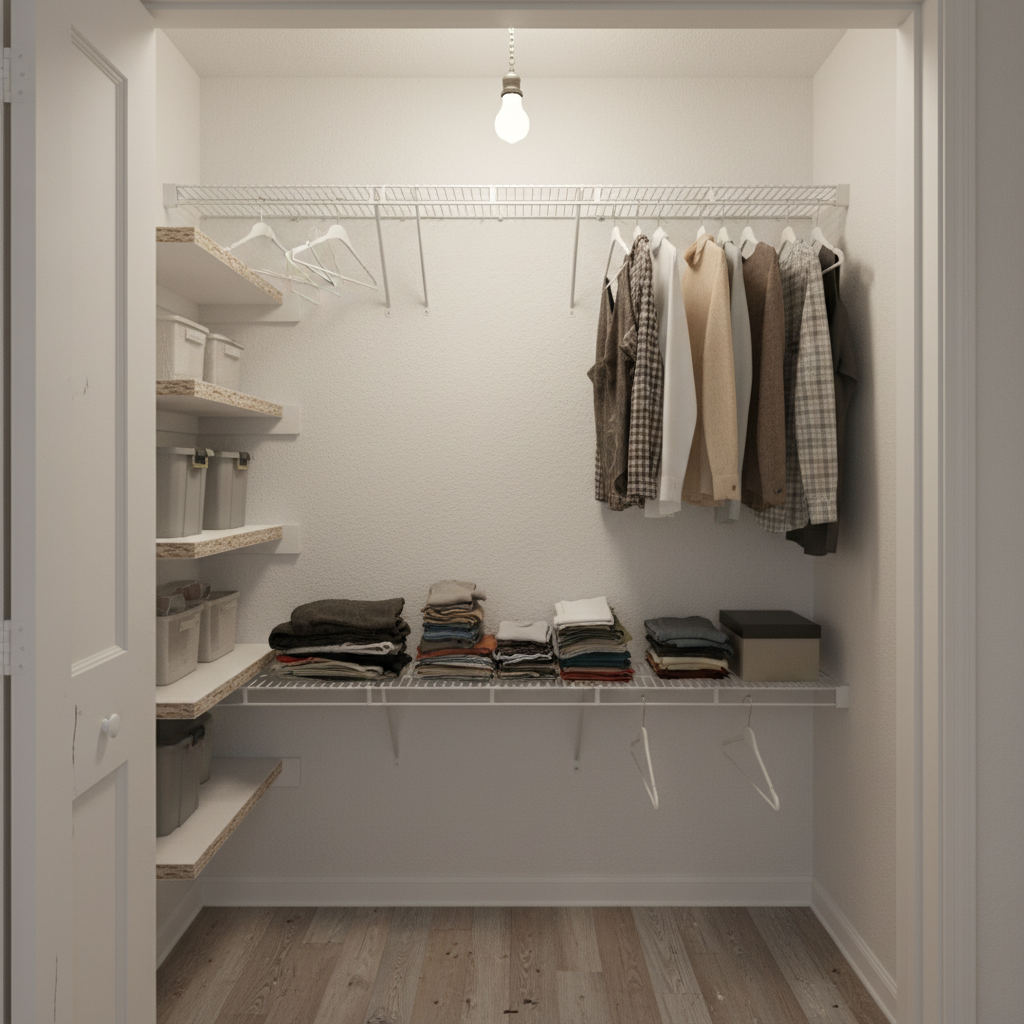
If you feel like every morning in your closet is a small battle, you are not alone. Many homeowners struggle with standard closet design issues, from awkward heights to wasted corners. Fortunately, a few smart insights can help you pinpoint exactly what is going wrong and how to fix it. Below, you will find practical tips that uncover the most common pitfalls and guide you toward a better storage solution. Read on to see if your closet suffers from any of these mistakes, and learn why a custom system might be the long-term solution you need.
Recognize common closet flaws
Standard closets often appear deceptively simple: a single rod, maybe a shelf, and a bit of space below. But as soon as you start adding clothes, shoes, and accessories, that minimalistic design quickly shows its limits. Many common closet failures actually stem from the same core problem: a one-size-fits-all layout that leaves little room for real-life storage needs.
Builder-grade closets lack the functional details you need for everyday convenience. You might find that your clothes brush the floor because the rod is set too low, or piles of sweaters tumble off shelves that are too shallow. Worse yet, builder-grade closet defects can mean poorly placed supports or fixed shelves that cannot adapt when your wardrobe changes. By identifying which specific shortcomings affect you, you can plan an upgrade that fixes them for good.
Aim for proper height
Rod or shelf height is a prime culprit in many closets. If your clothes bunch up at the bottom or drape over other items, chances are your rod is not high enough. For the average user, installing rods at around 84 inches allows room for two tiers of hanging garments. Tall individuals, especially those over 6 feet, might need to go even higher, up to 90 inches or more, to prevent clothes from dragging on the floor [1].
You also need to watch how high your top shelf sits. If it is too tall to access without a ladder, you will end up ignoring valuable storage space. A top shelf that is just within easy reach can hold bulky items like blankets or suitcases. Should you prefer a floor-to-ceiling configuration, leaving a step stool near the closet keeps everything accessible.
Prevent shallow shelving troubles
If you have ever tried to fold heavier items like jeans or sweaters onto a tiny 12-inch shelf, you know how quickly everything spills over. Shelves should be at least 14 inches deep so garments can fully rest on the shelf without hanging off the edge. This extra depth also makes sure the hanging rod sits far enough forward to protect clothes from brushing against the back wall [1].
Deeper shelves can hold more, but make sure you do not go beyond 24 inches if you have a reach-in closet. When shelves are too deep, you end up creating hidden areas no one can reach. Aim for a sweet spot that suits your preferred folding style without creating new nooks and crannies that gather clutter.
Use corners more efficiently
Every closet has that tricky corner space, and many of these corners wind up wasted or crammed with items you rarely touch. Common corner shelves can trap folded clothes, while “dead” corner cubbies force you to move clothes aside just to retrieve one shirt. Rotating solutions may sound high-tech, but unless they are custom-fit for your items, they often waste as much space as they promise to create [2].
A practical fix is to use curved rods designed explicitly for corners. This ensures a smooth transition from one rod to another and eliminates awkward dead zones. If you cannot find curved rods, consider storing items you rarely use in corner compartments so they do not block everyday items. Sometimes, a simple adjustment—like rearranging what goes into the corner—can make the space more accessible.
Maximize your hanging space
Standard closets often only have one rod about five feet off the ground, leaving the area above and below underused. A second rod for short-hanging items (which sits around 30 or 40 inches high) can almost double your storage capacity [3]. You can then use the upper rod for shirts and blouses, and the lower rod for pants or skirts.
That said, not all closets can handle dual rods without feeling cramped. If you have a narrower space—under 72 inches wide—you might need to shift hanging rods to one side and use the back wall for shelving or drawers. The key is to avoid crowding yourself out. You want to open the closet without feeling boxed in.
Enhance closet lighting
Poor lighting turns your closet into a shadowy cave where you can barely distinguish navy from black. This frustration is more than cosmetic. It impacts your morning routine when you are trying to quickly find that perfect shirt. To fix this, consider adding LED puck lights or strip lights under shelves or along the edges. You might also opt for motion sensors so the lights turn on the moment you open the door [4].
If your space allows it, installing a small window or a transom can introduce natural light and instantly brighten the closet [5]. For most homeowners, though, practical LED lighting solutions are simpler to implement and will keep your clothes looking as vibrant in the closet as they do outside of it.
Consider a custom solution
Sometimes, standard layouts can only be tweaked so far before you hit a dead end. That is why many homeowners investigate why standard closets fail and ultimately turn to custom builds. A custom solution lets you specify deeper shelves for bulkier items, adjustable rods for changing wardrobes, and specialized compartments for boots or handbags.
Professionally designed closets also prioritize usability. Rather than cobbling together random fixtures, a custom system can include sliding drawers for undergarments, angled shoe shelves for heels, or built-in lighting channels for a clean, polished look. This level of customization is especially helpful if you have unique items or if you need to accommodate family members of different heights.
- Rods and shelves at varied heights handle short and long garments without wasted space
- Adjustable side rails give you the freedom to rearrange sections as your needs evolve
- Integrated drawers replace the need for an extra dresser in your bedroom
- Angled and fenced shelves keep shoe collections orderly and visible
- A streamlined lighting plan ensures every centimeter of your closet is well lit
By investing in a design that truly reflects how you use your closet, you solve more than just cosmetic issues. You address core functionality, reduce morning stress, and eliminate that nagging sense of clutter taking over your bedroom.
Ready to take the next step? Custom closets typically start with a professional assessment of your current setup to see exactly where and why it fails. You can point out your biggest pain points—like that top shelf you cannot reach or clothes that pile up on the floor. With the right planning, your closet goes from cramped and chaotic to spacious and orderly.
Have you realized that your space might be suffering from builder-grade closet problems? That is a strong sign you have outgrown what a standard setup can offer. When it comes to achieving an organized home that truly matches your lifestyle, a custom closet is more than an aesthetic upgrade—it is a daily quality-of-life upgrade you will appreciate every single morning.