


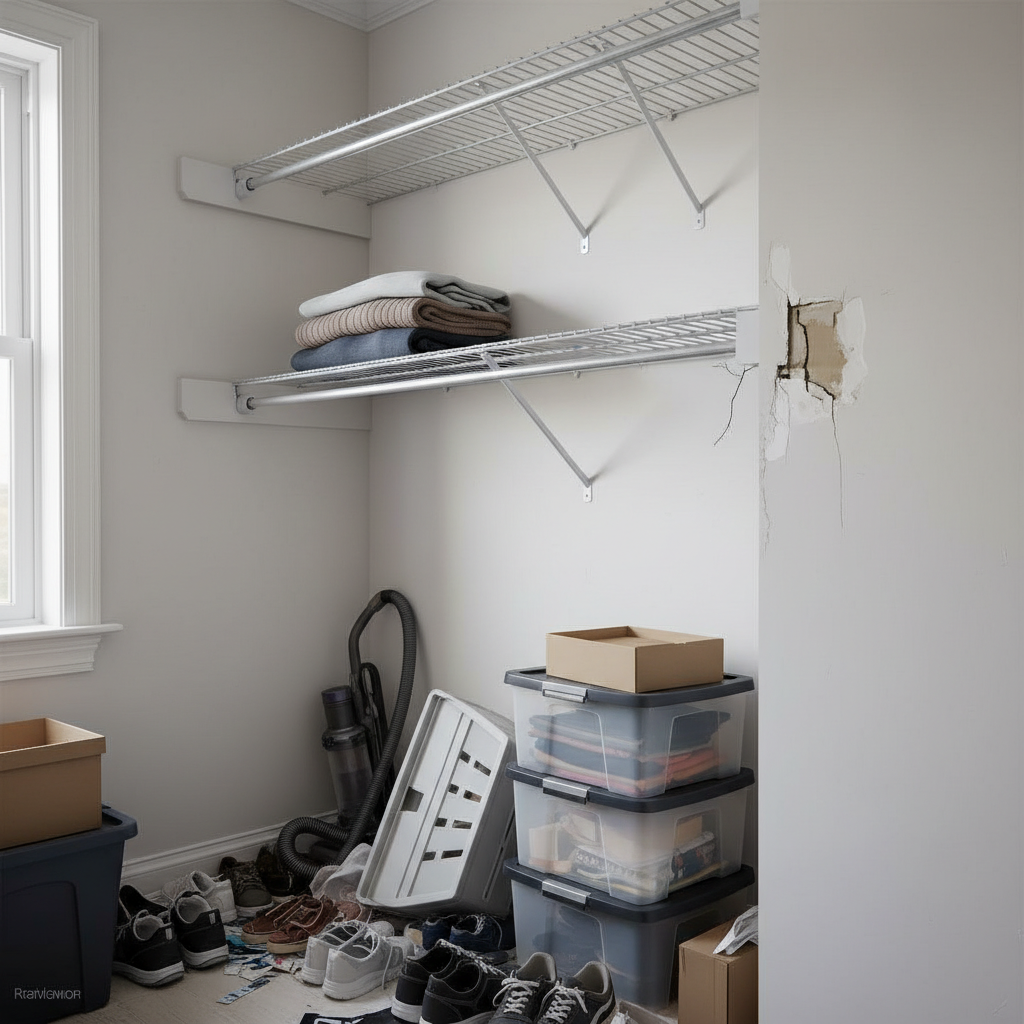
Tackle builder-grade closet problems head-on
Builder-grade closet problems can make your morning routine feel like a daily obstacle course. You may have tried using extra bins or shelf inserts, but if your closet is fundamentally flawed, those quick fixes rarely work in the long term. Many standard closets are built for cost-efficiency, not for meeting real-life storage needs, so it’s no surprise when you find yourself frustrated by overcrowded hangers, piles of clothing, and no clear path to a solution.
Before you decide to move or simply give up on your closet plan, take a closer look at why standard closets fail. When you understand where the problems start, you can finally explore better options that transform your entire space. If you need more background on common trouble spots, check out common closet failures or take a deeper look at why standard closets fail.
Recognize wasted vertical space
One of the biggest oversights in builder-grade closets is the large gap left between the hanging rod and either the floor below or the ceiling above. Most rods are mounted about five feet high with a lone shelf on top. That setup leaves a couple of feet of untouched space below your longest items, plus loads of empty air near the ceiling. According to research, this alone can reduce your closet’s functionality by around 30 percent because you lose valuable storage zones [1].
You might have tried storing out-of-season sweaters in plastic bins on that top shelf, only to be forced into balancing acts whenever you need something. Instead, consider installing double-hanging rods. Hang one rod around 80 inches high for longer pieces, such as dresses or coats, and place a second rod around 40 inches for shorter items, like shirts. This approach often doubles your hanging capacity and frees up the shelf above for non-daily essentials.
Identify limited hanging capacity
Whether you’re sharing your primary closet with a partner or just have an extensive wardrobe, a single rod simply can’t meet everyday needs. Many new homes come with builder-grade closet defects that look roomy until you start hanging clothes. The moment you realize there’s no place for shoes, handbags, or accessories, your closet quickly becomes a disaster area [2].
You’ll notice this problem even more when you try to organize your clothes by type or season. Without enough rods, everything squishes into one cramped strip. Think about how much faster you could get ready each day if you had separate areas for work clothes versus casual wear. Doubling your rods, or shifting rod positions to match your garment lengths, goes a long way toward achieving that stress-free morning routine.
Beware fixed shelves that don’t adapt
A common frustration with builder closets is the rigid shelving set at arbitrary heights. Some closets come with shelves spaced 12 to 16 inches apart, regardless of what you plan to store. Sweaters might need about 10 inches, while shoe boxes often require 7 or 8, which can create awkward dead zones and wasted air between shelves [1].
Here’s a quick look at how these unmovable shelves can fail you:
- They can’t accommodate bulky items like coat liners or thick winter sweaters.
- They force you to stack clothes too high, which topples easily.
- They waste space above smaller items like sandals and folded tees.
- They make it hard to access anything stored at the back or top.
If you see these signs in your closet, or you’re searching for a deeper explanation, check out builder-grade closet defects. When shelves don’t adjust to fit the items you own, you end up with piles on the bedroom floor, or you resort to layering baskets on top of baskets.
Notice poor-quality materials and hardware
Many builder-grade systems feature wire racks, thin particleboard, and cheap drawer slides. It’s a combination that almost guarantees sagging rods, bending shelves, or sticking drawers as soon as the closet sees regular use [1]. Wire shelving, in particular, can leave lines on delicate sweaters and may even collapse under weight over time [3].
All of that adds up to daily frustration. Clothing that snags, shelves that bow, and drawers that don’t open smoothly drain your energy when you’re in a rush. Upgrading to solid wood or quality laminate shelves, along with hardware rated for heavier loads, can stop these problems cold. While it might seem like a bigger upfront investment, it saves you from constant repairs and replacements in the future.
Use smarter layout strategies
Beyond the materials, the layout of a builder-grade closet can be just as problematic. Long rows of unbroken hanging sections waste corner space, and bifold or sliding doors can block entire sections of your wardrobe [1]. If you’ve ever had to stretch your arm deep into a dark corner to reach your favorite blouse, you know how frustrating a poor layout can be.
A simpler solution is to break up large hanging areas with a shelving section or rotating fixture. That way, you can carve out a nook for shoes or accessories while making sure clothes hang freely without bunching up in a corner. You can also consider upgrading to doors that slide all the way open or swing fully out so you can see your entire wardrobe at once. If you want more detail on typical arrangement pitfalls, explore standard closet design issues.
Embrace a custom closet solution
When faced with ongoing clutter or disorganized corners, it’s tempting to try band-aid fixes or cheap add-ons. Yet many homeowners discover that piecewise solutions often cost more in the long run [2]. If you’re tired of rummaging for your clothes or stepping over items on the floor, custom design might be the answer.
A custom closet solution typically includes the following:
- Rods placed at optimal heights for your clothing.
- Adjustable shelves sized for the items you actually own.
- Quality materials that support heavier loads without bending.
- Dedicated sections for shoes, handbags, and smaller accessories.
- Optional drawers that free you from lugging folded items across your bedroom.
By planning ahead, you can integrate everything you need from the start. If you’re moving into a new place soon, upgrading before you arrive can save you a lot of hassle. If you’ve already been living with builder-grade frustrations, a closet overhaul often feels like a breath of fresh air.
Your path to a truly functional closet
You shouldn’t need to tiptoe around clutter or wrestle with wire shelving every time you reach for something. By recognizing the telltale signs of builder-grade closet problems, you can address them before they turn into a daily battle. Start small by adjusting shelves or adding a second rod, or go big with a custom solution that solves everything at once.
Imagine waking up each morning knowing exactly where each shirt, belt, or pair of shoes is located. That vision can become reality when you trade the flaws of builder-grade closets for a system that fits your lifestyle. You deserve more than a single rod and a few flimsy shelves, and now you know how to make it happen.