


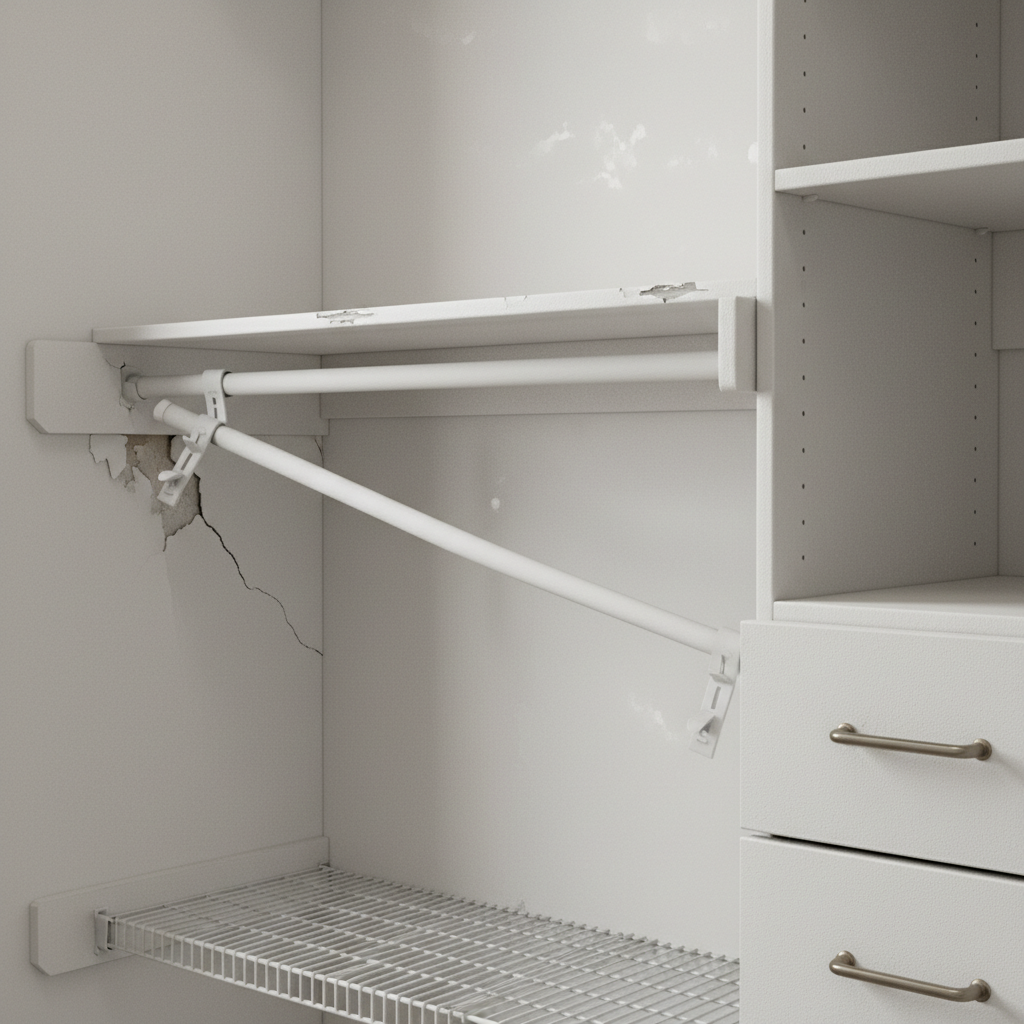
Understand the basics of builder-grade closet defects
Builder-grade closet defects often stem from the push for quick construction and cost savings. You might notice these shortcomings the moment you run out of space or see shirts bunched up on a single rod. The biggest sign that a builder-grade system isn’t meeting your needs is that it forces you to pile clothes along the floor or in random bins, even though you have a perfectly good walk-in closet.
Sometimes you start questioning why standard closets fail so quickly. Often, they are designed around a single rod and a single shelf, installed about five feet off the ground. While that arrangement might look neat on day one, it usually leaves you scratching your head about all that empty space above the shelf and the wasted area beneath your hanging shirts. This uniform design approach is common across many new homes [1].
Quick clues your closet is builder-grade
• A single hanging rod that sits too low or too high.\
• Wire shelves that leave marks on your folded clothes.\
• Shelves or rods bending under the weight of heavier garments.\
• Little to no room for shoes, boots, or accessory storage.
If these issues sound familiar, you’re certainly not alone. Many homeowners find themselves forced to invest in bins, shelf inserts, or shoe racks just to compensate. Yet despite these add-ons, the frustration remains. If you’re curious about other typical storage blunders, you can explore our post on common closet failures.
Spot wasted space and awkward layouts
Wasted vertical space is a major culprit in builder-grade closet problems. Shelves are often placed far above where your arm can comfortably reach, leaving a big block of unused space above them. Sometimes this gap can be 24 to 36 inches tall, and no matter how many baskets you buy, it never feels organized. Experts recommend placing the top shelf at around 84 inches off the floor if you have an 8-foot ceiling [1]. This way, you optimize the upper third of your closet instead of letting it become a black hole of clutter.
You might also recognize wasted space in the corners. This “Bermuda triangle,” as some designers call it, happens when rods from two walls meet and your clothes collide. Everything tucked into that corner is practically invisible and impossible to reach. That’s a key reason to explore solutions beyond the standard shelf-and-rod approach. If you want more insights, take a look at why standard closets fail.
How shelf depth plays a role
Many builder-grade closets use shelves that are 12 inches deep, because it’s cheap and easy to produce. But try stacking hoodies or sweatshirts on a 12-inch shelf, and you’ll soon see them droop over the edge. Closet designers recommend at least a 14-inch depth for clothes and shoes to avoid that sloppy, overhanging look [1]. If you’ve ever wondered why your folded garments keep sliding forward, now you know: it’s not you, it’s the shelf.
Check material and durability pitfalls
When you open the closet door each morning, you don’t want to see sagging shelves or wobbling rods. Unfortunately, builder-grade closet defects frequently include flimsy hardware and low-quality materials that struggle with daily wear. Wire shelving can pop out of the wall, leaving you worried about whether your entire weekend wardrobe will end up on the floor. Particleboard or thin melamine can chip or warp after just a few seasons of humid weather.
According to industry experts, some builder-grade systems use cores like MDF or particleboard with a layer of laminate glued on top [2]. Over time, these glued finishes may peel or crack. If you’ve found yourself repeatedly adjusting shelf supports or avoiding putting anything heavy on a particular shelf, low-quality construction could be the reason.
“A typical 32-inch shelf made from high-quality TFL can hold up to 300 pounds, which is two to three times stronger than builder-grade particleboard,” notes one custom closet provider.
That kind of strength means you can stack shoes, sweaters, or handbags without fear of the shelf buckling. The difference in daily life is immediate — you won’t have to tiptoe around the weight limit.
Repairing or replacing parts
If you’re not ready to make an entire closet overhaul, simple fixes can help you eke out a bit more life from your existing setup. Tightening screws, lubricating drawer slides, or replacing sagging rods can offer temporary relief [3]. However, if you’re looking at your closet as a long-term home solution, you may want to consider the bigger picture.
Below is a quick reference table that shows how different materials and configurations tend to hold up:
| Builder-Grade Feature | Common Outcome | Why It Fails Most Often |
|---|---|---|
| Single wire shelf | Marked or snagged clothes | Wire design leaves marks; non-adjustable. |
| Particleboard shelves | Sagging under weight | Low load capacity; prone to moisture damage. |
| Fixed rod at 5 ft | Wasted vertical space | Leaves 2-3 ft unused; results in crowded floors. |
| 12-inch shelf depth | Bulky items overhang | Not enough surface area to fit typical clothing and shoes. |
For a deeper dive, you can check out builder-grade closet problems or standard closet design issues.
Consider a custom closet upgrade
When you’ve tried every bin, basket, and bracket, the enduring solution might be a custom-designed closet. By now, you know exactly where your current system falls short, whether it’s the flimsy materials or the single-purpose rod. A custom closet typically addresses these builder-grade closet defects head-on. It offers shelving that suits your wardrobe, rods at different heights for dresses or suits, and even drawers to hide smaller accessories.
Custom closet companies often use sturdier materials that can handle daily life without bowing or cracking. Some also provide formaldehyde-free options, reducing off-gassing concerns in your home [2]. It’s not just about aesthetics — it’s about creating a space that eliminates the morning struggle to find your favorite jacket or a matching pair of shoes.
How to know if it’s time
Ask yourself a few questions to confirm whether you’re ready to move on from the builder-grade setup:
- Do you feel frustrated by the lack of shelves or drawers for folded clothes?
- Have you run out of practical places for your footwear or accessories?
- Is your closet’s floor cluttered to the point where you can’t walk in?
- Are the rods or shelves buckling under normal use?
If you answered “yes” more than once, you’ve hit that breaking point many other homeowners face. The good news is that investigating a custom system doesn’t commit you to a massive renovation. You can start with a simple in-home design consultation or even an online closet planning tool. That small step often leads to a lightbulb moment: you realize the cost isn’t as high as you feared, especially when weighed against ongoing frustration and half-measures.
Final thoughts
Builder-grade closet defects are not your fault, and you’re far from alone in seeking a better solution. The standard rod-and-shelf design might work for a guest room you rarely use, but your daily closet deserves a more thoughtful layout. When you choose a custom approach, you’re investing in usability for the long run — no more sagging shelves, wasted vertical space, or tangled rods of clothing.
Whether you decide to do it yourself or bring in professional help, there’s a real benefit in turning your closet into a supportive, streamlined point in your morning routine. Tired of frustration? Consider a design that offers real organization and frees you from the daily puzzle of finding what you need. You’ll quickly discover this is one upgrade that makes a tangible difference in your home life.