


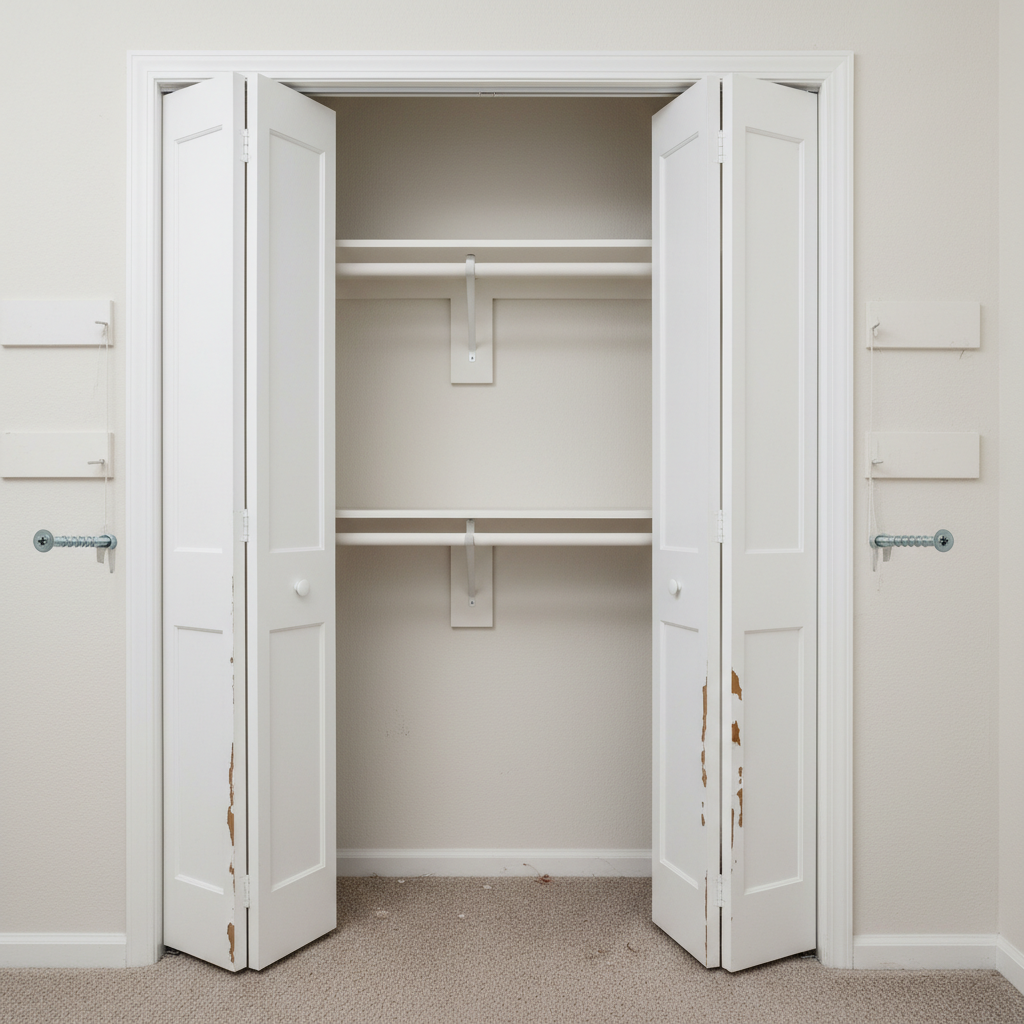
Why standard closets fail
If you have ever started your day wrestling with hangers that snag on each other or rummaging for shoes buried under a pile of clothes, you already know why standard closets fail. They rarely offer the durability, storage flexibility, or design details your wardrobe truly needs. After all, they were never built around your specific items, habits, and lifestyle. Instead, they rely on a one-size-fits-all approach that usually includes a basic shelf, a single rod, and a material that might look okay at first but quickly reveals its shortcomings.
Standard closets often rely on mediocre construction to cut costs and fit the “builder-grade” mold. The moment you hang a week’s worth of heavier jackets or slip a few shoeboxes on the top shelf, you might notice some bowing or warping. Even if it’s subtle, it sets the scene for bigger structural problems down the line. Over time, the frustration grows, every morning, you face another snag or stumble in a closet that just won’t cooperate. You’re left feeling disorganized and annoyed, all because the closet can’t handle the day-to-day rigors of real life.
Materials that lead to damage
Many standard closets rely on plywood or Medium-Density Fiberboards (MDF) for shelves and interior panels. At first glance, these wood-based materials might seem perfectly normal. But look closer, and you’ll discover why big-box shelving is prone to sagging, chipping, and overall deterioration. According to a 2020 article from Dream Closets, MDF becomes grainy and rigid over time, showing wear on drawer fronts and edges much sooner than you might expect. [1]
If your local climate is humid, MDF can absorb moisture and swell. Since it needs support every 24 inches, even minor sagging can throw your shelves visibly out of level. The same goes for plywood, which stacks thin layers of wood. Over time, those layers can separate, causing warping or bending. Another issue is the lack of a protective coating. Standard closets rarely come with a resilient laminate that guards against moisture, stains, or heat, meaning spills or even a steamy bathroom can damage your closet long before you realize it.
When you add heavy winter coats, bins of holiday decorations, or your partner’s growing shoe collection, your shelves and closet rods are under constant pressure. If the materials can’t carry that load, you’re seeing the start of cracks, loose hardware, and creaking boards. The result is a closet that feels cheap, squeaks every time you open the door, and begs for reinforcement that a builder-grade structure was never designed to provide. For more background on these breakdowns, see common closet failures.
Design oversights that limit storage
Beyond flimsy materials, standard closet systems often suffer from oversights in design. The first mistake is shelving depth, most builder-grade shelves top out at 12 inches, which isn’t nearly enough for bulkier items like jeans and sweaters. According to Artisan Custom Closets, shelves this shallow cause items to hang over the edge, leading to a messy appearance and constant re-folding. [2]
Another shortcoming is how standard closets fail to use vertical space effectively. Builders often install a single rod about 60 to 65 inches from the floor and cap things off with a lone shelf just above it. This leaves a huge gap near the ceiling that goes unused. You might notice wasted space in your closet if your overhead shelf is too low, or if your hangers collide in “dead corners,” making it tough to reach anything hidden in that awkward spot.
Many closets also lack adjustable features. A single fixed rod is fine if your wardrobe never changes—but most of us regularly shift between coats, dresses, and bulkier seasonal items. Without a system of holes or a pull-down rod to accommodate shifting needs, you end up stuffing everything in the same cramped space. Eventually, the closet floor becomes a parking lot for random belongings. Keep in mind, these design issues aren’t just an eyesore—they actively sabotage your organization. To explore more about how poor planning can derail storage, check out standard closet design issues.
Below are some of the most common design oversights:
- Shelves that are too shallow for bulky items
- Wasted vertical space above the closet rod
- Fixed rods that can’t adapt to longer dresses or jackets
- Corners that get cluttered because they’re difficult to reach
- Lack of designated spots for frequently used items, like shoes or accessories
Overlooking any of these points can quickly transform your closet into a constant source of stress.
Installation and planning pitfalls
Sometimes, even a decent design is undone by hasty or improper installation. According to complaints logged with the Better Business Bureau (BBB), many homeowners ended up with serious gaps between the closet system and the wall because their home’s baseboards, outlets, or vents hadn’t been factored into the initial measurements. [3] When the installer arrives and sees these obstructions, they might adjust on the spot, resulting in a sloppy fit or wasted nooks that can’t be used effectively.
It’s also common for homeowners to expect certain finishing touches, such as painting behind the new shelving or patching old screw holes, but find out too late that these tasks weren’t in the contract. In a 2024 notice, one closet company explained they aren’t drywallers, which means they won’t handle wall repairs, yet the homeowner believed they would. Whether it’s the contract or the measurement process, any mismatch between your expectations and the installer’s plan leads to dissatisfaction and a flawed final product.
Equally problematic is the failure to plan for real weight loads. If you pile multiple heavy boxes on particleboard shelves that lack center supports, don’t be surprised when they sag or come loose from the supports. Weak hardware connections will eventually strip the holes or come free, leaving tilt or wobble in your closet. Before long, you may have to brace the shelves manually or even replace them. To find out more about the pitfalls of builder-grade construction, visit builder-grade closet problems.
“I was never told about the outlets that would obstruct the new shelving, so half my closet is now wasted space.”
– Complaint reported to the BBB in 2023
[3]
Issues like these often boil down to rushed planning. Measurements might not capture every quirk in your walls or mention that an angled ceiling calls for custom cuts. If you have especially tall ceilings, it takes more than a standard approach to make good use of the top third of your closet. Without a careful plan, you’ll spend money on a system that never fully meets your needs.
Practical ways to fix the problem
Once you understand why standard closets fail, the next step is deciding how to fix them. Fortunately, most solutions involve correcting the design, switching materials, or installing features you might have assumed were out of reach. For starters, consider upgrading your shelves and rods to melamine-laminate or another engineered material that resists moisture and heat. This added protection keeps surfaces from warping, swelling, or staining, which is especially critical if you live in a humid environment.
Material upgrades won’t solve everything, though. You also need better organization. Think about replacing that single rod with double-hang sections. This setup not only doubles your hanging space, but also helps separate short items, like shirts or skirts, from longer garments. If your closet is big enough, carve out a dedicated shoe section near the entrance. This is where angled shelves, individual cubbies, or simply a length of open shelving can spare you the morning hassle of digging through a jumbled pile on the floor.
If your current builder-grade system is installed too low or doesn’t align with your height, raise the top shelf closer to the ceiling. Innovate Home Org suggests leaving around 12 inches of space between the rod and ceiling in an 8-foot closet. [4] That way, there’s room to add a second rod below or to incorporate extra shelving. Homeowners who are shorter can install pull-down rods or place frequently used items at eye level to make retrieval more comfortable. Feel free to adapt these details to your preferences—flexibility is key to a successful closet makeover.
Moving forward with a lasting solution
You might be tempted to patch a failing standard closet with quick fixes, like adding another tension rod or stuffing your sweaters in bins. But to truly solve the problem, you need a comprehensive plan built around your real storage habits. That’s where designing or investing in a custom layout comes in. By addressing all the issues – materials, shelf depth, vertical space, and adjustable configurations—you create a lasting solution that doesn’t leave you battling the same frustrations a year from now.
Start by taking a thorough inventory of your wardrobe. Separate out-of-season clothing, rarely used items, and daily necessities. As noted by Holland’s Custom Cabinets, failing to declutter first leads to wasted storage for clothes you no longer wear. [5] From there, measure not just the width and height of your closet, but also the width, length, and depth of key items, including bulky sweaters or boots. If you’re especially tall, consider shelving heights of 90 or 96 inches so your clothes hang freely without hitting the floor.
Finally, coordinate with a team or resource that specializes in closets, not just general carpentry. Trim carpenters may be adept at baseboards and molding but can miss crucial details about shelf spacing and load requirements. Instead, choose a design that uses the 32 mm hole system or another adjustable method. These approaches let you move shelves gradually to different heights, so your closet can adapt to life changes. Over time, this kind of flexibility saves you from repeated tear-outs or expansions.
Putting it all together
Transforming your space takes planning and the right materials, but the payoff is huge: you’ll enjoy a clutter-free zone where everything has its place. No more rummaging for matching shoes or standing on tiptoes to grab your favorite jacket. A well-conceived design removes daily friction, turning your closet into a functional, enjoyable space.
If you want to dig deeper into the causes behind poor construction, head over to builder-grade closet defects. That page covers additional pitfalls to watch for, especially if you’re looking to spot vulnerabilities in a new-build home. By looking at all angles—from engineering flaws to day-to-day usability—you can avoid repeating the same missteps and finally get a closet that truly works for you.
The next time you find yourself tripping over piles or cursing at shelves that refuse to stay level, remember that you deserve better. You don’t have to settle for a standard closet that fails when the real solution lies in a more carefully planned, custom arrangement. By rethinking everything from the rods to the materials to the final coat of paint, you can carve out a streamlined, functional spot for your entire wardrobe. And that means smoother mornings, more breathing room, and a closet you can count on for years to come.