


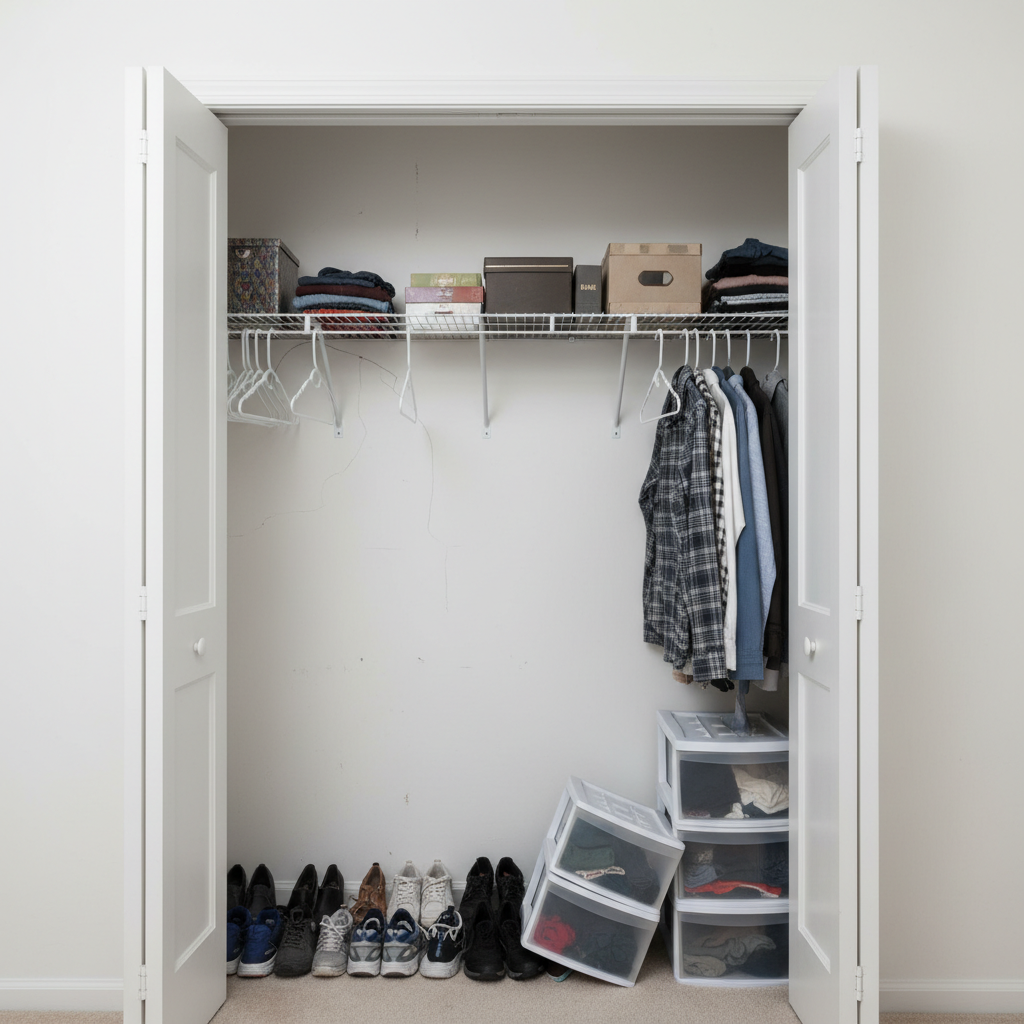
If you’ve been wrestling with common closet failures in your home, you already know how maddening they can be. You might wake up ready to tackle the day, only to spend precious minutes rummaging through piles on the floor. Or perhaps you installed extra bins and shelves, expecting a miracle, but your closet still seems to overflow. These issues are more than annoying. For many homeowners, they’re the final push toward seeking a genuine, long-term fix.
Understand why closets fail
Closets usually fail because they’re designed without much thought for real-life routines. Standard builder-grade closets often include a single rod and flimsy shelving that may serve a purpose for the first few months. But once you add more clothes, shoes, and storage containers, the poorly anchored hardware and inadequate layout become obvious.\
When the design lacks vertical shelving or a space plan, clutter creeps in fast. Sections that aren’t well lit or are awkwardly located tend to accumulate neglected items, too. If this sounds all too familiar, you’re not alone. In fact, professionals note that focusing only on racks or rods while ignoring layout, lighting, and storage depth is a huge reason why many closets end up dysfunctional. [1]
For more insights into the roots of these problems, take a look at why standard closets fail and the telltale signs of builder-grade closet defects. These resources explain how corners get wasted, rods bend under load, and materials often don’t stand up to daily use.
Spot the hidden warning signs
Some closet failures are painfully obvious, such as a cracked shelf or a bent rod that suddenly gives out when fully loaded. Others creep in subtly, building up frustration over time. Look for these red flags:
- Sagging or loose brackets and shelves. If you notice brackets pulling away from the wall, that’s a sign the interior framing can’t support your items.
- Overcrowded floors. When shoes, bags, or laundry baskets spill out onto the bedroom, it often means the vertical space is unused or disorganized.
- Poor lighting. A pale overhead bulb can’t properly illuminate everything in the closet, making it easy to forget items you already own.
- Clothing damage. If clothes frequently get snagged or wrinkled, your hanging rods may be overloaded, or your folded items might be stacked too high.
When you see any of these symptoms, it’s time to address the streak of standard closet design issues. According to home inspection reports, waiting too long can lead to sudden collapses that cause drywall damage, framing headaches, and big repair bills. [2]
Conquer wasted space
A primary culprit behind cramped, chaotic closets is wasted space. Builders often provide just one rod, leaving you with unused vertical real estate. This leads to piles on the floor and awkward corners that gather dust. If you suspect you’ve outgrown your original setup, you’re not alone. Organizing experts point out that if you rely solely on the rod and a single shelf, you could be overlooking half of your closet’s potential. [3]
To reclaim that space, start by visualizing how you could utilize the full height of your closet. Could you add upper shelves for off-season clothes? Some people place rarely used items, like holiday attire, up top and rotate them in when needed. Hooks, adhesive hangers, or corner shelving can also transform dead corners into valuable storage.
Easy ways to maximize space
- Install adjustable shelving so you can move shelves up or down as your wardrobe changes.
- Use slim hangers to fit more garments while keeping them well-spaced.
- Mount a small rack or rail on the inside of the closet door for scarves, belts, or hats.
- Label any bins you use, so you’re never wondering which container holds your winter gloves.
Fix the flow and function
Even with plenty of space, a closet can fail if it lacks logical flow. For example, if your hanging rods are all the same height, you end up with a jumbled sea of garments that’s tough to navigate. Dividing the closet into zones for short-hang items (shirts, skirts) and long-hang items (coats, gowns) can immediately create order.\
Likewise, grouping items by category improves your morning routine. Place daily items at arm’s reach and reserve harder-to-access areas for special-occasion clothing. [4]
A balanced flow also extends to lighting. A single overhead bulb often casts shadows in the corners, hiding what you own. Motion-sensor or LED strip lights help you locate that missing pair of shoes within seconds. Good lighting doesn’t just save time—it may also reduce clutter by making items more visible.
Plan before you purchase
If you’ve ever rushed to buy bins, hanging dividers, or fancy storage tools—only to find they didn’t solve the real problems—you’re in good company. Professional organizers stress that purchasing materials without a plan can lead to even more clutter. [5]
Start by taking a thorough inventory of what you own. Separate current season clothes from the ones you know you won’t wear for several months. Once you see how many shoes, folded sweaters, or suits you have, you’ll be better prepared to pick customizable solutions. You might realize you need multiple rods (one at an upper level, one in the middle) instead of a single rod plus random hooks. Or maybe drawers for undergarments and accessories make more sense than another shelf.
A quick plan checklist
- Gather all clothes from around the house so you see the full picture.
- Declutter items you haven’t worn in a year.
- Decide which items you’ll store seasonally.
- Take measurements of your closet’s width, depth, and height.
- Map out zones for short-hang, long-hang, folded items, and shoes.
This approach ensures you only invest in solutions that truly fit your space. If you’re consistently frustrated by structural limitations, you might be in the zone where a custom setup is worth considering. For more on the pitfalls of one-size-fits-all storage, see builder-grade closet problems.
Prevent rod and shelf collapses
One dramatic closet failure many homeowners experience is the collapse of rods or shelves. This usually happens when a bracket tears away from drywall that was never reinforced, or when rods overloaded by heavy clothing finally give in. [2]\
Before catastrophe strikes, look for warning signs of stress, such as sagging rods or cracks where your shelving meets the wall. It’s best to anchor any heavy load directly into studs or use continuous cleats. Reducing the weight also helps—if your closet visuals look precarious or heavily stuffed, you may be one hanger away from a broken rod.
Think long term, not short fixes
Perhaps the biggest reason folks get stuck with failing closets is the belief that one quick purchase can fix everything. You might add a fresh shelf, buy some new containers, or even think about switching to velvet hangers. But if the underlying structure doesn’t suit your needs, any improvement will be short-lived.\
Experts like organizer Katia Basley recommend a gradual approach—tackling small sections at a time to avoid overwhelm. [4] So instead of rushing to clear out every inch in a weekend, focus on one area, like your upper shelf or your shoe rack. By moving step by step, you’ll create a system that sticks.
Closing thoughts
Common closet failures don’t have to be permanent. If your closet feels like it’s working against you every day, that’s a strong indicator it’s time for a change. Start by spotting the warning signs—whether that’s structural weakness, items exploding onto the bedroom floor, or a lack of coherent zones. Then, make a purposeful plan before you buy or install anything new.
Look upward to use wasted space, pay attention to lighting, and consider a custom approach if your current setup is truly maxed out. Many homeowners discover that once they fix the root causes of their frustrations, the morning routine becomes smoother, clothing stays in better condition, and the entire bedroom feels more serene. By diagnosing your closet failures accurately, you’ll be well on your way to a more organized and functional home. If you’re curious about specific trouble spots, take a deep dive into why standard closets fail to see how a tailored solution could help.
Transforming your closet doesn’t have to be a daunting process. A little planning and the right strategy will clear the clutter, protect your clothes, and save your sanity. And once your closet truly works for you, you’ll wonder how you ever lived with the daily hassle in the first place.