


If you’re searching for the best closet storage, you’re probably past the point of buying one more bin and hoping for a miracle. The real problem usually shows up at 7:12 on a weekday morning, when the chair is piled high, the shelf is bowing, and the one shirt you want is somehow buried under three sweaters and a tote bag.
Why Most Closet Storage Stops Working After a Few Weeks
Most closet fixes fail for a simple reason: they add stuff without fixing flow. A few baskets, a hanging organizer, maybe a shoe rack on the floor, and for a week or two it feels better. Then life resumes. Laundry comes in half-folded, dry cleaning gets shoved to one side, shoes drift out of place, and the closet goes right back to fighting you.
The best closet storage is not the prettiest setup on Pinterest. It’s the one that fits how you actually move through your day. If you get dressed in a rush, you need quick visibility. If you rotate workwear and weekend clothes, you need categories that make sense. If your top shelf has become a graveyard of old gift bags and backup blankets, you need structure, not more containers.
That’s also why closets keep showing up as a major remodeling priority. In fact, 79.3% of sales for closet firms in one 2025 industry survey came from closet systems. Not flashy upgrades. Closet systems. Daily friction has a way of forcing the issue.
Start by Figuring Out What Your Closet Needs to Do
Before comparing materials, kits, or installers, get clear on the job. “I need more space” sounds right, but it’s usually too vague to help. More often, the real need is better access, better visibility, or better separation between categories that keep colliding.
A closet can hold a lot and still function badly. You can have enough square footage and still waste half of it because the hanging section is too tall, the shelves are too deep, or the shoes eat up the floor. The trick is to figure out what the closet is supposed to support every single week, not what looks impressive in a showroom.
Look at Your Daily Friction Points
Start with the moments that annoy you most. Maybe folded sweaters topple every time you grab one from the bottom. Maybe handbags are hanging off a doorknob because there’s nowhere else for them to go. Maybe your shoes are technically in the closet, but only if “in the closet” includes a heap near the baseboard.
Those repeat frustrations point to layout problems. Not discipline problems. If clothes constantly land on a chair, that usually means your closet doesn’t have an easy home for in-between items like jeans worn once or tomorrow’s outfit. If accessories disappear, the issue is usually visibility and access, not lack of effort.
Measure the Space You Actually Have
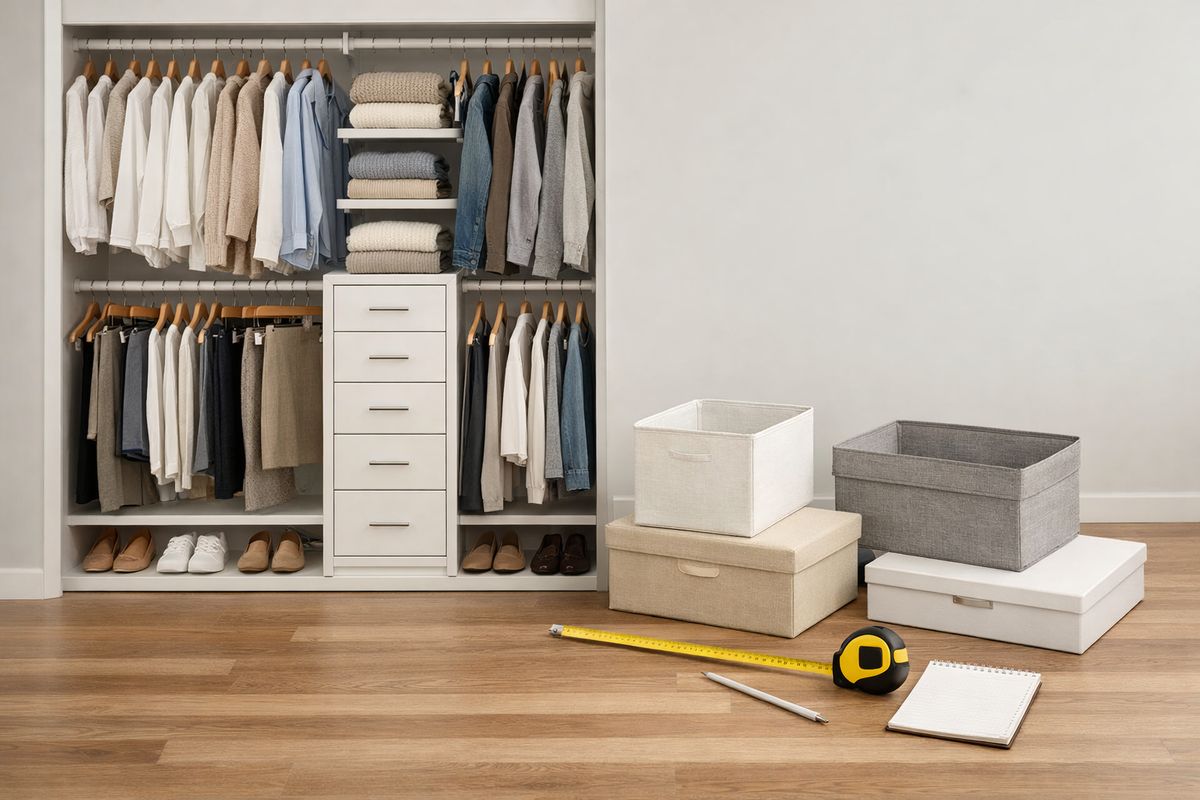
A closet system that looks perfect online can fail by an inch or two. Measure width, depth, and height. Then measure what gets overlooked: door swing, trim, baseboards, outlets, light switches, vents, and where the wall may be uneven.
Usable hanging height matters more than total height. So does depth. A shallow older closet might not handle standard drawers without crowding the aisle or blocking the door. If you’re comparing kits and custom options, this is also where it helps to understand what a made-for-your-space setup really changes, because fit is often the whole point.
Sort by What You Wear, Not by Fantasy
Here’s the thing: your closet should match your real wardrobe, not your aspirational one. If you own ten pairs of work pants, four long dresses, fifteen folded knits, and a mountain of gym clothes, your storage should reflect that. Not a boutique-style row of evenly spaced blouses and decorative hats.
Count your categories in rough terms. Short hanging, long hanging, folded items, shoes, bags, jewelry, seasonal gear, extra bedding, laundry overflow. That simple inventory will tell you whether you need more rod space, more shelves, or just better division between everyday and occasional items.
The Main Types of Closet Storage, and Who Each One Works For
Once you know what the closet needs to do, the options get easier to sort out. Most buyers end up comparing the same few categories, and the differences are more practical than complicated.
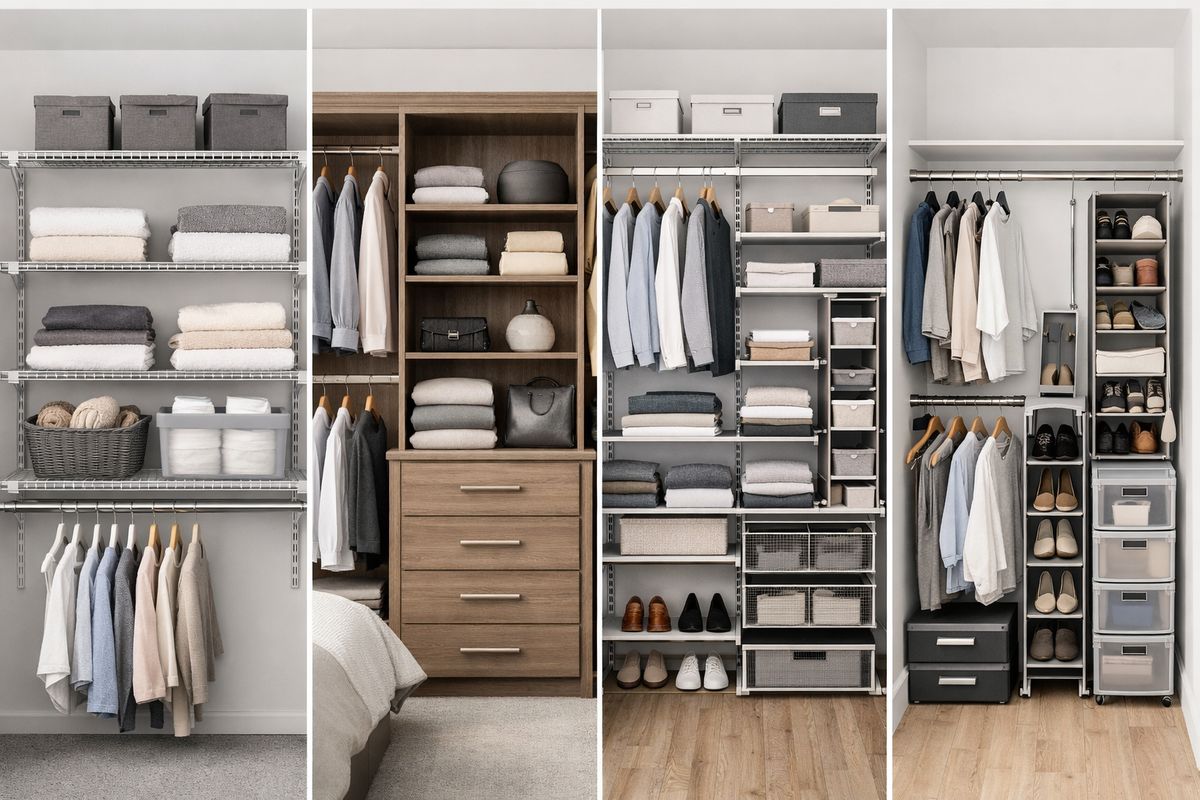
Wire Systems
Wire systems are popular because they’re affordable, easy to find, and decent for airflow. In utility closets, kids’ closets, or low-pressure spaces, that can be enough. If the goal is basic improvement on a modest budget, wire shelving does the job.
The catch is that wire can feel temporary, even when it isn’t. Small items tip over, folded clothes can sag between bars, and the look is more utility room than finished bedroom. It’s also not the most satisfying answer if you’re trying to solve years of frustration instead of adding one more layer to it.
Wood and Laminate Closet Systems
Wood-look and laminate systems are popular for a reason. They give a closet a cleaner, more built-in feel, and they usually offer a better mix of shelves, drawers, cubbies, and hanging sections. In a primary bedroom closet, that matters.
Material names can sound more technical than they are. MDF is a smooth engineered board that paints and finishes well, but it doesn’t love moisture. Particle board is cheaper and usually less durable. Plywood tends to be stronger. Solid wood sits at the premium end. If you want a polished look without full custom pricing, laminate over engineered wood is often where the sweet spot lives.
Modular and Adjustable Systems
Modular systems work well because life changes. Your closet should be able to change with it. Adjustable shelves, movable rods, and components you can reconfigure later give you breathing room, especially if your wardrobe shifts seasonally or your storage needs evolve.
That flexibility is a big reason modular storage keeps gaining traction. Buyers are steadily leaning toward modular, customizable options rather than one-size-fits-all setups. Honestly, that makes sense. A fixed layout is like buying a sofa that only works if nobody ever rearranges the room.
Freestanding Organizers and Add-On Pieces
Freestanding racks, drawer towers, shoe cabinets, shelf dividers, and over-the-door organizers can absolutely help. In rentals, guest rooms, older homes with awkward alcoves, or short-term situations, these pieces often solve a real problem fast.
But they’re usually support pieces, not a full answer. Add-ons work best when the closet already has a decent structure and just needs help in one weak spot. If the whole closet lacks logic, freestanding pieces can start to feel like traffic cones in a bad parking lot.
Fully Custom Closets
Custom closets make the most sense when the space is odd, the closet gets heavy daily use, or you’re done patching together partial fixes. Sloped ceilings, unusual widths, deep corners, and shared primary closets are where custom really starts earning its keep.
What you’re paying for is fit, finish, and smarter use of every inch. Budget matters, of course. Many projects land in the broader $1,000 to $15,000 range, and premium setups can go much higher. If you’re weighing that jump, it helps to compare store-bought organizers against built-to-fit options before spending money in the wrong direction. For a look at a polished local example, custom closet solutions show what that once-and-done approach can look like.
What Actually Makes Closet Storage Worth Buying
Looks matter. But function decides whether you still like the closet six months later.
Adjustable Shelves and Hanging Sections
Adjustability is one of those features that sounds boring until you live without it. Then it becomes the whole story. Shelves that can move up or down let you shift from folded jeans to handbags to labeled bins without wasting space.
The same goes for rods. Double hanging can nearly double your short-hanging capacity, while one taller section handles dresses, coats, or jumpsuits. In buyer feedback, adjustable shelves show up again and again as a favorite feature, which tracks with real life. Fixed layouts age fast.
Drawers, Baskets, and Closed Storage
Drawers are worth paying for when small items keep making the closet look messy. Undergarments, socks, workout wear, sleepwear, scarves, belts, and jewelry all benefit from a closed home. Open shelving sounds simple, but it turns into visual noise fast.
Closed storage also creates calm. That sounds a little dramatic for drawers, but it’s true. If every surface in the closet is exposed, even a normal week can make the whole space feel unfinished.
Shoe Storage That Doesn’t Waste Floor Space
The best shoe storage depends on what you actually wear. Everyday pairs should be easy to grab. Seasonal or occasional shoes can live higher up or farther back. That means your best setup may be angled shelves, slim cubbies, low racks, or stackable shelves, depending on the closet.
What usually doesn’t work is letting shoes consume premium floor space in a small closet. If the shoes you wear once a month are blocking the pairs you wear five times a week, the layout is backwards.
Lighting and Visibility
Seeing what you own is half the battle. Dark closets make good storage feel worse because hidden items may as well not exist. Stick-on LEDs can help in a simple setup. Integrated lighting feels more polished and is becoming more common in better systems.
That shift is real. Features like integrated lighting and soft-close drawers are no longer rare luxuries. In mid-to-upper-tier closets, they’re increasingly expected because visibility and ease matter every day.
Hardware, Weight Capacity, and Build Quality
Product photos rarely tell you what you need to know. Check shelf thickness, drawer slide quality, anchoring method, and weight limits. Look for full-extension drawers, solid mounting points, and finishes that won’t chip after a few months of actual use.
Assembly quality matters too. A lot. Poor instructions show up in a huge share of negative reviews on closet systems, which is another reminder that a good design on paper still has to survive installation.
Best Closet Storage by Closet Type
The right answer changes with the space.
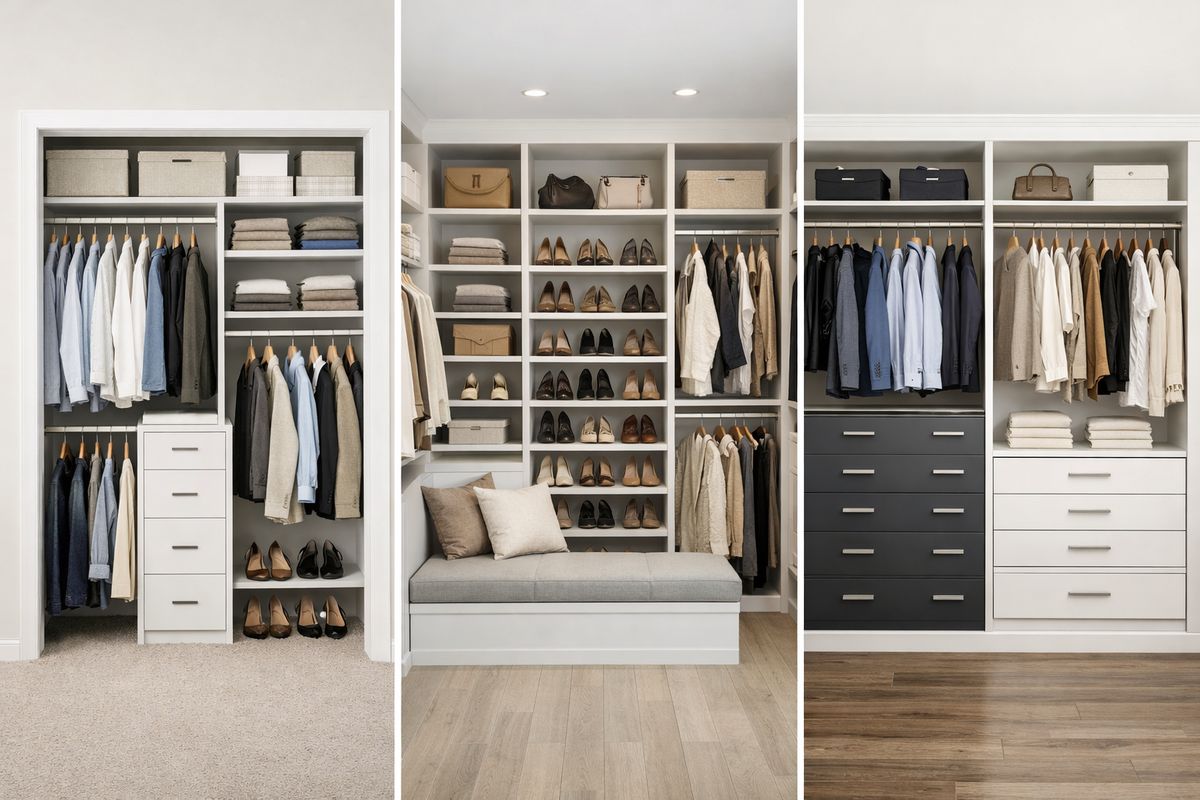
Reach-In Closets
A reach-in closet works best when it stays simple and deliberate. Double hanging is often the highest-payoff move. One drawer tower can anchor the layout, the top shelf can hold off-season or low-use items, and slim shoe storage can keep the floor open.
You do not need to over-design a reach-in closet. In fact, that’s usually the mistake. A reach-in succeeds when every zone is easy to access from one standing position.
Walk-In Closets
Walk-ins feel generous, but they waste space surprisingly easily. Dead corners, oversized islands, too many display shelves, and giant hanging zones can eat up room fast. Good walk-ins use zoning: hanging in one area, folded storage in another, shoes where they’re visible but contained, and accessories where you can actually reach them.
If space allows, a mirror, hamper, or small bench can help. But only if the basics are already working. A walk-in closet should make mornings faster, not just look finished.
Shared Closets
Shared closets work best when the layout matches what each person stores, not when the floor plan is split down the middle like a property line. One side may need more long hanging. The other may need more shelves or drawers. Equal space sounds fair, but useful space is better than equal space.
This is where hanging heights, drawer ownership, and shoe planning matter a lot. If you’re dealing with constant crossover and low-grade closet resentment, a better way to divide shared space can help you think through the layout before buying anything.
Small Closets in Older Homes
Older homes bring charm and weird closet dimensions in the same package. Shallow depth, single rods, one lonely shelf, sloped ceilings, uneven walls. All familiar.
In those spaces, modular pieces and custom-fit solutions often outperform generic kits. Vertical storage matters more, and bulky inserts matter less. The goal is to use height without making the closet feel like it’s closing in on you.
Budget: What You Get at Different Price Points
Closet budgets vary wildly, but the tradeoffs are pretty consistent: lower cost usually means less structure, less durability, and more DIY effort.
Under $300: Quick Fixes and Add-Ons
At this level, think shelf risers, bins, dividers, over-the-door storage, basic hanging organizers, and simple racks. These can absolutely reduce friction, especially if one problem area is driving you crazy.
But be honest about what this tier can do. It improves symptoms. It rarely fixes a closet that fundamentally lacks enough hanging zones, proper shelves, or usable shoe storage.
$300 to $1,000: Better Kits for Real Improvement
This is where many households find real value. Modular kits, upgraded shelving, drawer units, and basic laminate systems can make a reach-in closet dramatically easier to use without jumping into full custom pricing.
For many homes, this is the practical middle. You get more structure, better looks, and more permanence without turning the project into a full renovation.
$1,000 to $5,000: Semi-Custom and Professionally Installed Upgrades
This tier opens up stronger materials, cleaner fit, better hardware, drawers that feel good to use, and help with installation. Many buyers land here because the closet is important enough to do properly, but not important enough to justify the highest-end custom build.
Installed costs vary by size and layout, but Angi puts typical installation costs between $627 and $2,526 on average for closet organizers, with larger and more customized jobs rising from there. If you want a better sense of where the money goes, breaking down the real price drivers makes the numbers less mysterious.
$5,000 and Up: Custom Storage for Long-Term Homes
This is once-and-done territory. Better finishes, tailored dimensions, specialty storage, integrated lighting, and that built-in feel that makes the whole room function better. If you plan to stay put and use the closet hard for years, this can make perfect sense.
The tradeoff is obvious: higher cost upfront. But for a high-use primary closet, custom can stop the cycle of buying temporary fixes over and over again.
Material Choices: What Lasts, What Saves Money, What Looks Better Than It Performs
Material affects lifespan, strength, finish, and price. Not just appearance.
Particle Board and MDF
These are common in budget and midrange systems because they’re affordable and easy to finish cleanly. MDF has a smooth surface and can look great. Particle board keeps costs down.
The catch is durability. Moisture is not your friend here, and lower-quality construction can show wear faster, especially in heavily used drawers or long shelves.
Plywood and Solid Wood
Plywood is often the smartest middle-to-upper-range material choice. It’s stronger, holds hardware better, and tends to age more gracefully. Solid wood is premium, durable, and expensive.
If your closet gets heavy daily use, better materials pay off. Research on closet materials often pegs plywood as a strong balance of cost and longevity, while solid wood sits at the top for long-term durability.
Metal and Wire
Metal is durable, practical, and in some systems, surprisingly sleek. It works especially well in utility spaces, modern designs, or closets where airflow matters.
But metal can feel colder and less finished in a bedroom setting. Wire, specifically, is usually the least expensive option, though often the least polished too.
Low-VOC and Sustainable Options
Sustainable choices are no longer a niche concern. More buyers now look for recycled wood content, responsibly sourced materials, and low-VOC finishes, which simply means finishes that release fewer chemical fumes into the air.
That matters even more in bedrooms and dressing areas. In some market data, more than 40% of consumers prefer recycled wood or low-VOC finishes, so this has moved from bonus feature to practical buying factor.
Common Closet Storage Mistakes That Make the Space Feel Worse
A bad upgrade can make a closet feel tighter, messier, and more frustrating than before.
Buying Containers Before Fixing the Layout
Bins are useful, but only after the structure works. If your rods are wrong, your shelves are too deep, or your shoes have nowhere to go, containers just package the chaos more neatly.
Choosing Looks Over Daily Use
Showroom closets often overdo display shelves and underdo real storage. Your closet needs room for laundry, bulky knits, random everyday bags, and shoes you actually wear. Not just pretty spacing between color-sorted shirts.
Ignoring Installation Reality
Some closet systems look simple until box three is open on the bedroom floor and the instructions feel like a puzzle written in a hurry. If your walls are uneven, your baseboards stick out, or your tools are limited, DIY can turn into a stalled project fast.
Forgetting That Your Needs Will Change
Wardrobes change. So do homes and routines. A closet that handles today’s life but can’t adapt to tomorrow’s becomes annoying surprisingly fast. Flexibility matters more than perfection.
How to Choose the Best Closet Storage for Your Situation
Here’s where it gets simple. Match the solution to the stress point.
Best for Renters or Temporary Fixes
Choose freestanding pieces, removable add-ons, and simple upgrades that improve access without permanent installation. Better storage matters in rentals too. In one survey, 42% of renters said upgraded storage made them willing to pay more, which tells you how much function matters even without ownership.
Best for Busy Primary Closets
A modular or semi-custom setup usually works best here. You want double hanging, drawers, shelves, good shoe storage, and lighting if possible. The goal is less hunting, less piling, and less chaos before coffee.
Best for Small Budgets With Big Frustration
Start with the highest-payoff fixes: rework hanging zones, add one drawer tower, solve shoe storage, and assign the top shelf a real purpose. Don’t try to fix everything at once. Fix the bottlenecks first.
Best for a Long-Term, Once-and-Done Solution
If you want durability, tailored fit, and a closet that feels finished, higher-end modular or custom is the strongest route. If you’re still unsure whether the jump is worth it, it helps to review the signs your closet has outgrown quick fixes.
Questions to Ask Before You Buy or Book an Install
Before you spend anything, confirm the basics. Are your measurements exact? Can shelves and rods move later? What material is the system actually made from? What hardware comes standard? Who handles installation, and what happens if your walls are uneven or your layout is tricky?
Also ask about lead time, warranty coverage, and which add-ons are included versus extra. Lighting, soft-close drawers, valet rods, and specialty racks can raise the price quickly, so get clarity before you commit.
Try one thing this week: measure your closet and write down the three daily problems you want the new setup to fix. That one step will do more for your decision than another hour of scrolling.
Frequently Asked Questions
What is the best closet storage for a small reach-in closet?
Usually, a simple system with double hanging, one narrow drawer tower, and better shoe storage gives the biggest improvement. In a small reach-in, clear zones matter more than fancy features.
Are custom closets worth the money?
Yes, if your closet gets heavy daily use, has awkward dimensions, or you’re tired of layering temporary fixes. No, if a basic modular kit would solve the real problem just as well.
Which closet material lasts the longest?
Solid wood generally lasts the longest, with plywood close behind as a strong value choice. MDF and particle board can work well too, but quality varies more and moisture can shorten lifespan.
Is wire shelving a bad choice?
Not at all. Wire shelving is affordable, ventilated, and useful in low-pressure spaces. It just tends to feel less finished and less supportive for folded clothing or long-term bedroom use.
How much should you spend on closet storage?
Spend based on how hard the closet works. A low-use guest closet may need only a few hundred dollars. A busy primary closet often justifies a larger investment because the payoff shows up every morning.
What should you measure before buying a closet system?
Measure width, depth, height, baseboards, door swing, outlets, and usable hanging height. Those overlooked details are often what determine whether a system fits cleanly or becomes a headache.