


A custom closet system is a storage layout designed around your exact space, your actual wardrobe, and the way your mornings really work. If you’re staring at a chair covered in “not dirty, not clean” clothes, fighting a shelf that swallows sweaters, or digging for shoes at 6:45 a.m., this is the fix you’ve probably been circling for years, even if the term custom closet system still sounds a little vague.
What a Custom Closet System Actually Is
At its most useful, a custom closet system is not a fancy add-on or a showroom fantasy. It’s a planned arrangement of storage that fits your closet the way your home actually exists, including the odd corner, the low shelf, the short wall, the outlet in the wrong place, and the pile of things that never seems to have a home. The whole point is to stop forcing your belongings into a generic setup that was never designed for them.
That matters because most closet frustration is not really about laziness or even too much stuff. It’s about mismatch. Your closet has one kind of storage. Your life needs another. So you keep patching the gap with bins, hanging shelves, clear boxes, over-the-door hooks, and those fabric cubes that look promising for about three weeks. Then the system collapses under the weight of real use.
The short definition
A custom closet system is a built-to-fit storage plan for a closet or storage area, created around your room dimensions, your belongings, and your daily routine. It can include hanging sections, drawers, shelves, shoe storage, hampers, and specialty features, but the key idea is the layout, not just the parts.
That’s the big distinction. A few shelves do not make a system. A row of bins does not make a system either. A system is a coordinated setup where each section has a job, each category has a place, and the whole thing works together instead of fighting you every morning.
Why “system” matters more than “closet”
Here’s the thing: the magic is not the closet itself. It’s the coordination. Think of it like a kitchen. A stack of random cookware on open shelving is technically storage, but it does not function like a well-planned kitchen where utensils, pots, spices, and prep space are arranged around how you cook. Closets work the same way.
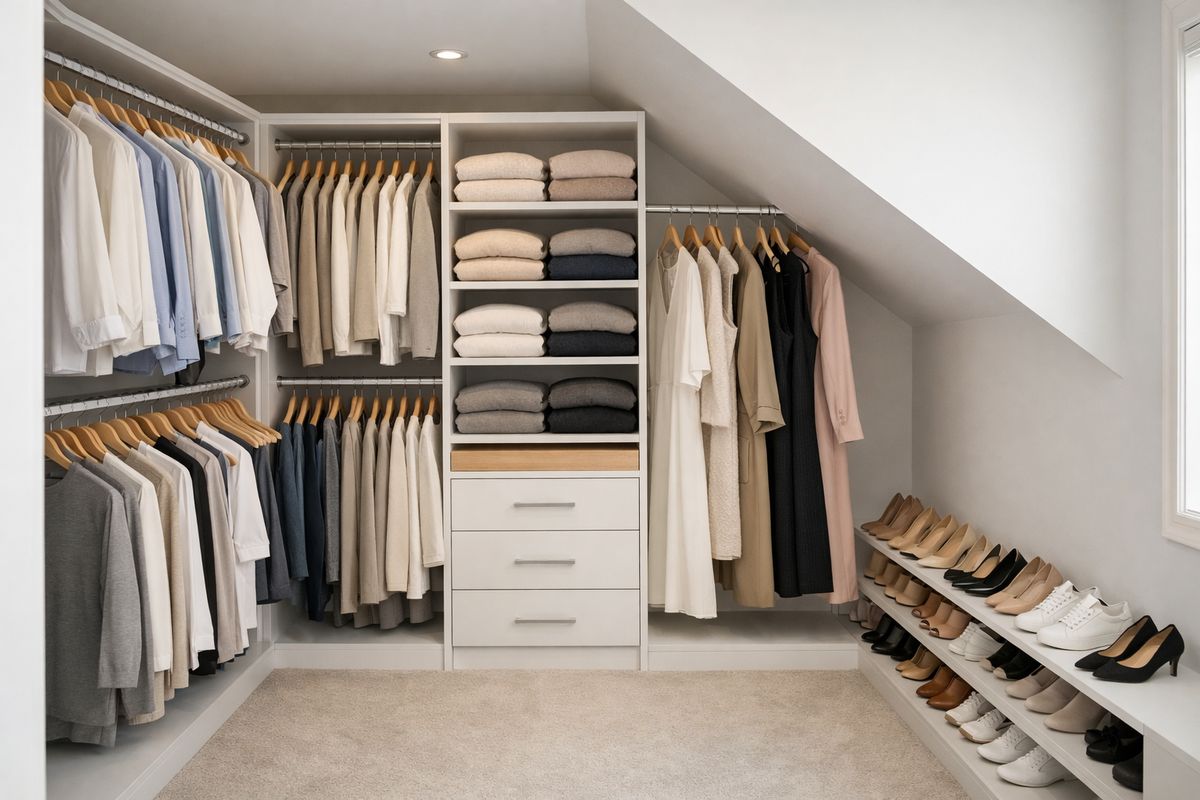
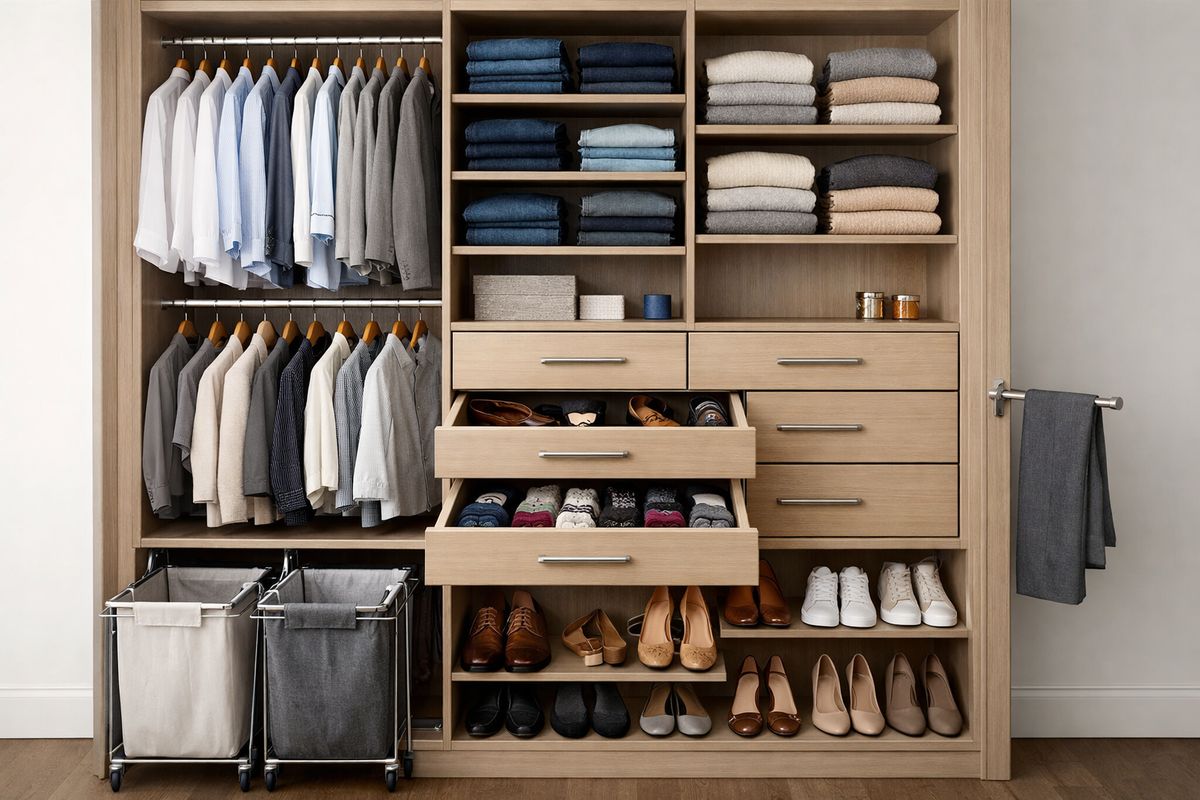
A real system combines short-hang space for shirts and jackets, longer hanging space for dresses or coats, shelves for folded clothes, drawers for smaller items, shoe storage that matches the types of shoes you actually own, and extras that support your routine. Maybe that means a hamper near the clothes you change out of at night. Maybe it means a valet rod so tomorrow’s outfit is ready before bed. Maybe it means more enclosed storage because visual clutter makes your whole bedroom feel tense.
When those pieces work together, the closet stops being a storage problem and starts acting like a tool.
What Makes It “Custom” Instead of Just Organized
A lot of people hear “custom” and picture expensive millwork, polished display shelves, and a closet full of color-coordinated handbags. That’s not the useful definition. Custom simply means the setup is based on your real conditions instead of a standard template.
That distinction matters because organized and custom are not the same thing. You can organize a bad closet for a weekend and still hate using it by Tuesday. You can label bins, fold perfectly, and buy matching baskets, but if the layout itself is wrong, the mess comes back. Fast.
It’s built to your measurements
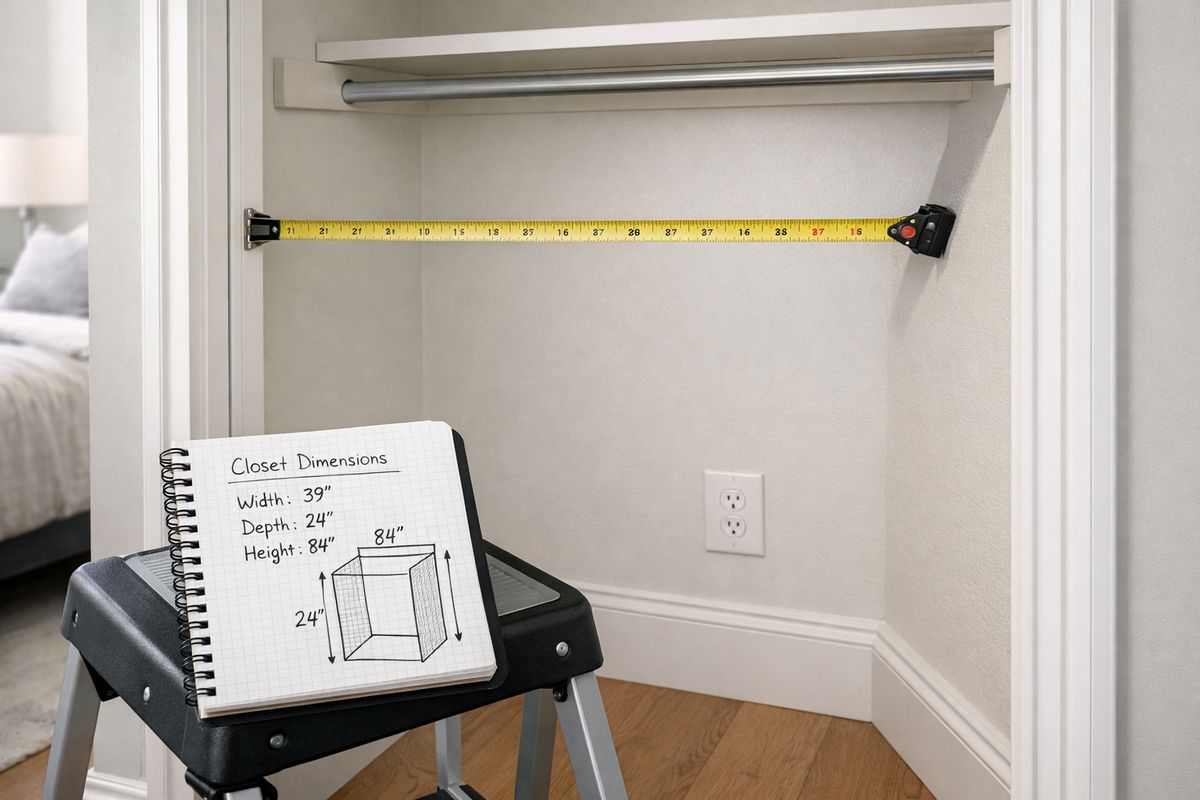
A true custom system starts with your actual dimensions, not the dimensions of a pre-boxed kit. That means wall width, ceiling height, closet depth, and door opening, but it also means the stuff that quietly ruins off-the-shelf solutions: sloped ceilings, trim, baseboards, uneven walls, attic angles, vents, outlets, access panels, return air grilles, and the awkward dead zone above a standard shelf.
In a reach-in closet, custom design can turn wasted vertical space into another full layer of storage. In a walk-in, it can prevent those weird corners from becoming black holes where luggage and impulse buys go to disappear. In older homes, where walls are rarely as straight as you want them to be, custom matters even more because “close enough” usually looks sloppy and wastes inches you actually need.
That’s one reason small and awkward closets often benefit the most. A generic organizer can work in a perfectly rectangular space. The minute your room stops behaving, customization earns its keep.
It’s built to your wardrobe and daily habits
Your closet should match the way you live, not the way a showroom says you should live. If you hang almost everything, you need more hanging space and less shelving. If you fold T-shirts, gym clothes, and jeans, drawers or shelves matter more than double-hang rods everywhere. If you own long dresses, long coats, or uniforms, you need vertical clearance that won’t leave hems crumpled on the floor.
Habits matter just as much as inventory. If you get dressed before sunrise and try not to wake anyone up, fast visibility and easy reach matter more than decorative display. If your closet is shared, equal hanging space may not be the right answer at all. One side may need more drawers. One side may need more long hang. Fair is about function, not symmetry, which is exactly why dividing a shared space in a way that actually works matters so much.
A good custom setup also reflects how much visual calm you need. Some people want to see everything at a glance. Some want half of it hidden so the room feels quieter. Both can be right.
It’s built to your priorities, not a showroom ideal
Custom does not mean maximum everything. It means deciding what matters most and designing around that. Maybe your priority is fitting more storage into a small reach-in. Maybe it’s making space for shoes that are currently lined up against the bedroom wall. Maybe it’s reducing the piles on your dresser. Maybe it’s making a shared closet less irritating. Maybe it’s finally creating a place for bags, luggage, or laundry that isn’t “for now” storage on the floor.
That’s why a custom closet system can be modest and still be transformative. You do not need a center island and chandelier to get real relief. Sometimes the best custom closet is just one that gives every category a real home and stops the daily spillover.
The Core Parts of a Custom Closet System
Once you start looking at design mockups or estimates, you’ll run into a handful of common components. The jargon can sound more technical than it really is, but most of it is pretty simple once you translate it into everyday use.
Hanging sections
Hanging storage usually falls into three categories: single hang, double hang, and long hang. Single hang means one rod with open space below or above it. It works well for shirts, jackets, blouses, and items that need breathing room. Double hang means two rods stacked vertically, often one for tops and one for shorter items like folded pants hung by the waistband. It’s one of the easiest ways to double usable hanging space in a standard-height closet.
Long hang is for clothes that need full drop length, like dresses, coats, robes, jumpsuits, and longer formal wear. If you’ve ever tried to tuck a maxi dress into a standard section and watched it bunch at the bottom, you already understand why long hang matters.
The mix matters more than the amount. Too much hanging space wastes room if you mostly fold. Too little creates piles immediately.
Shelving and cubbies
Shelves are the workhorses of most closet systems. Open shelves handle sweaters, jeans, handbags, hats, and bins for off-season items. Adjustable shelves are especially useful because your storage needs change over time. Maybe today the shelf height works for folded sweatshirts. Next year it needs to hold handbags or baby supplies. Flexibility counts.
Cubbies can be helpful, especially for shoes, bags, or clearly defined categories, but the catch is that too many cubbies can become clutter traps. A wall of small square openings looks tidy in a photo. In real life, it can turn into a grid of random overflow unless each section has a clear purpose. Wider shelves are often easier to live with than dozens of tiny compartments.
Display shelves can also make sense, though usually in moderation. A few visible shelves for favorite bags or neatly stored shoes can make the closet feel polished. Too many and it starts to feel like you’re managing a store display instead of getting dressed.
Drawers and enclosed storage
Drawers are where a closet often starts to feel calmer. Socks, underwear, workout gear, sleepwear, swimsuits, scarves, and small accessories all tend to behave better in drawers than on open shelving. You are not looking at every category all at once, which cuts visual noise and makes the closet easier to maintain.
Pull-out shelves and interior trays can function a lot like drawers while giving easier visibility. Jewelry inserts, watch trays, and divided organizers keep smaller items from drifting. Concealed compartments can hide valuables or just keep the less attractive parts of life, like chargers or spare cords, out of sight.
Closed storage also changes how tidy the room feels. If open shelves make you feel like you’re always one unfolded T-shirt away from chaos, more drawers are often worth the extra cost.
Shoe storage
Shoe storage sounds straightforward until you realize not all shoes want the same thing. Flat shelves work well for stacked everyday shoes. Angled shelves make shoes easier to see, which helps if you actually choose among several pairs each week. Pull-out shoe shelves can be a smart middle ground because they keep shoes visible and accessible without forcing you to crouch into a dark lower corner.
Boot storage needs height. Athletic shoes usually need width. Dress shoes benefit from cleaner separation. If dust bothers you, enclosed shoe drawers or cabinets may be worth considering, though you trade some visibility for that cleaner look.
That tradeoff shows up across almost every closet decision. Visibility makes daily use easier. Concealment makes the space look calmer. The best option depends on which frustration annoys you more.
Accessories and specialty features
This is where estimates start listing things that sound optional until you imagine actual use. A valet rod is a small pull-out bar that holds tomorrow’s outfit while you pack, dress, or steam something. A belt or tie rack keeps narrow accessories from tangling in a drawer. A pull-out hamper gives laundry a designated home instead of turning a corner into a fabric mountain. Hooks catch robes, bags, or the jacket you reach for every day.
Mirrors, islands, and seating show up in larger walk-ins, and sometimes they’re wonderful. Sometimes they just take up room. Charging drawers can be handy if your closet doubles as a getting-ready zone and you keep devices, watches, or grooming tools there. The trick is to tie every specialty feature back to a real habit. If it solves a daily annoyance, it’s useful. If it only looks impressive in renderings, skip it.
The Main Types of Custom Closet Systems
Not every custom closet is built the same way, and that’s actually good news. The category includes fully bespoke systems, middle-ground options, and modular setups that still feel tailored. Knowing the differences helps you avoid paying for the wrong level of customization.
Fully custom systems
A fully custom system is designed specifically for your space and then built or manufactured to suit it. That usually means the greatest flexibility in dimensions, layout, finish choices, trim details, and specialty features. It also tends to create the strongest built-in look, especially when the design runs wall to wall, uses full height, and includes finishing touches like crown-style top panels or furniture-style drawer fronts.
This is the version most people picture when hearing “custom closet.” It’s also usually the highest-priced path. But the upside is precision. If your space is awkward, your storage needs are specific, or you want the closet to feel like part of the architecture rather than an insert, fully custom is often the cleanest answer.
Semi-custom systems
Semi-custom systems sit in the middle. The parts are usually based on standard component sizes, but the layout is arranged to fit your closet and can often be adapted with a good amount of flexibility. You may get a curated set of finish options, accessory choices, and layout combinations without the open-ended cost of fully bespoke construction.
For many homeowners, this is the sweet spot. It feels intentional. It fits better than a basic kit. It often includes design support and professional installation. But it does not require every panel and drawer box to be made from scratch. If you’ve been comparing temporary organizers against a more permanent fix, this is often the category that starts to make the jump feel realistic.
Modular closet systems
Modular systems are built from repeatable units or components that can be combined in different ways. Think of them like building blocks with better design. You can still get a result that feels customized if the layout is planned well and the components are chosen for your actual space.
This part of the market is growing fast for a reason. Modular closet systems give homeowners more flexibility, often at a lower cost, and they tend to be easier to adjust later. Some even look surprisingly polished once installed, especially with upgraded finishes, drawers, and trim details. If your needs may change over time, modular can be a smart choice rather than a compromise.
DIY kits vs professionally designed installations
A box-store kit can absolutely solve some problems. But there’s a difference between assembling closet parts and having an actual plan. DIY kits usually come with fixed dimensions, fewer material options, and less forgiveness for awkward spaces. They may work well in standard closets where the main issue is adding a bit more structure.
Professional design changes the experience because somebody is thinking through fit, inventory, layout, and installation quality before anything goes on the wall. That often leads to a more polished final result and fewer frustrations after install. It also reduces the common DIY outcome where the pieces technically fit, but the closet still doesn’t function very well.
That doesn’t mean professional is always better for every home. It means design support has real value when the problem is not just lack of parts, but lack of fit.
How a Custom Closet System Is Designed
The process sounds more mysterious than it is. In practice, it’s a structured way of translating your space and your habits into a layout that makes sense. If you’ve been researching how a more tailored setup differs from generic storage, this is where that difference becomes concrete.
Step 1: Measuring the space
The first step is measuring, but not just width and height. A good measurement process also accounts for depth, door swing, door trim, window placement, baseboards, crown or soffit details, outlets, switches, vents, and anything fixed that the design has to respect. Corners matter. Ceiling angles matter. Access points matter.
In older homes, even wall irregularities matter. A closet can look straightforward until a standard-depth tower blocks the door casing or a drawer can’t fully open because trim steals an inch. Good design catches those problems before installation, not after.
Step 2: Taking inventory of what you own
This is the part people skip, and it’s usually where bad designs begin. A custom closet should reflect the amount and type of stuff you actually own. That means counting long-hang items, short-hang items, folded clothes, shoes, boots, bags, hats, accessories, luggage, hampers, and anything else the closet is expected to hold.
You do not need a perfect spreadsheet. A rough count is enough to reveal patterns. Maybe you own 28 pairs of shoes and two tiny shoe racks. Maybe half your closet is hanging space even though most of your clothes live folded. Maybe the “bag problem” is not a bag problem at all, but a missing shelf category. Once the inventory gets specific, the design usually gets better fast.
Step 3: Mapping your routine
A closet should support your routine, not just store your belongings. If work clothes need to be front and center Monday through Friday, that deserves priority. If you change into workout clothes in the evening, those should be easy to grab. If you prefer not to see laundry supplies, enclosed storage may matter more than display space.
Routine also shapes visibility. Some people function best when everything is visible. Some need less visual input, especially in the bedroom. If you share the closet, your routines may be completely different, which is exactly why splitting a shared closet by actual habits instead of guesswork can make such a difference.
Step 4: Choosing layout, materials, and finishes
Once the space and storage needs are clear, the design choices start to feel more grounded. This is where you decide how much hanging space, how many drawers, how tall the shelves should be, where shoes go, how laundry gets handled, and whether accessories deserve dedicated storage.
Then come the visual choices: white or wood grain, matte or textured finish, slim hardware or something more furniture-like, open shelving or closed fronts, visible storage or a calmer concealed look. Lighting often enters the conversation here too. The closet can blend quietly into the room or feel like a feature. Both are valid. The right choice is the one you’ll still like after the excitement of installation wears off.
Step 5: Installation and final adjustments
After design comes manufacturing or ordering, then installation. The timeline depends on the system type and the company, but the install itself is usually quicker than people expect. A simple system may go in within a day. A more involved walk-in with drawers, lighting, and trim details can take longer. The lead time before install is often the slower part.
Small post-install adjustments matter more than you’d think. A shelf moved up two inches can make a bag section finally work. A hamper shifted closer to where clothes come off can improve the whole routine. A good project does not end when the panels are mounted. It ends when the closet actually functions.
What Problems a Custom Closet System Actually Solves
The best reason to invest in a custom closet system is not that it looks nicer in photos. It’s that it removes friction you feel almost every day. And those tiny daily annoyances add up more than people expect.
It gives everything a real home
The biggest win is simple: categories stop wandering. Shirts have a place. Jeans have a place. Shoes have a place. Bags have a place. Laundry has a place. The in-between pile on the chair finally loses its excuse because the closet now offers a few practical landing spots instead of one overcrowded rod and a high shelf nobody can reach.
That kind of zoning reduces reshuffling. You spend less time moving things around just to get to something else. You also stop turning every flat surface in the bedroom into backup storage, which is what usually happens when the closet is too generic to absorb real life.
It uses space that standard closets waste
Most standard closets waste a surprising amount of usable space. The single rod with one shelf above it is the classic example. It leaves a lot of vertical room underused and rarely matches the mix of hanging and folded storage most households need.
Custom layouts can reclaim that wasted height, make better use of corners, and eliminate awkward gaps between organizer pieces and walls. That’s especially helpful in smaller homes, where better storage matters more than extra square footage. Demand keeps rising partly because custom storage fits how people actually live now, with residential installations making up more than 70% of the market.
It makes mornings faster
There’s a real difference between a closet that stores clothes and a closet that helps you get dressed. When your work shirts are in one place, your everyday shoes are easy to reach, your accessories are not tangled in a bin, and your laundry is not mixed with clean clothes, your morning stops feeling like a search mission.
Picture that weekday moment before coffee, when you’re trying to get dressed without thinking too hard. A good closet cuts decision fatigue because the categories are visible, the most-used items are accessible, and nothing important is hidden behind three other things. That is not a luxury benefit. That is a quality-of-life benefit.
It can make the whole bedroom feel calmer
Closet problems rarely stay in the closet. They spread to benches, dressers, nightstands, bedroom corners, and whatever chair has quietly become part-time furniture, part-time wardrobe support system. Once the closet works better, that overflow often disappears too.
And yes, the emotional side is real. There’s a reason this category keeps growing. Homeowners keep investing in personalized storage because function and visual relief matter in daily life, and 57% of homeowners say they prefer custom-designed closet layouts for exactly that mix of efficiency and appearance.
What a Custom Closet System Does Not Automatically Do
This part matters because honest expectations lead to better decisions. A custom closet can solve a lot, but it is not magic.
It won’t fix owning more than the space can hold
A better layout can dramatically improve capacity, but it cannot break the laws of physics. If the volume of clothing, shoes, and accessories is far beyond what the closet can reasonably contain, some tradeoffs still need to happen. That might mean seasonal rotation, storing luggage elsewhere, reducing duplicates, or admitting that two bulky comforters do not belong on the top shelf over your shoes.
The good news is that many closet problems are layout problems disguised as volume problems. But not all of them. Sometimes the closet needs both a smarter system and a little editing.
It isn’t always luxury-level or overbuilt
Custom does not have to mean dramatic. It can be practical, simple, and scaled to a regular home. Clean white panels, a few drawers, better hanging sections, and smarter shoe storage can still count as custom if the layout is designed for your space and needs.
That matters because the category often gets flattened into one image: a huge walk-in with glass fronts and boutique lighting. In reality, plenty of custom projects are ordinary reach-ins that simply work better. If you want inspiration grounded in actual daily use, not fantasy closets, these practical layouts that tame the mess are often a better reference point than showroom pictures.
It doesn’t have to mean permanent perfection
Your life changes. Jobs change. Kids grow. Shared closets become solo closets, then shared again. Wardrobes shift. Good closet design leaves room for some evolution, especially through adjustable shelves, modular components, or phased upgrades.
That flexibility is one reason modular and semi-custom systems are gaining ground. You can start with the categories that are hurting most and expand later if needed. The best closet is not the one frozen in a perfect rendering. It’s the one that keeps working as your life moves.
Materials, Finishes, and Build Quality Explained
A closet can look great in photos and still disappoint in person. Build quality is where that gap shows up. Understanding a few material basics makes it much easier to tell the difference between a durable system and one that just has good staging.
Common materials
Many custom closets use melamine or laminate over engineered wood cores such as MDF or particleboard. That sounds less glamorous than solid wood, but in closet design, it’s common for good reasons. These materials can be stable, consistent, cost-effective, and available in a wide range of finishes.
MDF is smooth and works well for painted-style finishes or routed details. Plywood is often stronger and lighter, and may appear in higher-end construction or structural parts. Solid wood is usually reserved for accents, trim, drawer fronts, or special details rather than the entire system. Metal shows up in rods, drawer hardware, racks, and supports. Across the category, wood, metal, MDF, and plywood are the main material families you’ll see.
What affects durability
Durability comes down to more than material labels. Edge banding, the thin finish on panel edges, should feel secure and clean, not peel-prone. Drawer glides matter a lot. A soft-close drawer on good hardware feels completely different from a flimsy drawer that sticks after six months. Shelf span matters too. Long shelves without adequate support are more likely to sag, especially under denim, shoes, or stacked sweaters.
Wall anchoring is another big one. A closet system should be properly secured to wall studs or with appropriate hardware, not just balanced in place. Moisture resistance can matter in humid climates or areas near bathrooms. Even simple details, like whether the drawer bottoms feel solid or thin, tell you a lot about how the system will age.
Sagging shelves usually happen because of poor support, overly long spans, weak materials, or all three. It’s not mysterious. It’s construction.
How finishes change the look
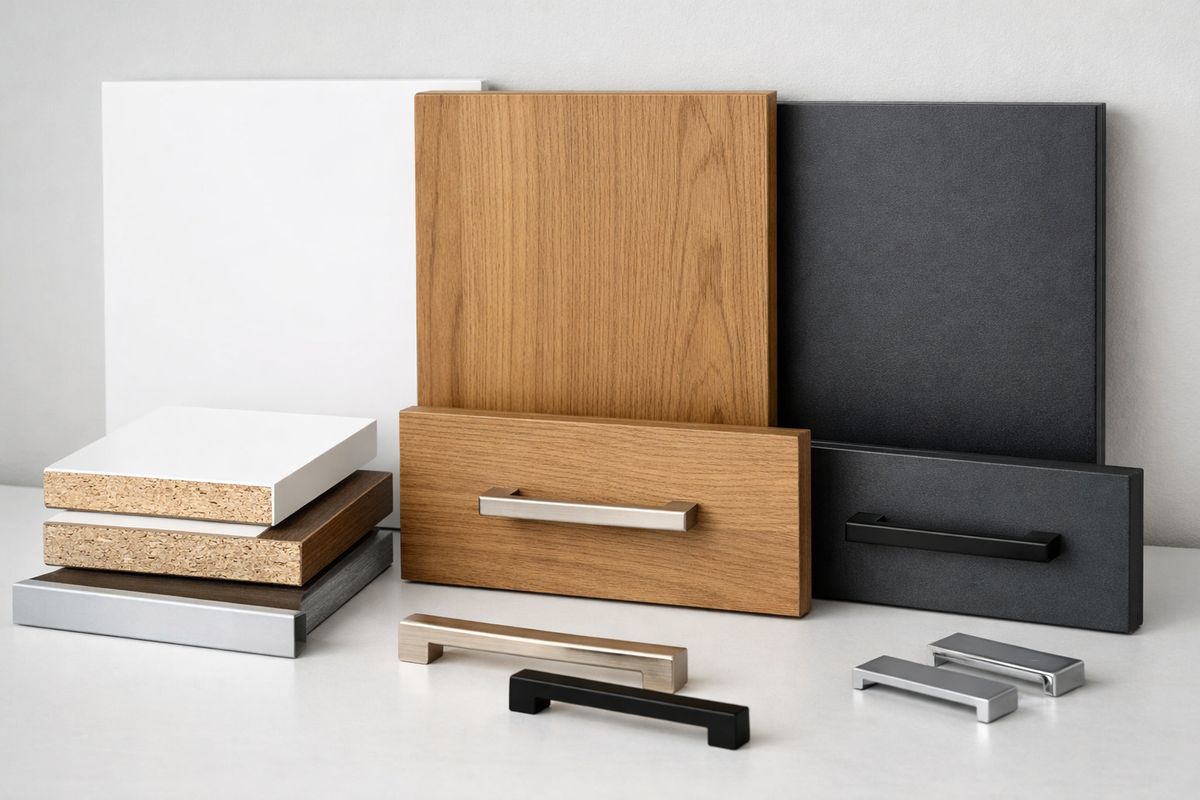
Finish choices do more than change color. Bright white tends to feel crisp and helps a small closet look cleaner and lighter. Wood grain adds warmth and can make the closet feel more like furniture. Matte finishes read softer and more current. Textured finishes hide fingerprints and minor wear better than slick glossy surfaces.
Hardware matters too. Small changes, like swapping a basic pull for a slimmer metal handle or a warmer brushed finish, can shift the whole impression from “storage unit” to “built-in furniture.” This is where a closet’s style starts to influence the bedroom itself.
Eco-friendly options
Sustainability is becoming a bigger factor, especially for homeowners thinking about air quality and long-term material choices. Low-VOC finishes can reduce off-gassing. Recycled wood content and responsibly sourced materials are showing up more often. Some manufacturers are also experimenting with bamboo, reclaimed materials, or greener manufacturing processes.
This is not just a niche concern anymore. Research shows that more than 40% of consumers prefer recycled wood or low-VOC finishes, which makes sense for a storage system installed inside the rooms you use every day.
Design Choices That Change How the Closet Feels to Use
Two closets can hold the same amount of stuff and feel completely different to live with. That difference usually comes down to design choices that shape visibility, flow, and effort.
Open vs closed storage
Open storage is easy to scan. You can see the sweater, grab the bag, and spot the pair of shoes you forgot you owned. That visibility can make daily use faster, especially if you are visually driven and like having categories in sight.
Closed storage hides clutter and creates visual calm. Drawers, doors, and covered compartments reduce the sense that your whole wardrobe is on display. Closed closets also dominate the broader market because many homeowners simply prefer a cleaner look, with closed closets accounting for 55% of demand in one market estimate.
The right balance often lands somewhere in the middle: open space for frequent-use items, closed space for the categories that get messy fast.
Lighting
Lighting changes everything, especially in deep, narrow, or naturally dark closets. Overhead lighting helps, but it often leaves shadows exactly where you need visibility most. LED strips under shelves or along hanging sections can make clothing colors easier to read and eliminate that cave-like feeling. Motion-sensor lights are especially useful in closets because your hands are usually full when you walk in.
This is one of those upgrades people underestimate until they live with it. Good lighting makes a closet easier to use, easier to maintain, and honestly more pleasant.
Mirrors, islands, seating, and dressing zones
In larger walk-ins, mirrors can make a lot of sense, especially if they’re placed where you naturally check your outfit. Islands can add valuable drawer storage and a landing surface for folding, packing, or setting things down. Seating can help with shoes or simply make the space more comfortable.
But here’s the catch: these features only work if the room is large enough to support them without creating obstruction. In a cramped walk-in, an island can become a traffic problem. A bench can become another pile magnet. A good dressing zone supports movement. A bad one steals it.
Shared closets
Shared closets fail when the design looks equal on paper but ignores how each person actually stores clothes. One side gets too many shelves, the other not enough hanging. One side needs jewelry drawers, the other needs more shoe space. One person gets clean access, the other gets overflow.
Good shared closet design starts with habits, not symmetry. Drawer counts, hanging types, and shelf depths should reflect real use. Equal square footage is not the same thing as fair function. If you’re comparing options or vendors, it helps to understand what separates a truly thoughtful closet provider from a generic one.
Where Custom Closet Systems Work Beyond the Bedroom
The logic behind a custom closet system does not stop at bedroom clothes storage. The same planning principles work anywhere your house keeps collecting friction.
Reach-in bedroom closets
Reach-ins are often the most underrated candidates for custom design. Because the footprint is fixed and usually small, layout matters a lot. Swapping a single rod and shelf for a mix of double hang, drawers, and shelves can completely change how the closet functions without changing the room at all.
That’s especially valuable when the problem is daily use, not occasional storage. A reach-in that works well can punch far above its size.
Walk-in closets
Walk-ins give you more options, but they also make it easier to waste space if the layout is not deliberate. You can create zones for dressing, shoes, folded storage, accessories, seasonal items, and shared use. Double-sided storage, center islands, and dedicated mirrors can all work well if the space supports them.
The trick is avoiding empty luxury. More square footage should create better function, not just more room to lose things.
Entryway, pantry, laundry, office, and garage storage
Custom storage companies often work beyond closets because the same pain points show up all over the house. Entryways need drop zones. Pantries need category-based shelves. Laundry rooms need sorting, supplies, and vertical use of wall space. Home offices need drawers, cabinetry, and surfaces that match real routines. Garages need durable organization for bulky gear and seasonal overflow.
That crossover is not accidental. In industry reporting, closet companies frequently branch into adjacent storage projects, with garage and laundry organization becoming notable categories alongside bedroom closets. If storage frustrations are spreading room to room, the underlying solution is often the same: planned space, not more bins.
How Custom Closet Pricing Really Works
Cost is where a lot of people either get serious or stop the search. Fair enough. Closet pricing can feel all over the place because the category includes everything from simple modular setups to high-end built-in style systems with specialty finishes and lighting.
Typical price ranges
At the lower end, DIY modular systems may cost a few hundred dollars to around $1,000 depending on size and add-ons. Semi-custom projects often land somewhere in the low thousands. Fully custom systems, especially with drawers, premium finishes, and professional installation, commonly start around a few thousand dollars and climb from there.
A broad real-world premium range is about $2,500 to $10,000 per unit, depending on size and features. Large walk-ins with islands, lighting, and lots of drawers can easily move beyond that. Small, well-planned reach-ins can come in much lower.
What increases the cost
Drawers add cost faster than open shelves. Specialty accessories add cost. Lighting adds cost. Better hardware adds cost. Larger spaces, taller systems, trickier installs, and upgraded finishes all push the number upward.
Installation complexity also matters. Uneven walls, unusual trim, sloped ceilings, electrical coordination, and detailed finishing work all take time. The more a closet starts to behave like built-in furniture, the more the price tends to reflect that.
What lowers the cost without ruining the result
The smartest savings usually come from simplifying the design, not gutting the function. Fewer drawers and more shelves can reduce cost while keeping the closet useful. Standard finishes usually cost less than upgraded textures or wood grains. Limiting specialty racks to the ones you’ll actually use helps too.
Phased installs can also work. You might start with the main hanging and folded storage, then add accessories or lighting later. Mixing custom sections with modular components can be another practical compromise. If you want a deeper breakdown of where the money goes, it helps to look at what pricing usually covers and why estimates vary.
Why pricing can vary so much between companies
Different companies sell very different things under the same general label. National brands may include polished design tools, broad finish menus, and standardized installation systems. Local closet companies may offer more personal design service or more flexible fabrication. Independent carpenters may deliver beautiful work, but with different pricing structures and fewer standard accessories. DIY-friendly brands may offer planning help while leaving some labor to you.
The market is also crowded, with more than 150 established players worldwide. That means pricing reflects more than materials. It reflects design support, installation quality, customization level, service model, warranty, and brand positioning. If you want to see one example of how a provider presents custom closet solutions, notice how much of the offer goes beyond shelves and into planning and fit.
Custom vs Closet Kits vs Built-In Cabinetry
This comparison helps clarify where a custom closet system sits in the broader storage world. A lot of confusion comes from treating these options as if they’re interchangeable. They aren’t.
Custom closet system vs wire shelving
Wire shelving is inexpensive, widely available, and easy to install. It can work fine in utility areas or for basic hanging storage. But it has limits. Small items tip over or fall through. Folded clothes slump. Shoes can wobble. The look is utilitarian, which may be perfectly acceptable in some closets and deeply unsatisfying in others.
Custom systems usually offer better category control, cleaner appearance, more enclosed storage, and more flexibility in how space is divided. They also tend to feel more integrated into the room rather than temporary.
Custom closet system vs store-bought closet kits
Store-bought kits can be a smart move when the space is fairly standard, the budget is tight, and your storage needs are simple. They’re often better than doing nothing, and some newer systems look surprisingly good. But they usually come in preset widths and heights, which means compromise starts immediately if your space is at all unusual.
A custom closet system earns its value when the problem has persisted through multiple rounds of organizers, when the space is awkward, or when daily function matters enough that fit and layout need to be right, not just okay.
Custom closet system vs true built-in millwork
This is where the line gets blurry. Many custom closet systems are designed to look built-in, with wall-to-wall installation, finished trim, and furniture-style details. But true built-in millwork usually means custom cabinetry crafted more like bespoke furniture or architectural joinery from the ground up.
The overlap is real. The difference is often in construction method, material choices, and cost. A custom closet system can deliver a polished, built-in look without requiring handcrafted millwork at every level. For most homes, that middle ground is exactly the point.
Who a Custom Closet System Is Best For
Not every closet problem needs a full custom solution. But some do. The trick is knowing when you’ve crossed that line.
Signs you’ve outgrown temporary fixes
If shelf inserts keep sagging, hanging organizers keep collapsing, bins keep turning into catch-alls, and the bedroom chair keeps doing unpaid overtime as a clothing rack, you’ve probably outgrown the temporary-fix stage. Same if you keep re-sorting the closet every few months only to end up in the same mess again.
That pattern is the giveaway. The issue is no longer effort. It’s infrastructure. If you keep trying hard and the closet still fails, the setup is wrong.
When a smaller fix may be enough
Sometimes the issue is not the closet system itself. If your main problem is laundry backup, a missing hamper, one category with no obvious home, or a closet that only needs a bit of editing and reallocation, a smaller fix can absolutely be enough.
A single drawer unit, better hooks, a shoe solution, or improved shelf spacing might solve it. The smartest move is matching the solution to the problem, not escalating automatically.
Why renovation-minded homeowners keep coming back to this project
Custom closets keep showing up in renovation plans for a reason. Unlike upgrades you notice only when guests visit, this one pays you back in ordinary moments. Every workday morning. Every late-night outfit change. Every time you don’t have to move three things to find one thing.
That daily payoff is why the category keeps growing alongside remodeling activity, with homeowner renovation spending projected to reach a record $524 billion in early 2026. The value here is not just resale polish. It’s a home that functions better now.
Current Trends in Custom Closet Systems
Closet design has changed a lot from the old picture of either basic wire shelving or luxury boutique rooms. The most interesting shift is that the middle is getting better.
Modular-but-polished designs
More systems now aim for a built-in look while using modular components behind the scenes. That means cleaner lines, better finish options, and more flexibility later without jumping all the way to top-tier custom pricing.
This is a smart evolution because many homeowners want something tailored and polished, but not frozen forever. A modular base with thoughtful design can hit that sweet spot.
Sustainable materials and low-VOC finishes
Sustainability is moving from niche request to mainstream filter. Low-VOC finishes, recycled wood content, and more responsible sourcing are showing up more often because people care what gets installed inside their living spaces. You notice that especially in bedrooms, where air quality and off-gassing feel more personal than abstract.
Smart closet features
Smart features are starting to show up, but the useful ones are pretty simple. Motion-sensor lighting, integrated LED strips, charging drawers, and lighting tied to drawer or door openings can all make sense. Full-on novelty tech usually matters less than good visibility and smooth function.
That said, smart adoption is rising, with over 20% of urban households expected to adopt smart closet systems by 2028. The best upgrades are the ones that remove friction, not the ones that ask for attention.
More function, less showroom fantasy
This may be the best trend of all. More closets are being designed around real wardrobes and real routines instead of aspirational display culture. Fewer glass-front shoe museums. More practical drawers, better hanging mixes, usable laundry storage, and layouts that reflect how people actually get dressed.
Honestly, that shift makes the whole category more helpful.
Questions to Ask Before You Buy
If you start talking with closet companies or comparing systems, a few good questions can save you from an expensive almost-right result.
Questions about layout and customization
Ask how the layout reflects your actual inventory. Ask how much hanging space is assigned to short hang versus long hang. Ask whether the shelves are adjustable and how dead space is being used. Ask what happens in awkward corners, above doors, or around vents and trim.
If the design looks nice but nobody can explain why each zone exists, that’s a red flag.
Questions about materials and construction
Ask what the panels are made from. Ask how shelves are supported and how wide they can span without sagging. Ask what hardware is used in drawers and whether the finish is durable and easy to clean. Ask how the system is anchored to the wall and what warranty covers.
Simple questions, but revealing ones.
Questions about installation and timeline
Ask how long design and ordering usually take, how long installation takes, and what kind of disruption to expect on install day. Ask whether trim work, touch-ups, and cleanup are included. Ask what happens if something arrives damaged or a measurement issue appears after delivery.
The smoother companies tend to answer these questions clearly, because the process is part of the product.
Questions about future flexibility
Ask whether shelves can be moved later. Ask whether drawers, accessories, or towers can be added down the road. Ask if matching finishes are likely to remain available. If life shifts, can the closet shift with it?
That one question can save you from buying a system that works beautifully for today and poorly for tomorrow.
Common Questions About Custom Closet Systems
Is a custom closet system worth it?
It’s worth it when the problem is persistent, daily, and clearly tied to layout rather than a one-time mess. If you’ve already tried bins, shelf add-ons, and organizers and the closet still fails, a better system can be one of the most satisfying functional upgrades in the house.
Can a custom closet work in a small or awkward space?
Yes, and small awkward spaces are often where custom design matters most. When every inch counts, fit matters more. Custom layouts can use height, corners, and wall conditions that standard kits often waste.
How long does installation take?
Design and ordering often take longer than installation itself. A straightforward install may be completed in a day, while larger or more detailed projects can take longer. The exact timeline depends on the system type, materials, and complexity of the space.
Can you add onto a custom closet later?
Sometimes, yes. Modular and semi-custom systems are often easier to expand or adjust later. Fully custom projects can be harder to match exactly if materials or finishes change, so it’s worth asking about future flexibility before you buy.
Does a custom closet add home value?
It can improve appeal and make your home feel more functional and polished, which buyers often notice. But the biggest payoff is usually not theoretical resale value. It’s how much better your home works for you every single day.
How to Figure Out If You’re Ready for One
You do not need to make a giant decision this week. But you can get clarity this week, and that’s usually the step that matters.
Do a 20-minute closet audit
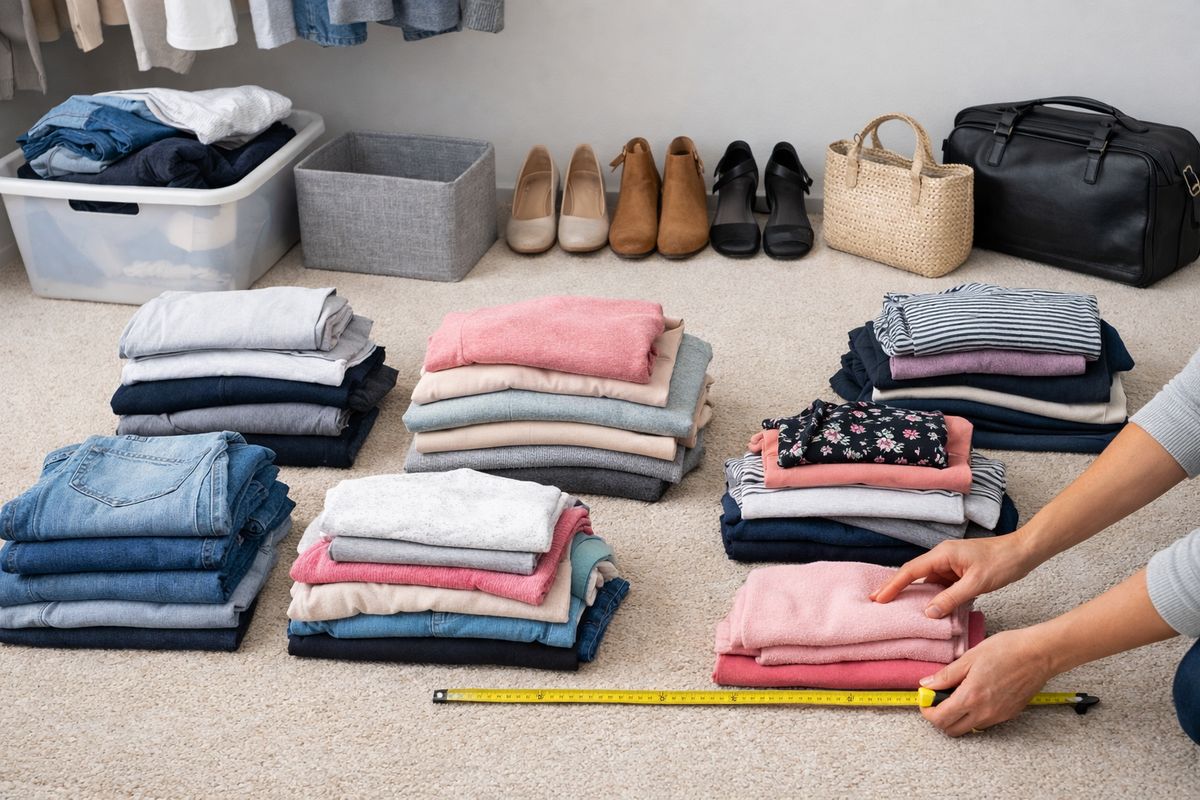
Set a timer for 20 minutes and count what’s actually in the closet. How many hanging clothes do you have, roughly? How many folded stacks? Shoes? Boots? Bags? How much overflow is living outside the closet right now? Once the problem gets measurable, it stops feeling like vague household failure and starts looking like a solvable design issue.
Write down the three things that bug you most
Keep this brutally simple. Maybe it’s slow mornings. Maybe it’s piles on the floor. Maybe it’s sharing the closet. Maybe it’s shoe storage. Maybe it’s visual chaos. Pick the three things that annoy you most often. Those are your design priorities, not whatever looks impressive in a showroom.
Save photos of closets you actually want to use
Not fantasy closets. Useful closets. Save examples that match your life, your room size, and the way you get dressed. Pay attention to what you’re really reacting to. More drawers? Better lighting? Cleaner lines? Better shoe storage? Then, this week, do one thing: take those photos and your 20-minute audit and put them in the same folder. That simple step makes every future design conversation sharper, faster, and much more likely to lead to a closet that finally works.
Frequently Asked Questions
What is the difference between a custom closet system and a closet organizer?
A closet organizer is usually a product category, like bins, hanging shelves, drawer inserts, or a kit. A custom closet system is a planned layout that may include organizers, but is designed around your space, inventory, and routine as a whole.
Are custom closet systems only for walk-in closets?
No. Reach-in closets are often some of the best candidates because standard layouts waste so much usable space. A small closet with a smart custom plan can improve daily life more than a large closet with a bad layout.
What is the most useful feature to prioritize first?
For most closets, the most useful starting point is getting the right mix of hanging, shelving, and drawers. Fancy accessories can help, but the main layout does most of the work.
Do custom closet systems require professional installation?
Not always. Some modular and semi-custom systems can be installed as DIY projects or with local handyman help. Professional installation tends to matter more when the space is awkward, the finish needs to look built-in, or the design includes drawers, lighting, or detailed trim.
How do you know if your closet problem is really a layout problem?
If you’ve cleaned, sorted, bought organizers, and still end up with the same overflow and frustration, the layout is probably the problem. Repeating the same fixes without lasting improvement usually means the storage structure itself needs to change.