


If your shoes keep ending up under hanging clothes, along the baseboard, or on that bedroom chair that disappears by Friday night, the floor is not the real problem. The real problem is the system, and a well-planned shoe storage closet fixes clutter by giving each kind of shoe the kind of space it actually needs.
1. Floor-to-ceiling shoe shelves that use the height you’ve been ignoring
The fastest way to gain control is usually to stop thinking wide and start thinking tall. Most closets waste a surprising amount of wall height, especially above the first shelf line. In a custom shoe storage closet, floor-to-ceiling shelving turns that dead space into usable storage without eating up more floor area.
The trick is shelf spacing. Flats and sandals do not need the same clearance as chunky sneakers, and low heels do not need the same height as ankle boots. Adjustable shelves matter here because fixed low shelves often leave awkward gaps that waste inches all the way up the wall. Even a few inches repeated eight or ten times adds up to a lot of lost capacity. That is why adjustable shoe shelves tend to outperform basic add-on racks.
Why this works better than one long shelf
One long shelf sounds neat until real life hits. A few pairs get pushed back, one shoe turns sideways, and suddenly the whole row becomes a traffic jam.
Stacked shelves solve that by separating pairs into smaller visual zones. You can scan quickly, pull one pair without knocking into three others, and keep categories from blending together. It feels simple because it is simple.
Best fit for everyday shoes
This feature shines for the pairs you grab half awake on a Tuesday morning. Sneakers, loafers, flats, work shoes, everyday sandals, all of those deserve easy eye-level access. If you want the closet to function better at 7:15 a.m., this is where to start.
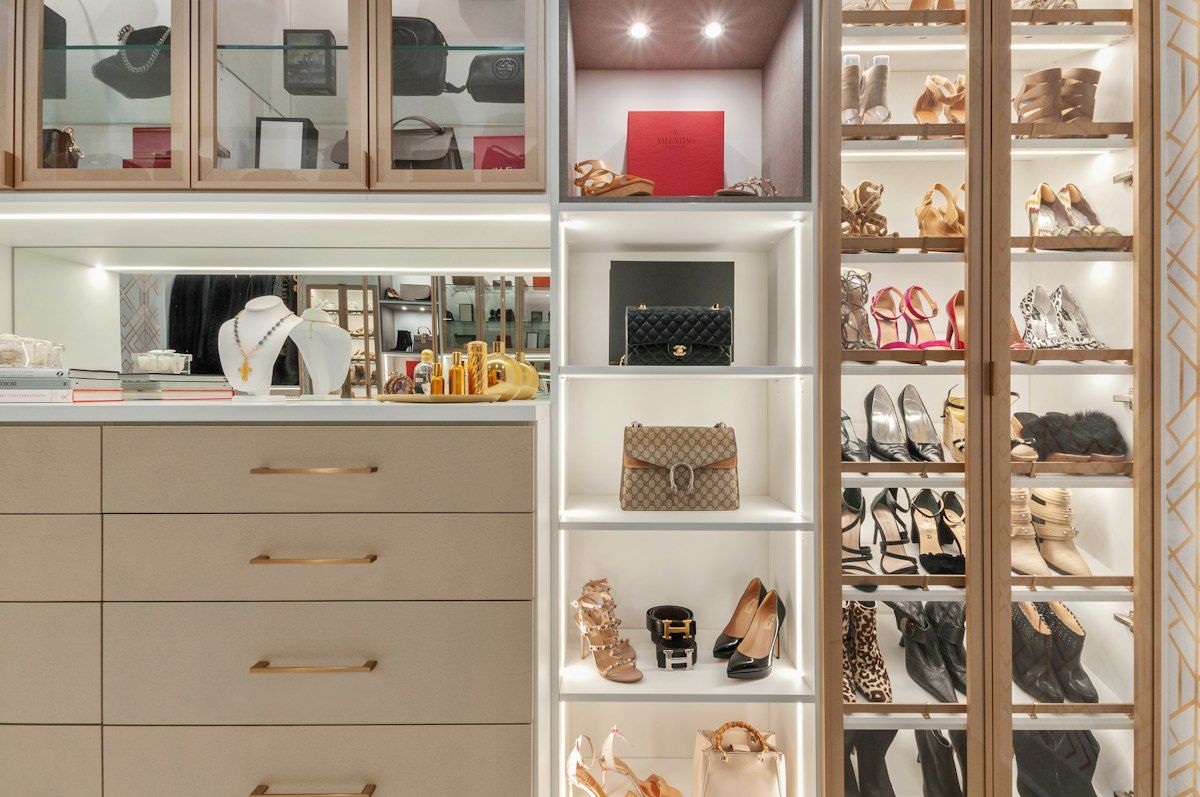
2. Angled display shelves that let you actually see what you own
Visibility is half the battle. If shoes disappear into shadow or hide behind one another, you stop using half your collection and start rebuying versions of what you already own.
Angled shelves tip shoes forward so the full pair is easier to see, especially in deeper closets where flat shelves can feel like looking into a cave. The effect is a little boutique, yes, but more importantly, it is practical. You spend less time hunting and less time shoving pairs into a pile because there is nowhere else to put them.
Ideal for dress shoes, heels, and favorite pairs
Dress shoes, pumps, nicer leather pairs, and anything you want to keep looking good benefit most here. Angled storage presents the shoe instead of burying it, which helps you spot shape, color, and heel height at a glance. If you have a few pairs you genuinely love but rarely see because they vanish on flat shelves, this is a smart upgrade.
The catch: not every shoe needs prime real estate
Not every sneaker or flip-flop needs a spotlight. Reserve angled shelves for the shoes you wear often or want to protect a little better. The rest can live on standard shelving, which gives you more capacity for less space.
If you are still sorting out the bigger picture, it helps to look at how the overall layout comes together, because shoe storage works best when it is planned with the rest of the closet instead of bolted on at the end.
3. Pull-out shoe drawers or trays that make deep closets usable
Deep closets create a familiar problem: shoes disappear into the back and become seasonal by accident. Pull-out trays fix that.
In plain English, these are shallow shelves on slides. Instead of crouching, reaching, and guessing what is in the dark corner, you pull the tray out and everything comes to you. That sounds minor until you live with it. Then it becomes one of those features you notice every single day.
Where pull-outs beat static shelving
Pull-outs are especially useful in reach-in closets, lower cabinets, and any spot where visibility is poor. Static shelves work fine when the space is shallow and well lit. In deeper sections, though, they waste the back half because you cannot comfortably see or reach it.
Some custom systems even allow double rows while keeping both rows accessible through the slide-out design, which is far more efficient than stacking shoes heel-to-toe and hoping for the best.
A smart option for mixed shoe sizes
This is also one of the better choices if your collection is mixed. Sneakers, flats, and bulkier casual pairs can sit side by side without being stacked on top of each other. That matters because stacked shoes always turn into a mess. Always.
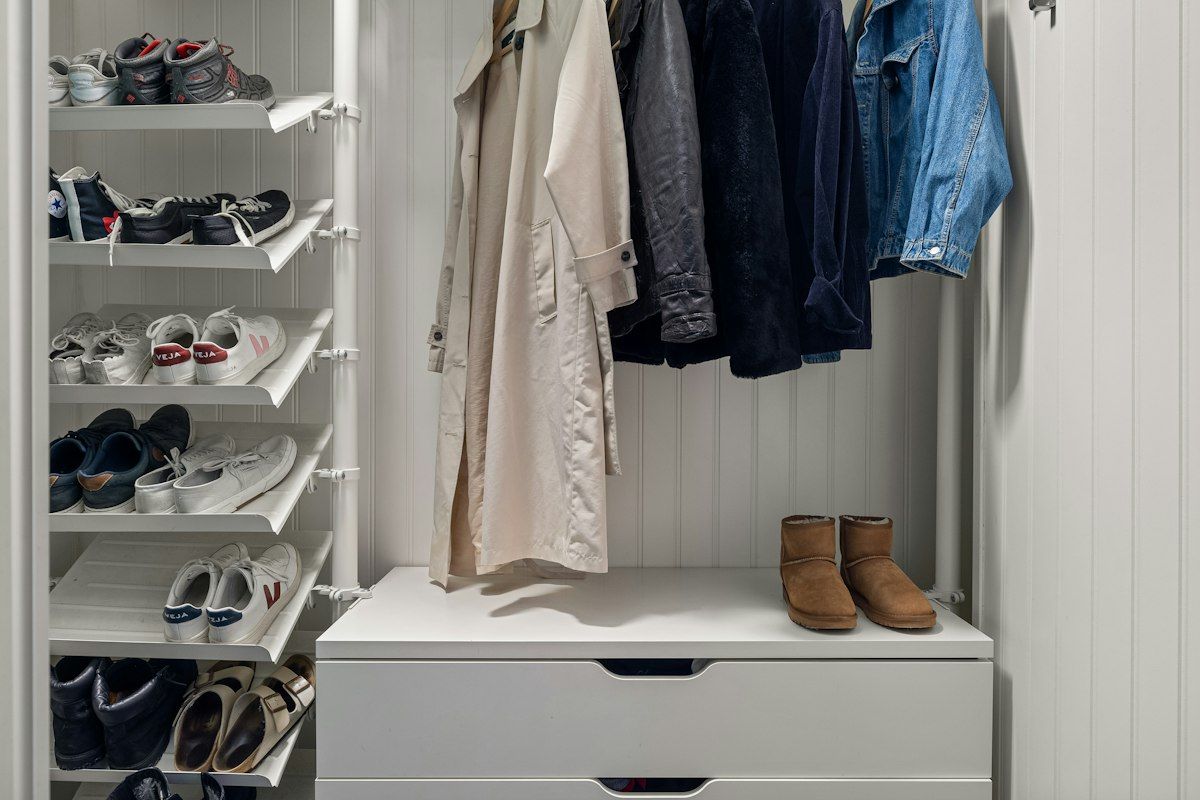
4. Boot-height compartments that stop tall pairs from slumping over
Boots cause their own kind of chaos because standard shelves are built for shorter shoes. If boots do not have a designated zone, they take over everything nearby.
A custom section with taller compartments gives ankle boots, rain boots, and taller shafts room to stand upright. Instead of folding over like a crumpled paper bag in the corner, each pair gets enough height to hold its shape and enough separation to stay easy to grab.
Separate tall boots from everyday pairs
When boots live on regular shoe shelves, you either waste a lot of vertical space or crowd out everything else. A boot section solves that immediately by removing the tallest, most awkward shoes from the everyday area. The rest of your shelves become usable again.
Add support and airflow
Open taller compartments also help with drying and airflow, which matters more than most people think. Shoes stored off the floor with better circulation can stay fresher, and slanted or open designs can improve air movement around footwear over time.
This same logic applies to the rest of the closet too. Once shoes stop taking over the bottom, you can make smarter use of the hanging area around them instead of fighting for every inch.
5. Closed cabinets or dust-protected zones for the pairs you don’t wear every week
Open storage is faster. Closed storage looks calmer. A good custom closet uses both.
For the shoes you wear every week, open shelves make sense because speed matters. For formal shoes, seasonal pairs, or delicate materials, enclosed cabinets or box-style sections offer better protection from dust and less visual noise in a bedroom-facing closet. That is often the difference between a closet that feels orderly and one that still looks busy even after you organize it.
When closed storage is worth it
Closed storage earns its keep with off-season sandals, special-occasion heels, dress shoes for rare events, and anything you do not want exposed all the time. If a pair comes out four times a year, it does not need front-row placement.
This is also where custom work starts to make more sense than another temporary organizer. A built-in system can be sized for your actual collection and finished to match the room, which is why many homeowners end up comparing racks and inserts, then realizing they really want a clearer picture of what custom features are included.
Balance hidden storage with easy access
The catch is not to hide too much. If everything goes behind doors, daily use gets annoying fast. The better move is a mix: open shelves for this week’s shoes, closed zones for the pairs you are storing, protecting, or simply trying not to look at every morning.
6. Shelf dividers and dedicated cubbies that keep pairs from collapsing into each other
Sometimes the smallest features do the heaviest lifting. Shelf dividers are simple panels that create lanes on a shelf, and dedicated cubbies give each pair its own spot. Both do the same basic job: they stop shoes from sliding into one another the second you pull one pair out.
If you have already tried basic shelves and watched them turn messy in a week, this is probably the missing piece. Even inexpensive clear dividers can change the whole shelf dynamic, and a six-pack for $22 shows how much order a small containment feature can add.
Great for shared closets or mixed categories
Dividers are especially helpful when multiple categories sit near each other. Sneakers stay with sneakers. Sandals stay with sandals. Dress shoes stop drifting into casual space.
In a shared closet, this gets even better because it reduces that constant, low-grade annoyance of wondering whose pair is whose. A little structure goes a long way.
Visibility without the mess
Here is the nice part: you still get the speed of open storage. Nothing is hidden. Nothing needs to be unboxed. But the shelf holds its shape instead of collapsing every time you touch it.
7. A split-zone layout that separates daily shoes from seasonal overflow
This is the feature that makes the whole shoe storage closet keep working six months later. Without zoning, even a beautiful install slowly turns back into a pileup.
A split-zone layout gives prime space to the shoes you wear now and secondary space to the shoes you do not need this week. Eye-level shelves, easiest-reach pull-outs, and the most visible sections should go to your regular rotation. Upper shelves, lower cabinets, or farther-back zones can hold the overflow. It is a little like setting your kitchen up so the coffee mugs live by the coffee maker. Obvious once you see it.
What belongs in the prime zone
Your work shoes, go-to sneakers, everyday sandals, and the pairs you grab without thinking belong here. If a shoe gets worn in a normal week, it has earned the best real estate. This is also a good time to be honest about what “everyday” really means.
What gets stored higher, lower, or farther back
Special-occasion heels, snow boots, vacation shoes, duplicates, and out-of-season pairs can move out of the main lane. If closet space is tight, even storage ideas beyond basic bins can help support that overflow without crowding your daily zone.
The simplest way to judge all of this is to count how many pairs you actually wear in an average week. Not own, wear. That number should drive your best shelving, best visibility, and easiest reach first.
Frequently asked questions
How many shoes should stay in a primary closet?
Keep the pairs you wear in a normal week, plus a few in-season backups. Everything else can move to higher shelves, closed cabinets, or another storage zone so your daily area stays easy to use.
Are open shelves or closed cabinets better for shoes?
Open shelves are better for speed and visibility. Closed cabinets are better for dust protection and a calmer look. Most closets work best with both.
What shelf height works best for shoe storage?
Flats and sandals need less height than sneakers or low heels. Adjustable shelves are the best option because you can tighten spacing for shorter shoes and create taller openings only where needed.
Do custom shoe shelves really hold more than store-bought racks?
Usually, yes. Custom shelves use the exact height, width, and depth of your closet, which cuts down on wasted gaps and awkward dead space.
What is the best way to store boots in a closet?
Store boots in taller open compartments so shafts can stay upright. If tall boots do not have their own section, they tend to slump over and crowd everything around them.
Can a small closet still have a good shoe storage system?
Absolutely. Small closets often improve the most because vertical shelving, pull-outs, dividers, and split zones make better use of every inch than floor piles or one-size-fits-all organizers ever will.