


Closet hanging space is the usable rod room you need for the clothes that should stay hung, not folded, crushed, or draped over a bedroom chair. If your closet turns every 7:15 a.m. into a rummaging session, the problem usually is not that your closet is too small. It is that your hanging space does not match your real wardrobe.
What closet hanging space really means
Closet hanging space sounds simple, but it gets misunderstood all the time. It is not the total size of your closet, and it is not the number of rods a system can squeeze in. It is the amount of usable hanging room for the items that actually need to hang, with enough clearance to keep them visible, reachable, and unwrinkled.
That distinction matters. A closet can be wide and still fail if long dresses are folded over a short rod, or if two stacked rods leave no room for pants to hang properly. On paper, that setup looks efficient. In real life, it feels like trying to park three cars in a two-car garage.
The goal is not the biggest closet possible. The goal is enough hanging room for your actual routine, plus shelves or drawers for everything that should not be taking up rod space in the first place.
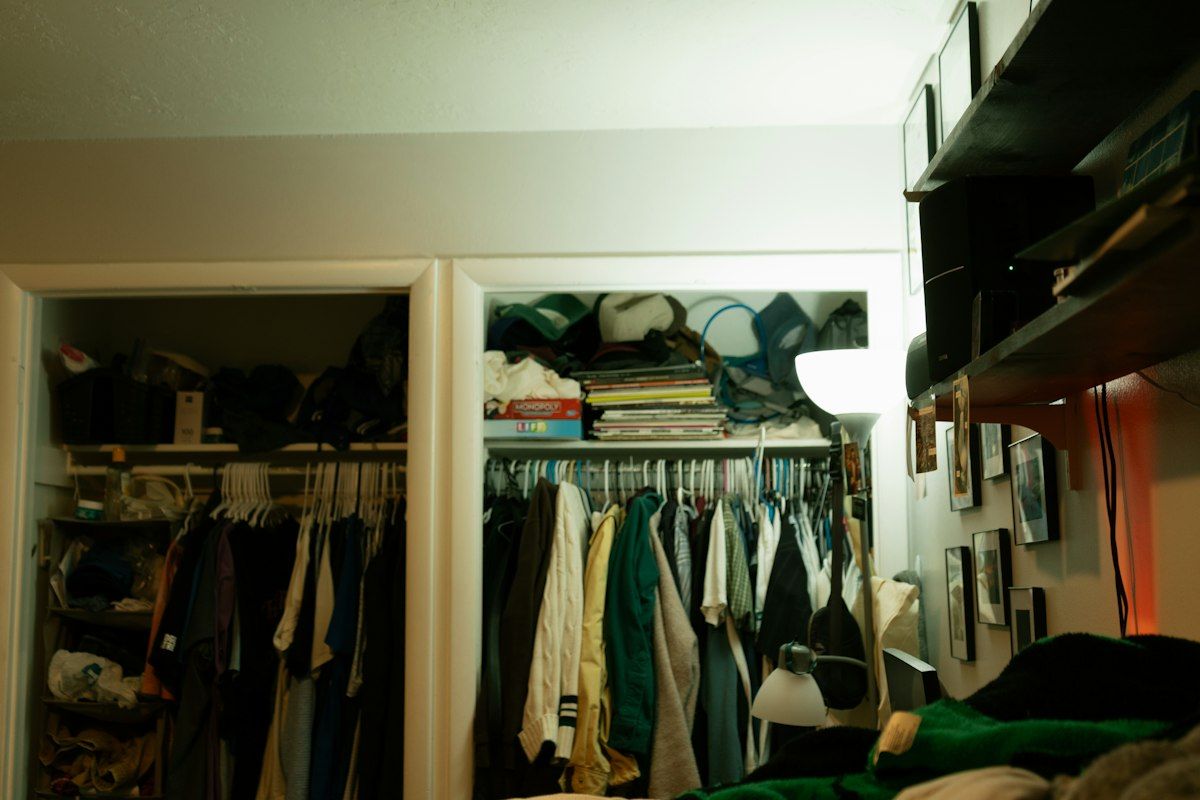
Start with the clothes that create the daily bottleneck
The morning mess tells the truth. The chair piled with “not dirty, not clean” clothes, the blazer jammed behind summer tops, the wrinkled pants you meant to wear but gave up on, all of that points to a layout problem.
Here’s the thing: most closet problems are not caused by owning too many clothes. They come from the wrong mix of hanging space, shelving, drawers, and access. If your closet gives premium rod space to things that could live folded just fine, the clothes you wear most often end up packed too tightly to function.
Hanging space is for wrinkle-prone, hard-to-fold, and often-worn items
Most closets should reserve rod space for clothes that crease easily or get worn on repeat. Think dresses, blouses, button-downs, jackets, slacks, uniforms, and anything structured enough to look messy after one bad fold.
T-shirts, jeans, leggings, sweatshirts, and many sweaters usually do better folded. The catch is that your habits matter too. If you actually wear knit tops every other day and hate digging through drawers, giving some of them hanging space can make sense. A good closet supports how you live, not how a magazine says you should sort laundry.
More rod space is not always the fix
Adding one long rod sounds like the obvious answer, but it often wastes vertical space. Shirts, jackets, and folded-over pants do not need a full drop from rod to floor. If all your shorter items hang in one tall section, you are leaving useful space empty below.
Sometimes the real problem is missing shelves, better drawer space, or a smarter layout. If shoes are eating the floor and bags are swallowing a corner, hanging space alone will not save the closet. That is where better storage beyond bins and random inserts starts to matter.
How to figure out how much hanging space you actually need
You do not need a formula with decimals. You need a simple count of what deserves rod space, how long those items are, and how cramped your current setup feels.
Start with the clothes that create friction. If getting dressed feels slow, something is overpacked, badly placed, or both. Build around the pain point first.
Step 1: pull out everything that truly needs to hang
Take every hanging item out of the closet and make an honest pass. If something has lived folded in a drawer for years without issue, it probably does not need premium rod space now. If something only hangs because there was nowhere else to put it, that is useful information too.
This step matters because closets get distorted over time. Old systems force weird habits, and before long you are hanging jeans, storing handbags on hangers, and wondering why nothing fits.
Step 2: group by length and type
Now separate clothes into short-hang and long-hang piles. Short-hang means shirts, jackets, skirts, and pants folded over hangers. Long-hang means dresses, coats, jumpsuits, robes, and anything that needs full vertical drop.
This one split changes everything. Once you see how much of your wardrobe is short versus long, the right layout gets much clearer. If 80 percent of your hanging clothes are short, one tall rod is almost certainly wasting space.
Step 3: measure rod length, vertical clearance, and reach
Before buying any organizer, measure three things: the rod length, the open height below it, and how easy the section is to reach. Those are the numbers that matter.
The catch is that a closet can look roomy on paper and still fail in daily use. Some hanging add-ons need more vertical clearance than expected, and low rods can make fabric shelves drag. One organizer review even notes that rods under 60 inches from the floor can cause lower shelves to hit the ground. Measure first, always.
Step 4: count the problem categories first
If pants are always bunched together, solve for pants first. If dresses are crushed behind blazers, protect long-hang space before anything else. Buy or build for the category creating the most friction.
That sounds obvious, but it is where most closets go sideways. Generic systems treat every wardrobe the same. Yours is not generic. If shoes or handbags are stealing room from hanging clothes, separate solutions for keeping shoes under control or storing bags elsewhere can free more rod space than another organizer ever will.
A simple rule of thumb for different closet setups
There is no single number that fits every home, but there is a simple decision rule: short clothes benefit from stacked rods, long clothes need uninterrupted height, and mixed wardrobes need zones.
That is the whole game.
If most of your closet is shirts, pants, and jackets, use double-hang
Double-hang means two rods stacked vertically, one above the other, for shorter garments. This is the fastest way to increase capacity when most of your clothes do not need full-length drop. It can nearly double usable hanging room without making the closet wider.
It works best when the upper rod is still reachable and when long garments have a different home. If your closet has decent height, this is often the smartest move you can make.
If you own lots of dresses, coats, or long pieces, protect long-hang space
Long garments need uninterrupted vertical room. If you force them into a short section, hems drag, fabric bunches, and wrinkles set in fast. It is the closet version of trying to fit an SUV into a compact parking space.
If your wardrobe leans dressy, seasonal, or coat-heavy, long-hang space is not optional. It should be protected first, then everything else can work around it.
If your wardrobe is mixed, split the closet into zones
This is the sweet spot for most homeowners. One section for double-hang, one section for long-hang, and shelves or drawers for folded items usually creates a closet that finally works like a system instead of a pile.
That is also the thinking behind a good layout plan built around your actual wardrobe. The best setups are not flashy. They are specific.
The closet layout choices that change capacity fast
Once you know how much hanging space you need, the next question is how to get more out of what you already have. A few layout changes can create noticeable breathing room fast.
Swap bulky hangers for slim ones
This is the quickest win. Replacing thick plastic or wood hangers with slim non-slip versions can free visible rod space almost immediately. Research on space-saving closet products points to slim non-slip hangers as one of the fastest ways to reclaim room without remodeling.
It is not a full fix if your layout is wrong, but it is a smart first move.
Use vertical accessories carefully
Cascading hangers, pant hangers, hanging shelves, and over-the-door storage can help, especially in tight reach-in closets. Vertical tools work because they use height instead of asking for more width, and vertical space is usually the real limit in a closet.
But here’s the trick: only use them if they improve access. If a cascading hanger turns five shirts into one hard-to-reach clump, it is not saving space in any meaningful way. If an over-the-door unit blocks the door from closing, same problem.
Check weight limits and clearance before adding organizers
This part gets skipped all the time. Rod strength matters. Clearance matters. Shelf drop matters. A hanging unit can look perfect online and fail the second it meets your actual closet.
Some hanging shelf units weigh 4.1 pounds before you even load them. Add heavy jeans or winter sweaters, and a weak rod starts to sag. If you want a better sense of what a built solution can include, this breakdown of custom closet components helps connect the parts to real function.
Signs your closet needs more than organizer add-ons
At some point, another shelf insert just makes the problem louder. There is a difference between a closet that needs tweaking and one that needs a real reset.
Your rod is packed so tightly that getting dressed feels harder
If clothes are shoulder-to-shoulder and you have to shove hangers aside just to see what is there, the closet is no longer functioning. That kind of crowding causes wrinkles, hides pieces you forgot you owned, and often leads to buying duplicates because the good shirt has been invisible for months.
Overflow has spread outside the closet
When bedroom chairs, hooks, guest-room racks, or laundry baskets become permanent overflow space, your closet is telling you something. It is not supporting daily life anymore.
A working closet keeps everyday clothing inside the closet, accessible and visible. Not in three backup locations.
You keep buying organizers, but access keeps getting worse
This is the breaking point for a lot of homeowners. You add bins, then hanging shelves, then drawer cubes, then over-the-door hooks, and somehow the closet gets harder to use.
That usually means the layout itself is wrong. Layering products into a bad structure is like stacking apps on a phone with a cracked screen. The problem is deeper than storage accessories.
When to move from DIY fixes to a custom closet plan
A custom closet does not have to mean fancy lighting, glass fronts, or a showroom look. It simply means the layout matches your wardrobe, your room, and your habits.
That is why the market keeps growing. Residential demand drives more than 70% of installations, which makes sense. Function is personal.
What a well-planned custom setup solves
A good custom or modular system balances double-hang, long-hang, shelves, drawers, and accessories around the clothes you actually own. It gives long items room to hang cleanly, keeps short items efficient, and uses upper space without making the closet annoying to reach.
More importantly, it reduces friction. You stop wrestling with hangers. You stop storing half your wardrobe outside the closet. You can actually see what you own.
Features worth caring about and features you can skip
Care about durability, adjustability, and visibility. Strong rods, shelves that do not sag, and layouts you can tweak over time matter more than decorative extras. Adjustable systems are usually a better bet than fixed ones because wardrobes change.
Lighting can be nice, especially if your closet is dim, but it is a bonus. Specialty racks can help, but only if they solve a real problem. Showroom extras are easy to get distracted by. Daily function is what pays you back.
Try this before you make the call
Measure your current rod space. Pull out everything that truly needs to hang. Sort it into short-hang and long-hang piles.
That one exercise will tell you more than another hour of scrolling organizers online.
Frequently asked questions
How much closet hanging space does one person usually need?
There is no single number that fits everyone. A wardrobe full of suits, dresses, uniforms, or jackets needs far more hanging space than one built around folded casual clothes. Count what truly needs to hang, then split it into short and long items before planning rod space.
Is double-hang better than one long rod?
If most of your hanging clothes are shirts, pants, skirts, and jackets, yes. Double-hang uses vertical space much better. But if you own lots of dresses, coats, or jumpsuits, you still need a long-hang section.
Should jeans and t-shirts be hung or folded?
Usually folded. Those items rarely need precious rod space unless your habits make hanging easier for you. If you wear something constantly and hate digging through drawers, giving it a hanging section can still make sense.
Do slim hangers really make a difference?
Yes, a noticeable one. Slim hangers free rod space, improve visibility, and create a cleaner line across the closet. They are one of the fastest small fixes for an overcrowded rod, though they will not solve a bad layout by themselves.
When is it time to stop buying organizers and rethink the whole closet?
If your closet is still jammed after multiple add-ons, if overflow has spread into the bedroom, or if getting dressed feels harder instead of easier, the layout needs attention. More accessories will not fix a structure that never matched your wardrobe in the first place.
What changes once you understand your real hanging-space needs?
You stop guessing. Instead of buying another product and hoping for the best, you can see exactly whether you need more double-hang, protected long-hang space, better shelves, or a full layout reset. That clarity is what finally turns the closet into something useful.