


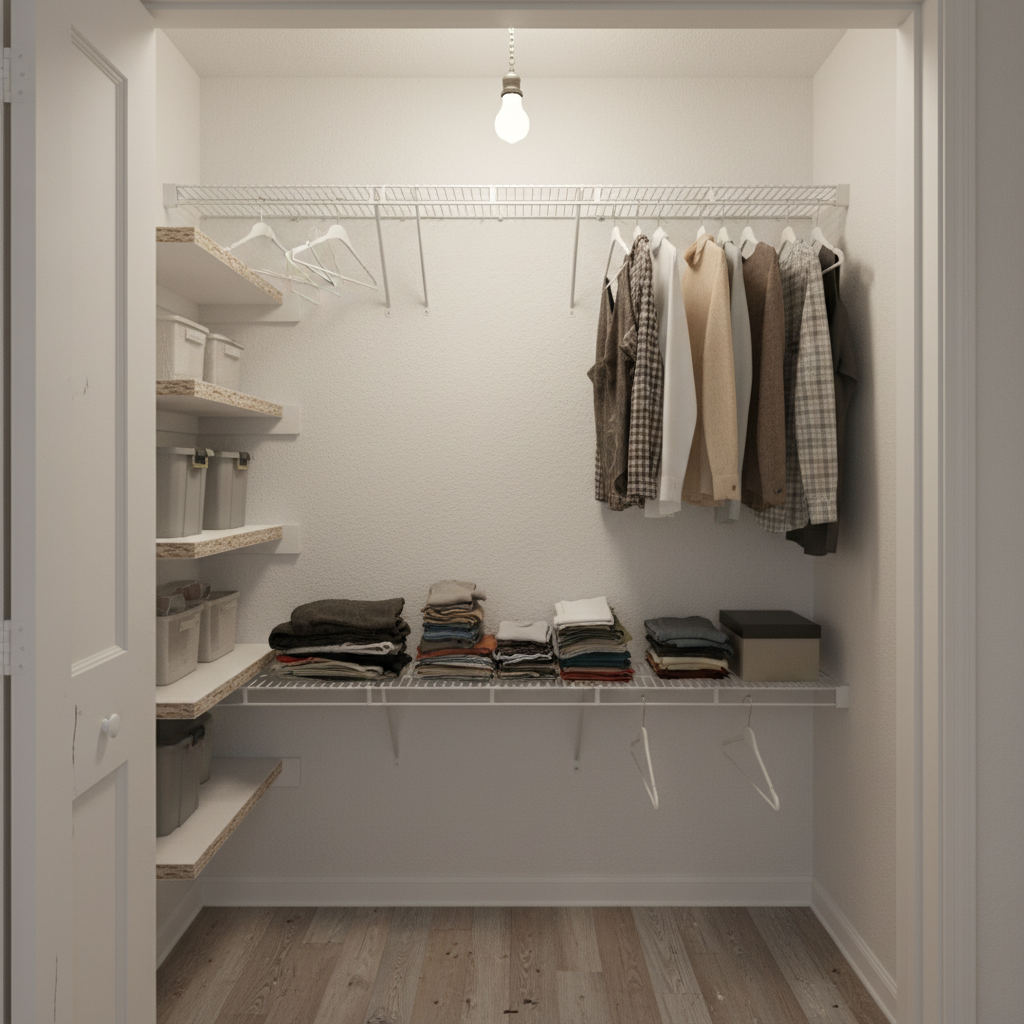
Small closet storage usually breaks down in one very specific moment: 7:18 on a weekday morning, when the chair is covered in yesterday’s rejects, one shoe has disappeared, and your closet somehow feels packed and useless at the same time. The fix is almost never “buy more bins.” A small closet works when it holds the right things, in the right season, in the right spots, and that’s exactly what this guide covers.
Here’s the plain-English version: a small closet should store the clothes and accessories you use often, can see easily, and need for your current routine. If it’s bulky, sentimental, out of season, or just living there “for now,” it’s probably stealing space from something that actually belongs.
What you’ll learn in this guide:
- Why small closets stop working
- What should stay in the closet
- What needs to move out
- How to declutter without drama
- Layout ideas that use real space better
- Which storage tools help, and which don’t
- When DIY, modular, or custom systems make sense
- A reset plan you can actually finish
Why your small closet keeps failing
Your closet probably isn’t failing because it’s tiny. It’s failing because it’s trying to do too many jobs at once.
That’s the pattern in almost every frustrating closet: daily clothes, backup clothes, old workwear, suitcases, random blankets, gift bags, maybe a keepsake box, all crammed into one narrow footprint. At that point, the closet stops being a useful part of your routine and turns into a warehouse with hangers.
Here’s the thing, disorganization causes more trouble than size alone. Research on home organization regularly points to clutter as a systems problem, not just a square-footage problem, and 80% of household clutter is tied to disorganization rather than true lack of space. That’s why shelf risers and hanging cubbies often disappoint. They add layers, but they don’t solve the real mismatch between what the closet is storing and what the closet can actually support.
A small closet needs a job description. Without one, every extra item sneaks in, and the useful stuff gets buried first.
The rule that changes everything: a small closet is for active use
The rule is simple: your small closet is for active use, not total ownership.
That means your closet should support your actual week. Not your entire wardrobe history, not your maybe-someday size range, not every coat you’ve owned since 2009. Just the things that help you get dressed now.
This one shift changes almost everything. Instead of asking, “Can this fit in here?” you start asking, “Does this deserve space in here?” That sounds small, but it’s the difference between stuffing and organizing.
What “active use” actually means
Active use means you reach for it regularly in your current life. Think this week, this season, this routine.
That usually includes the jeans you keep washing and rewearing, work basics, current weather layers, shoes you actually put on, your usual bag, maybe gym clothes if you use them three times a week. It does not include wool coats in August, bridesmaid dresses from another decade, or backup bedding “because there’s room.” There usually isn’t room, at least not where it counts.
This is also why organizing by use often works better than organizing by type. A row of “all pants” sounds neat, but it can hide what matters. A zone for office outfits, weekend basics, dog-walk layers, or school pickup clothes matches the way your mornings really happen. If you want more ideas like that, this breakdown of ways to set up zones that stay usable goes deeper.
The three questions to ask about every item
If you’re stuck on what belongs in the closet, run every item through three quick questions.
Do you use it often?
Is it in season right now?
Can you see it and grab it easily?
If the answer is no to two or three of those, it probably shouldn’t live in your main closet. That doesn’t mean you need to get rid of it. It just means it needs a different home.
This filter is fast, which matters. You don’t need a full emotional hearing for every cardigan. You need a practical way to protect prime closet space for the stuff that keeps your life moving.
What belongs in a small closet
Once you stop treating the closet like storage for everything you own, the categories that belong there get pretty clear. The winners are visibility, convenience, and repeat use.
Everyday clothes you actually wear
Your closet should carry your week.
That means the pants, tops, layers, dresses, jackets, and grab-and-go pieces that show up again and again. If you wear the same rotation of 30 to 40 current-season pieces, that’s normal. In fact, rotating a smaller seasonal wardrobe is one of the sanest ways to manage a tight space.
Research and organizing pros keep landing on the same truth: most clothes don’t get equal use. In many wardrobes, only one in five pieces gets worn frequently. So your closet should reflect that reality instead of pretending every item needs front-row treatment.
Daily clothes also deserve the easiest access. Eye level and middle reach should be reserved for these pieces, because that’s the real luxury in a small closet, not stuffing in more, but making your daily picks obvious.
Current-season shoes
The shoes you wear now belong in the closet. The rest should rotate out.
That means sandals and white sneakers in summer, boots and weather-proof pairs in winter, and a couple of crossover pairs during shoulder seasons. If every shoe you own is jammed onto the floor year-round, your closet floor turns into a parking lot, and you start forgetting what you actually have.
Visible shoe storage matters more than most people realize. One survey found women with shoe racks were 7 times more likely to be on time for work. That sounds dramatic until you’ve spent five minutes hunting for the second shoe while holding car keys in your teeth.
Keep current pairs visible and easy to pull. That’s the point.
Frequently used bags, belts, and accessories
If you use an item often, it deserves a real spot, not a hook pile or a shelf avalanche.
Belts, scarves, jewelry, sunglasses, and everyday bags can absolutely live in a small closet, but only if they have a dedicated zone. A few hooks on a side wall, a shallow top shelf with dividers, a hanging organizer with clear pockets, or a slim tray near your usual getting-dressed area can keep these categories readable.
The trick is keeping accessories visible enough to use, but contained enough not to spread. Hidden accessories turn into forgotten accessories, and forgotten accessories often turn into duplicate purchases.
A small number of special-use items you reach for regularly
Some categories aren’t everyday, but they’re still regular enough to earn closet space.
Gym clothes count if you work out several times a week. A uniform counts if you wear it on schedule. Dog-walk layers count if you grab them every morning. Formalwear might even count if your calendar really supports that.
The deciding factor is frequency, not category. A blazer isn’t automatically more deserving than a fleece. If your routine says fleece wins, give the fleece the better spot.
What does not belong in a small closet
This is where most small closets quietly lose the battle. Not because of one terrible item, but because of slow, reasonable-sounding space theft.
Off-season clothing
Heavy sweaters in July are freeloading. So are linen pants in January.
Off-season clothing takes up good space while giving you almost nothing back. A small closet cannot afford that. Seasonal rotation is not extra work, it’s maintenance for sanity. Keep the current season in the closet, then move the rest under the bed, into labeled bins, or into another storage area.
A rotating capsule is often enough. Some closet planners suggest keeping about 30 to 40 in-season pieces in the main closet, then swapping every 8 to 10 weeks as weather and routine shift. That keeps your daily choices clear instead of turning the closet into an all-year archive.
Rarely worn “just in case” pieces
The “just in case” category is sneaky because it sounds responsible.
Old interview outfits. Spare black dresses. Pants for a work life you don’t have anymore. Fancy tops waiting for the sort of dinner plans that almost never happen. These pieces eat room while solving very few real problems.
A small closet needs to support regular use, not hypothetical emergencies. Keep one or two versatile backup options if you need them, sure. But a whole section of low-probability clothing is expensive real estate.
And honestly, fantasy-life clothes are usually the first thing pushing useful clothes onto the chair.
Bulky items that waste prime space
Luggage, extra pillows, guest blankets, memory boxes, giant storage tubs, and random household overflow are terrible closet roommates.
Bulky items take up the easiest-to-reach space, block visibility, and make the closet feel cramped even before clothes go in. You get all the inconvenience and almost none of the benefit.
If bulky items must stay somewhere nearby, give them higher, harder-to-reach areas. Better yet, move them out entirely. A linen closet, under-stair storage area, attic-safe bin, or high utility shelf makes far more sense than your main clothing zone.
Duplicates and backup purchases
Five near-identical white shirts don’t save space. Neither do three black cardigans that all do the same job.
Duplicates pile up when your closet gets hard to read. In fact, cluttered closets often lead to repeat buying because you can’t tell what’s already there. One survey found 61% of women who struggled to find things in their closets ended up buying new clothes. That’s not really a shopping problem. It’s a visibility problem.
Keep your best version. Maybe keep a true backup if it solves a real need. But don’t let copies crowd out function.
Sentimental items and archived clothing
Sentimental clothes matter. Inherited coats, baby outfits, your wedding dress, old concert tees, meaningful uniforms, pieces tied to a season of life, none of that is silly.
But your small closet is not the right place to preserve those items.
Daily-use storage and memory storage are different jobs. Sentimental clothing is safer in labeled archival bins, garment bags stored elsewhere, or a dedicated keepsake area. Once you separate memory from routine, your closet gets easier to use, and your keepsakes get better protection too.
Declutter first, or nothing else works
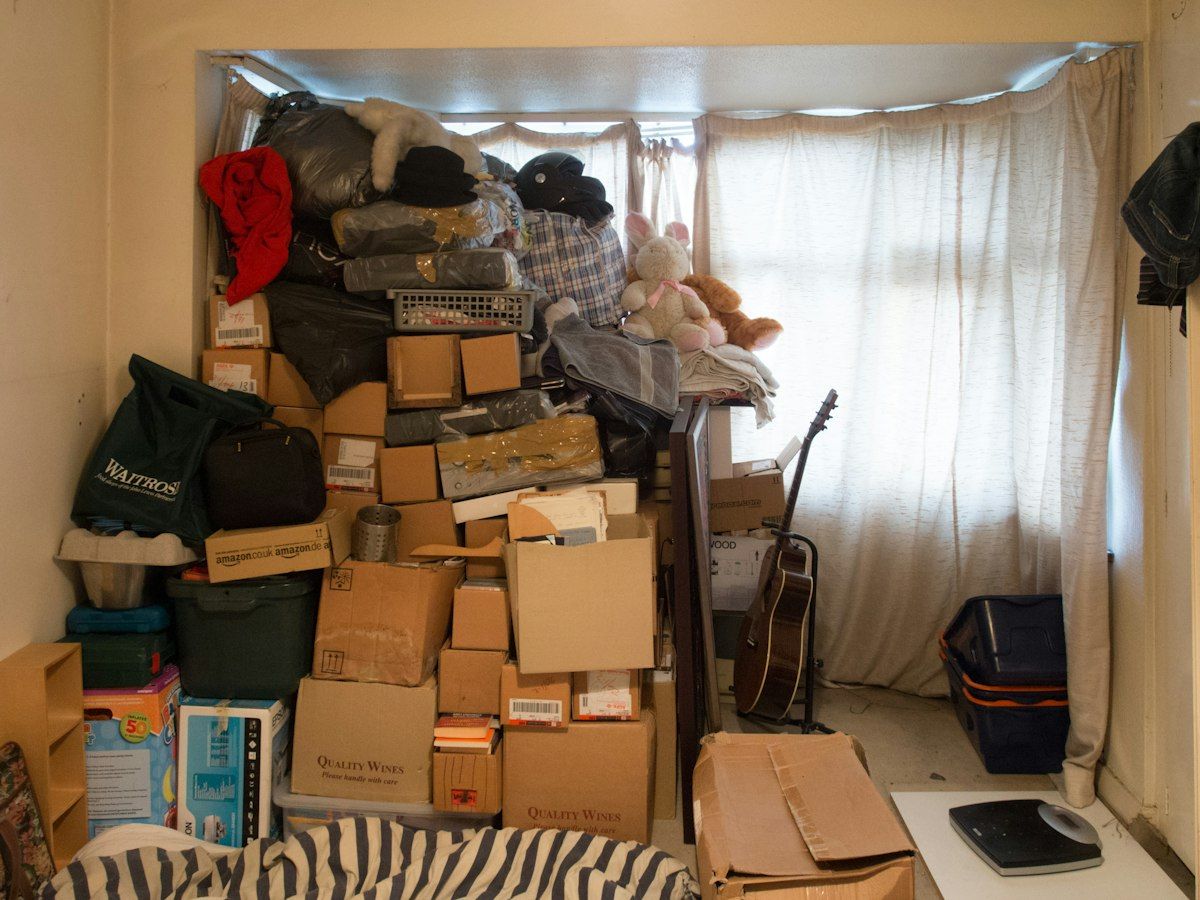
No organizer can fix overcrowding. That’s the blunt truth.
If the closet is over capacity, every product becomes a prettier form of stuffing. Shelf dividers won’t help if shelves are packed front to back. Matching baskets won’t help if each one becomes a mystery box. Hanging shelves won’t help if the rod is already overloaded.
That’s why the best closet reset starts with editing, not shopping. If you’ve already done the bins-and-inserts cycle and it never lasted, that wasn’t you failing. The system was trying to organize too much stuff.
Use a fast edit instead of a full-day purge
You do not need a dramatic all-day decluttering marathon with emotional speeches over every sweater.
A fast edit works better for most overloaded closets. Start with the obvious no’s: damaged pieces, things that don’t fit your life, duplicates, uncomfortable shoes, stained basics, broken hangers, tired handbags, and anything you haven’t willingly reached for in years. Quick wins create momentum, and momentum matters more than perfection.
If you want a more detailed version of that process, this guide to editing a closet when the usual advice hasn’t worked is a useful next layer.
Sort by real life, not aspirational life
This part is uncomfortable, but it’s usually where the real progress happens.
Your closet should support the life you live on ordinary Tuesdays, not the life you think you should be living. If your days are mostly home office, errands, casual dinners, school events, and weekend sports sidelines, your closet should reflect that. Not a fantasy lineup of cocktail looks, strict office wear, or hobby clothes for hobbies that haven’t happened in years.
Guilt keeps a lot of bad storage decisions alive. So does old identity. But a small closet has no room for guilt storage.
Create an exit path for the stuff leaving
Decisions stick better when there’s a clear next step.
As you pull things out, give every outgoing item a lane: donate, sell, repair, archive, or trash. Keep those categories physically separate. A donation bag by the bedroom door, a resale bin in the car trunk, a repair pouch with a deadline, and a temporary outbox for maybe items can keep edited pieces from creeping back in.
A visible outbox also supports the one-in, one-out habit later. That tiny cue does more than another decorative bin ever will.
How to decide what stays: build a closet around your routine
Once the closet is lighter, the question changes from “What can fit?” to “What should stay close?”
That answer lives in your routine.
Map your week before you organize
Before you start hanging things back, think through a normal week. What do you reach for on weekday mornings? What do you need for dinners out, school pickup, workouts, church, travel days, yard time, dog walks, or hybrid office days?
This matters because a closet is not just storage. It’s part of your morning workflow. If your most-used layers are buried behind dry-cleaning bags and rarely worn dresses, the closet is making your day harder before breakfast.
Even a quick mental map helps. Five workday outfits, three workout sets, two go-to weekend looks, one nice dinner option, one outerwear zone. Suddenly the closet has a job.
Group by use, not just by type
Traditional organizing says all shirts together, all pants together, all skirts together. That can work, but in a small closet it often creates neat-looking friction.
Grouping by use is usually better. Keep office outfits in one zone. Weekend basics in another. Grab-and-go outer layers together. Workout gear together. The result feels more intuitive because it matches how you get dressed.
Some closet planners now actively recommend context-based zones over strict item categories, especially in small spaces where speed and visibility matter most. It’s a smarter layout because it cuts decision time.
Give your most-used items the best real estate
The best closet real estate is simple: eye level, easy reach, and no obstacles.
That’s where your highest-turnover items should go. Favorite jeans, go-to tops, daily shoes, current jackets, everyday bag. Less-used categories can live higher up, lower down, or outside the closet entirely.
Also, leave some breathing room. A closet packed to 100% looks productive and functions terribly. Leaving a little open space is not waste. It’s what makes the system usable. Organizing pros often recommend keeping some capacity open so things stay visible and easy to return.
Smart small closet layouts that actually use the space
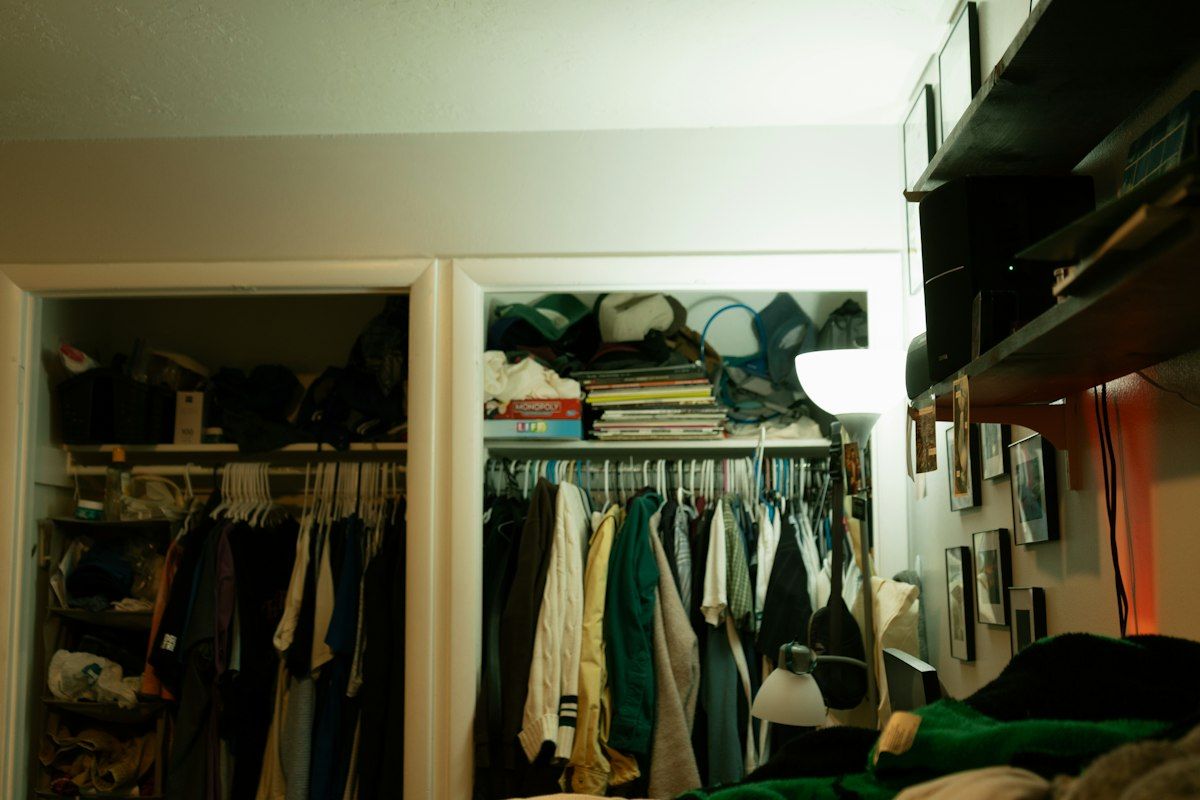
Once you know what belongs in the closet, layout decisions get a lot easier. You’re not trying to cram in your whole life anymore. You’re building structure around a smaller, more useful set of things.
If you want a visual companion to these principles, this guide on using a small closet more efficiently pairs well with the planning stage.
Use the full height of the closet
Most small closets waste vertical space. There’s one rod, one shelf, and a bunch of dead air above it.
That empty height matters. An upper shelf can hold labeled bins for low-use accessories or seasonal overflow. A second hanging rod can double short-hang storage for shirts, folded pants, and shorter jackets. Hooks on side walls can catch robes, tomorrow’s outfit, or daily bags. And the space above the top shelf can handle luggage or infrequent-use storage if it’s truly out of your daily zone.
Vertical storage is not optional in a small closet. It’s the difference between one working layer and three.
Don’t Waste the floor
The floor can help, but it can also wreck the closet fast.
Use it for current-season shoes, a narrow drawer tower, or a slim shelf unit if those pieces fit cleanly and don’t block access. But don’t stack random bins on the floor just because the floor exists. That turns the bottom of the closet into a dead zone where things are hard to see and even harder to reach.
A partly clear floor often makes a small closet feel bigger and work better. If you have to step around stuff to get dressed, the floor is doing too much.
Why shelf depth and reach matter
Deep shelves sound useful until they become black holes.
For many reach-in closets, about 12-inch depth hits the sweet spot. That’s often enough for folded sweaters or shoes, but shallow enough that items don’t disappear into the back. This matters even more in narrower closets, especially anything under five feet wide.
A reach-in closet is just the standard kind you stand outside of and reach into, unlike a walk-in. In that setup, every inch of depth needs to stay accessible. Otherwise the back half becomes storage limbo.
Add zones instead of random organizers
A good closet has zones. A frustrating closet has products.
That’s the difference. Instead of asking what organizer to buy, decide where your hanging clothes go, where folded items go, where shoes go, where accessories go, and where low-use overflow goes. Once those zones are clear, tools become obvious.
Structure beats containers every time. Containers without structure just hide confusion in matching pieces.
The best storage tools for a small closet
The right tools help. The wrong ones just create more edges, lids, and categories to manage.
Uniform hangers
Matching slim hangers are one of the fastest, cheapest upgrades you can make.
They save space, keep clothing at one visual level, and stop that annoying mix of bulky plastic, bent wire, and dry-cleaner hangers from eating precious rod room. They also make the closet easier to scan. That visual calm is not just aesthetic, it helps you see what you have.
If your clothes slip, choose slim flocked hangers. If you store heavier pieces, use sturdier slim-profile versions. The main point is consistency.
Shelf dividers, drawer inserts, and vertical folding
Folded stacks fall apart because most shelves turn into horizontal piles. You pull one item, three slump sideways, and suddenly the shelf looks like a clearance table.
Shelf dividers help hold stacks upright. Drawer inserts keep smaller categories from drifting. Vertical folding, meaning items are stored upright so you can see the edge of each one, works especially well for tees, leggings, sleepwear, and workout clothes.
This setup is especially useful if folded clothes always collapse in your closet. It replaces hidden stacks with visible rows, which is easier to maintain and much easier to use.
Hanging organizers, hooks, and door storage
Soft hanging shelves can work, but only for the right categories. Sweaters, bags, or a few folded pieces, yes. Heavy jeans and overloaded stacks, not so much.
Hooks are often more useful than people expect. A couple of side-wall hooks can handle tomorrow’s outfit, bathrobe, handbag, or current jacket without taking over the whole closet. Over-the-door storage can also help for shoes, scarves, or small accessories, but only if it doesn’t make the closet feel crowded or interfere with the door swing.
The catch is restraint. These tools are good sidekicks, not main systems.
Bins and baskets: helpful, but only in the right spots
Bins are not bad. They’re just wildly overused.
A bin works well for a contained category: scarves, workout gear, socks waiting to be paired, swimwear, small clutches, maybe seasonal accessories. A bin works badly when it becomes a place to toss unresolved stuff.
That’s why storage bins dominate so much of the market and still disappoint so many closets. They hold items, but they don’t make decisions for you. Use them after categories are clear, not before.
Lighting that makes the closet easier to use
A dark closet hides items, and hidden items become clutter.
Simple motion-sensing LED strips or rechargeable puck lights can make a huge difference, especially in deep corners, top shelves, and closets with poor overhead light. Newer adhesive LED strips are easy to install and usually cost less than a single failed organizer experiment.
Good lighting improves speed, visibility, and even honesty. You’re less likely to keep mystery piles when you can actually see them.
Storage solutions outside the closet that take pressure off
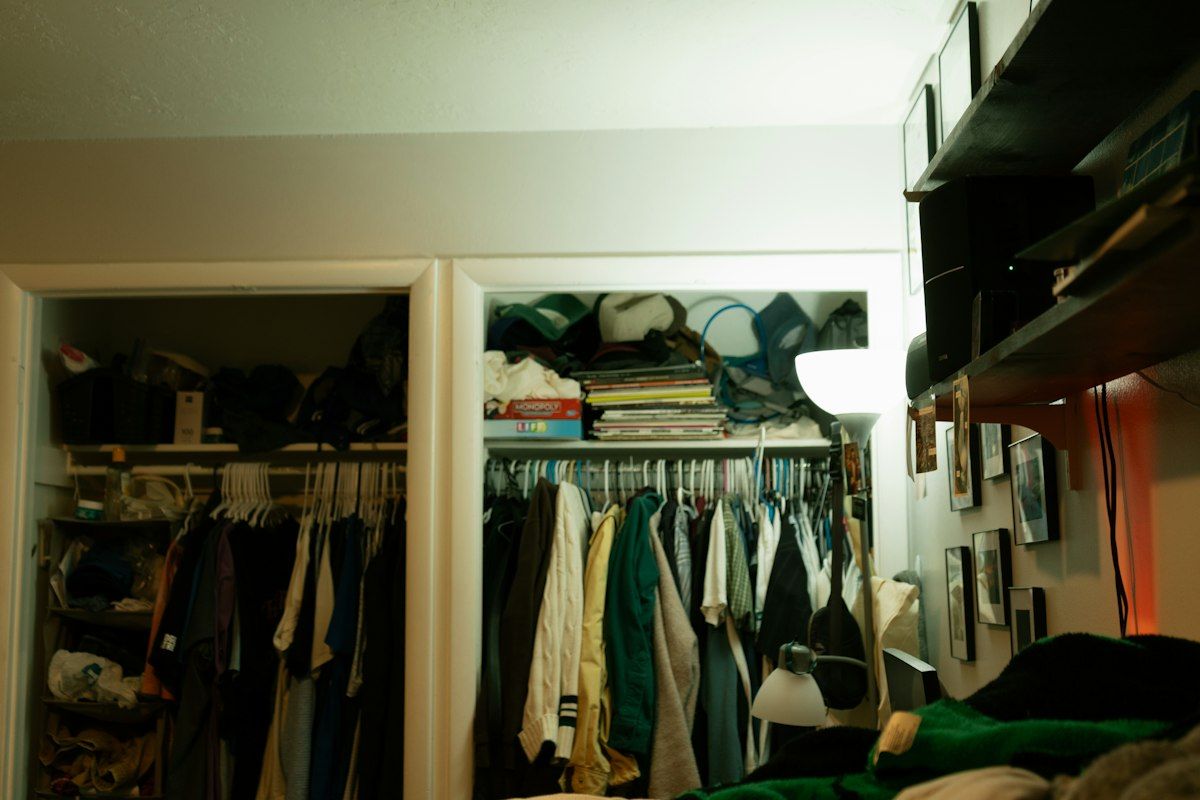
Not all clothing belongs in a closet, and not all storage needs to happen behind the same door.
Sometimes the smartest small closet solution is moving the right categories elsewhere on purpose.
Under-bed storage for off-season and backup items
Under-bed storage is perfect for low-turnover clothing.
Use flat bins, zippered fabric cases, or labeled low-profile boxes for off-season sweaters, extra denim, backup basics, and occasional-use layers. Soft-sided options are especially handy if your bed clearance is tight.
This is a much better use of space than keeping January coats in your main closet through July. The closet should hold what’s active now. Under-bed space can hold what’s waiting its turn.
Dressers, credenzas, and bedroom storage
A lot of clothing functions better in drawers than on shelves.
Undergarments, pajamas, lounge clothes, workout wear, socks, tees, and even folded denim often stay tidier in a dresser or bedroom credenza than in a packed closet. That’s not a compromise. It’s better category matching.
Closets are best for hanging clothes, current shoes, and quick-grab pieces. Drawers are better for soft folded basics that tend to avalanche on shelves.
A secondary hanging zone for overflow
Sometimes your main closet simply can’t handle every hanging item, even after a good edit. That doesn’t mean the system failed.
A secondary hanging zone can be a simple garment rack, a hallway wardrobe, a guest room rail, or another bedroom closet used intentionally. This works especially well for long dresses, coats, special-event pieces, or a narrow category that doesn’t need prime daily access.
Done on purpose, this is strategy, not overflow shame.
Better spots for sentimental and bulky items
Sentimental clothing, spare pillows, guest blankets, suitcases, and keepsake bins need a different home.
A linen closet, attic-safe storage bin, under-stair cabinet, high garage shelf, or labeled guest-room container will protect those categories far better than your daily closet. The best storage spot is not the nearest one. It’s the one that fits the item’s actual use level.
Closet mistakes that make a small space feel even smaller
Most bad closets aren’t ruined by one giant mistake. It’s usually a handful of normal habits that pile up until the space stops working.
Treating the closet like a warehouse
Keeping everything in one place sounds tidy. In a small closet, it usually kills function.
A warehouse closet holds all categories equally, whether you touch them every day or twice a year. That flattens priorities, and your best space gets wasted on low-value storage.
Buying organizers before editing the stuff
This is the classic trap.
You get frustrated, buy bins, shelf inserts, shoe racks, and hanging pockets, install all of it, then realize the closet is still hard to use. Of course it is. The volume never changed.
Always edit first. Then measure. Then buy tools for the categories that remain. If you’re weighing product kits against longer-term upgrades, this comparison of store-bought fixes versus built-in solutions can help you think more clearly about the tradeoffs.
Storing too many categories in one tiny footprint
If your closet is holding daily wear, memorabilia, luggage, paper goods, guest linens, old files, and holiday leftovers, no layout tweak is going to save it.
Small closets need focus. Mixed storage is fine in bigger utility spaces. In a tiny bedroom closet, mixed storage creates chaos fast.
Ignoring maintenance until it explodes again
Even a good closet needs small resets.
That doesn’t mean a Sunday overhaul every week. It means putting things back in the same zones, keeping an outgoing bag visible, rotating seasons on time, and taking five minutes now and then to clear shelf creep. Maintenance is boring, but honestly, it’s what keeps you from starting over every six months.
Should you use a DIY system, modular kit, or custom closet?
At some point, editing and rearranging raises the next question: do you need a better system, or a whole different closet setup?
The answer depends on how bad the mismatch is between your space and your routine.
When simple DIY upgrades are enough
DIY upgrades are enough when the closet is basically functional but underused.
That usually means the rod is at the wrong height, the top shelf is wasted, hangers are bulky, folded items collapse, and accessories have no home. In that case, a second rod, better lighting, shelf dividers, hooks, and slim hangers can improve the closet dramatically without a major investment.
That approach fits a lot of homes. In fact, DIY solutions make up a large part of the storage market because easy improvements often solve the most annoying problems without professional installation.
When a modular system makes sense
A modular kit makes sense when your closet needs more structure than add-ons can provide, but you still want flexibility.
Adjustable towers, shelves, rods, and drawers can help if you need a mix of hanging lengths, visible shoes, folded storage, and accessory organization. Modular systems are especially useful when your needs may shift later, like changing work routines or sharing closet space differently.
The downside is that fixed-width retail pieces often leave awkward gaps. In a small closet, wasted inches matter more than you think.
When custom is worth it
Custom becomes worth it when your closet has odd dimensions, severe dead space, shared use, or years of frustration that no simple fix has solved.
A cut-to-fit or custom system can use awkward width and height more efficiently than off-the-shelf pieces. Some small-closet systems recover several inches of usable space simply by trimming shelves and rods to exact dimensions instead of forcing standard sizes into a non-standard opening.
If you’re staying in your home long term, custom also tends to hold up better. That matters in a hard-working closet that gets used twice a day, every day.
What budget ranges usually look like
Budget matters, and closet pricing has a wide spread.
Wire systems are usually the cheapest, often around $75 to $200, and can work well for temporary or low-commitment fixes. Laminate modular systems often land around $150 to $500 and offer more built-in structure, though some lower-cost versions can chip, sag, or waste space with fixed dimensions. Premium custom wood systems often start around $600 and can climb to $1,400 or more depending on size, finish, and features.
You do not need the most expensive option. But if cheap systems keep failing, it’s worth noticing that repeated temporary fixes add up too.
Small closet setups for common real-life problems
Most closet advice sounds good until it meets actual daily friction. These setups are built around the problems that keep showing up in real bedrooms.
If you share one small closet
Shared closets need boundaries, not good intentions.
Split the space clearly. Separate rods if possible. Separate shelves if not. Give each person a defined accessory zone and a daily-drop basket for wallets, watches, or pocket clutter. If one side needs more hanging and the other needs more shelves, don’t force fake symmetry. Function matters more.
The real goal is reducing collisions at busy times. If both routines hit the closet at 7 a.m., easy access matters more than visual perfection.
If your shoes keep taking over
Set a visible limit for current shoes.
Keep only the pairs you’re actively wearing this season in the closet, and store the rest elsewhere. Use a low rack, shallow shelf, or clear open bins where each pair stays visible. If pairs stack into a heap, your system is already too crowded.
Shoe takeovers are usually a rotation problem, not just a quantity problem.
If folded clothes keep turning into piles
Stop making tall stacks on open shelves.
Switch some categories to drawers if possible. Add shelf dividers if not. Use bins for soft categories that collapse easily, and vertical folds for tees, leggings, pajamas, and lounge clothes. Once each category has a boundary, the pile problem usually shrinks fast.
If your closet is dark and awkward
Start with lighting, then simplify the layout.
A dark awkward closet gets worse when it has deep shelves, overstuffed corners, and too many categories. Add LED lighting, reduce shelf depth if possible, keep categories broad and visible, and put low-use items up high. Awkward spaces improve when you ask less of them.
A step-by-step reset plan you can actually finish
You do not need a perfect Pinterest closet by Sunday night. You need a closet that stops fighting your life.
Step 1: empty and sort fast
Pull everything out. Yes, everything.
Group like with like just long enough to see the volume: everyday tops, jeans, shoes, workout gear, dresses, bags, outerwear, sentimental pieces, off-season clothes. Then make quick decisions on the obvious stuff first. Trash damaged items. Pull duplicates. Move out anything that clearly doesn’t belong.
Speed matters here. Overthinking is how the mess wins.
Step 2: choose what belongs in the closet
Now choose only the items that earn main-closet space.
That means current-season, frequently used, easy-to-grab clothing and accessories that support your regular week. If it helps, imagine the next seven to ten days. What would you realistically wear? Start there.
Everything else is secondary by definition, not because it’s bad, but because the closet has a specific job.
Step 3: assign new homes to everything else
Give off-season clothes, sentimental pieces, bulky items, backup purchases, and low-use categories a real alternative home.
Use under-bed bins, dresser drawers, guest-room storage, hallway wardrobes, linen closets, or high shelves elsewhere in the house. Label what needs labeling. Protect delicate pieces properly. The goal is not exile. It’s sorting by use level.
Step 4: install structure before you put things back
Do not reload the closet into the same broken setup.
Add the second rod, hooks, shelf dividers, narrow shoe rack, drawer unit, or lighting first. Then place items by zone: daily hanging, folded basics, accessories, shoes, overflow. Structure should support your decisions, not come after them.
Step 5: reset once a season
Once the closet is working, keep it working with a seasonal reset.
Swap out weather-specific pieces, clear out stray items, edit anything you stopped wearing, and keep your outgoing bag or bin visible. A short reset every season is easier than another all-at-once meltdown later.
Frequently asked questions about small closet storage
How full should a small closet be?
Not packed. A small closet should have enough open space that you can see what you own and pull things out without causing an avalanche. A little empty room is useful, not wasteful.
What’s The best way to store off-season clothes?
Use breathable bins, under-bed containers, garment bags for delicate pieces, and clearly labeled storage in another area of your home. Keep off-season clothing out of prime closet space unless you truly have no other option.
Are bins good for small closets?
Yes, but only for contained categories. Bins are great for scarves, workout gear, or small accessories. They’re bad as a catch-all for undecided clutter.
How do you organize a small closet without spending a lot?
Start by removing what doesn’t belong. Then use low-cost fixes that actually change function: slim matching hangers, hooks, better lighting, shelf dividers, and moving some categories to a dresser or under-bed storage.
How do you keep a small closet organized long term?
Keep daily-use items in the same zones, rotate by season, use a visible outbox for outgoing pieces, and avoid stuffing new items in without making room. Small maintenance beats big overhauls.
The one change to try first
If you do one thing, pull every off-season, rarely worn, and bulky item out of the closet first.
That single move usually changes the whole space fast. Your small closet does not need to hold everything you own. It needs to serve your real life, on regular mornings, without turning getting dressed into a scavenger hunt. Try that one edit, and the next decision gets a lot easier.