


If your bedroom chair has turned into a backup closet, a DIY closet organizer probably sounds like the obvious fix. But once you start comparing it to a custom built-in, the real question isn’t just what costs less, it’s what actually ends the daily mess and keeps your closet working a year from now.
For most homeowners, a custom built-in wins if your closet has awkward dimensions, chronic overflow, or years of failed stopgap fixes behind it. A DIY system wins when your closet is fairly standard, your budget matters more than polish, and you’re willing to trade perfect fit for faster results.
Quick overview of DIY closet organizer vs custom built-in
A DIY closet organizer usually means an off-the-shelf or semi-modular system you buy in boxes, bring home, assemble, and install yourself. Think wire shelving kits, laminate towers, adjustable rods, shelf-track systems, or upgrade kits from stores like IKEA, ClosetMaid, or Easy Track. Some look simple and functional. Some aim for a built-in look. But they all start from standard parts.
A custom built-in is designed around your exact closet. That can mean a closet company, a finish carpenter, or a cabinet shop measuring the space, creating a layout, building or ordering components, and installing them so the whole thing looks integrated with the room. Instead of fitting your closet into a product lineup, the system is made to fit your closet.
That’s the whole tradeoff in one line: DIY gives you lower upfront cost and more flexibility to change things later, while custom gives you a cleaner fit, better use of space, and a more finished result.
If your closet is a pretty normal rectangle, DIY can work surprisingly well. If your closet is the kind of space that makes you mutter every morning because one side is deeper, the door hits a shelf, and half the upper wall goes unused, custom starts pulling ahead fast.
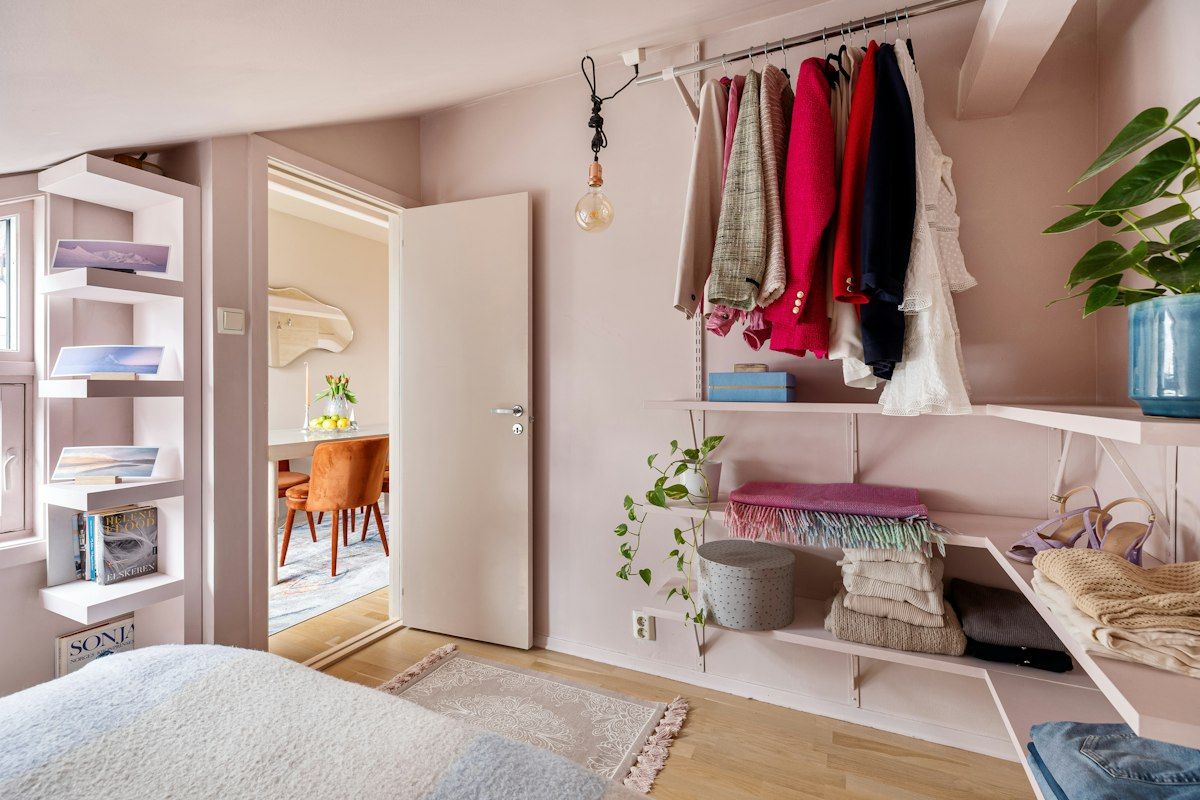
What each option actually looks like in real life
In real bedrooms, DIY closet systems usually look like one of three things. The first is basic wire shelving with hanging rods underneath. It’s affordable, breathable, and easy to install, but it rarely feels special. The second is a modular tower-and-rod setup in white or wood-look laminate. That gives you vertical sections, shelves, drawers, and rods in a more polished package. The third is a hybrid, maybe a stock tower in the middle with added rods and shelves around it. That kind of setup often starts as a weekend project and slowly grows over a few trips to the hardware store.
Custom built-ins tend to look more cohesive because every panel, shelf, and drawer is part of the same plan. Gaps get minimized. Filler strips cover odd spaces. Trim and finished edges make the closet feel more like cabinetry than storage gear. In a standard reach-in, that can mean double hanging on one side, long hanging on the other, drawers below, and upper shelves that go wall to wall. In a walk-in, it can feel like a mini dressing room instead of a utility zone.
The difference is kind of like comparing a freestanding bookshelf to wall-to-wall cabinetry in a living room. Both hold stuff. Only one looks like it belongs there.
That visual difference matters more than people expect, especially in a primary bedroom where the closet is part of your daily routine. If you want inspiration for layouts before choosing a system, it helps to browse storage setups that stay useful in real life, not just pretty before-and-after photos.
Installation and project effort
This is where a lot of closet decisions get real. On paper, DIY sounds simple. In practice, it’s simple only if your walls are straight, your measurements are accurate, your tools are ready, and your patience doesn’t run out halfway through.
Custom installation asks less of your time and more of your budget. You still have to make decisions up front, but the heavy lifting shifts to someone else. That matters when your clothes are stacked on the bed, shoes are in the hallway, and the project has already taken over the room.
DIY closet organizer installation experience
A typical DIY install starts with measuring, then measuring again because closet walls are rarely as square as you think. After that comes planning around studs, baseboards, door swing, outlet locations, and the actual dimensions of the organizer pieces. Then you buy materials, haul boxes home, clear the closet, patch old holes if needed, paint if you’re feeling ambitious, and start assembling.
Most systems require at least a drill, level, stud finder, tape measure, and some tolerance for frustration. Cut-to-fit shelves or rods add another layer. If the instructions are good, the project can feel manageable. If the instructions are one page of tiny diagrams, the mood changes fast.
The annoying part usually isn’t assembly. It’s the domino effect. A shelf lands where a rod needs to go. A wall anchor feels loose. A tower blocks access to an outlet. Your floor isn’t level, so a drawer doesn’t glide right. None of these problems are dramatic, but together they turn a one-day project into a multi-week annoyance.
That said, a straightforward reach-in closet with stock dimensions can absolutely be a good DIY candidate. If your closet is small and you’re mostly trying to get more function from limited square footage, this guide to making a tight closet work harder can help you think through what should actually go in there before you buy anything.
Custom built-in installation experience
Custom built-ins usually begin with an in-home measure or a design consultation. Your closet gets mapped, your storage habits get translated into sections, and the layout gets finalized before anything arrives. After that, there’s a wait while materials are ordered or fabricated.
The install itself is often faster than people expect. Once the components are ready, a standard bedroom closet may be installed in a day or two. A larger walk-in might take longer, especially if there’s trim work, lighting, or extra drawers involved. The room still gets disrupted, but not in the same slow, dragging way as a stalled DIY project.
The catch is scheduling. You’re working around design time, production lead times, and installer availability. So custom is rarely the quickest path from clutter to done. But during installation, the burden on you is much lower. Your job is mostly to empty the closet and stay out of the way.
Fit and use of space
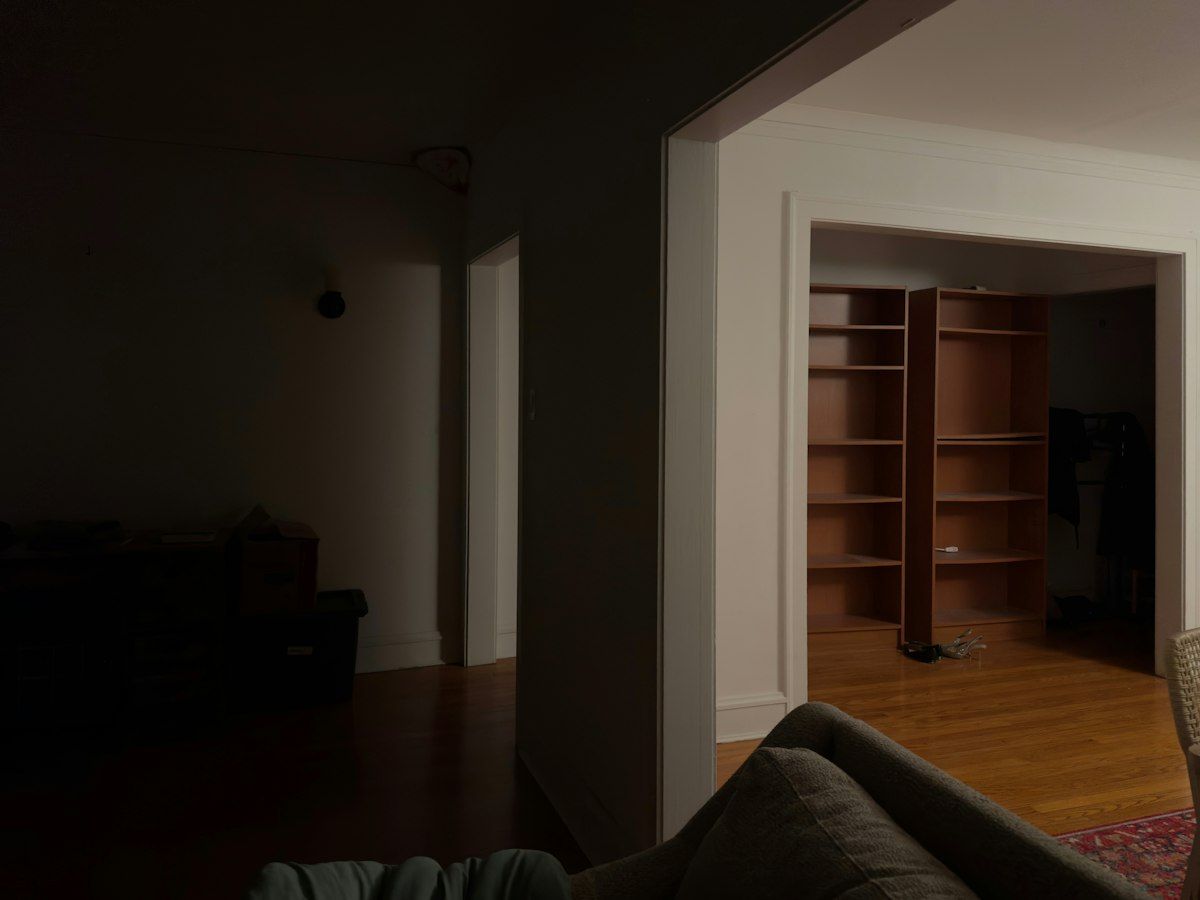
This is where custom built-ins usually justify the higher price. Closets almost never waste space because they’re too small. They waste space because the shape is awkward and the storage doesn’t match it.
A DIY system can improve a closet a lot, especially if the existing setup is just one rod and one shelf. But even a decent modular system has to work within preset widths, depths, and configurations. That means small gaps, dead corners, unused height, or compromises around doors and trim.
Custom built-ins are built around exact dimensions, so more of the closet gets used. Not just technically used, but used in ways that are actually convenient.
Standard sizes vs made-to-measure design
DIY systems usually come in fixed increments. Towers might be 16, 24, or 30 inches wide. Drawers come in standard widths. Rods extend only so far. Shelves are made for a certain depth. That structure is what keeps prices down, but it also means your closet has to cooperate.
If your closet is 71 inches wide and your available pieces add up neatly to 68, you’re left with a gap. Maybe you cover it with trim, maybe you ignore it, maybe you lose a few inches on both sides. None of that is a disaster. But it’s not efficient either.
Custom built-ins are measured to the inch, sometimes to a fraction of an inch. Panels can be scribed to uneven walls, filler pieces can close awkward side gaps, and vertical sections can be sized around what you actually own. That means long dresses don’t get crammed into a too-short section, and upper shelves aren’t stranded too high to use.
Working around awkward layouts
Older homes are where DIY systems often start losing the fight. Sloped ceilings, odd soffits, narrow alcoves, deep corners, uneven plaster, off-center doors, and baseboards that stick out more than expected can turn a modular plan into a compromise festival.
A custom built-in handles those conditions better because the layout adapts to the room instead of asking the room to adapt to the product. Deep corners can become shelves or cubbies instead of dead zones. Low ceilings can still get useful upper storage without forcing everything below into awkward proportions. Narrow reach-ins can be designed so doors, rods, and drawers don’t all collide.
If your closet has one weird issue, DIY may still be worth trying. If it has three weird issues, custom is usually the smarter move.
Storage capacity and organization
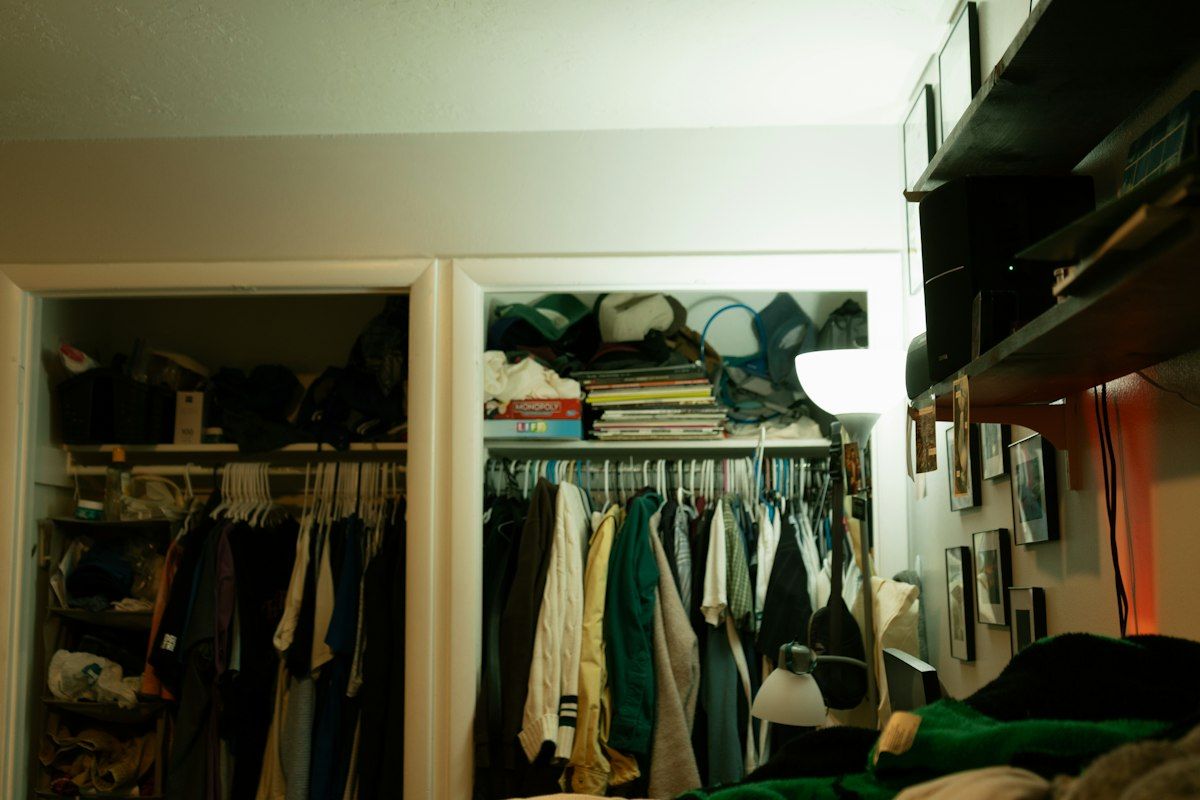
More shelves don’t automatically mean better storage. A closet only works when the space matches your stuff and your routine. That’s why some organizers look great on day one and drift back into chaos by month three.
DIY systems can create a lot more capacity than a builder-grade rod and shelf. But custom built-ins usually create better capacity, meaning more useful storage with fewer dead zones and fewer awkward compromises.
Hanging space, shelves, and drawers
Both options can include hanging rods, upper shelves, lower shelves, towers, and drawers. The real difference is how intentionally those pieces fit together.
With DIY, you’re usually choosing from a menu of available components. You can often get double-hang sections for shirts and pants, a tall-hang section for dresses or coats, a stack of shelves for sweaters, and maybe some drawers if the system supports them. For a standard closet, that can be enough.
Custom built-ins make the layout feel more balanced because each section is sized on purpose. If you need two long hanging items and forty short ones, the plan can reflect that. If shoes pile up because floor space disappears under hanging clothes, a shoe section can be built where it actually helps. If drawers would prevent your dresser from overflowing, they can be worked in without wrecking the rest of the layout.
That’s the difference between adding storage and solving the problem.
Small-item storage and daily function
This is where closets usually fall apart. Not at the coat rod. At the little stuff. Socks without a home. Belts draped over a shelf. Jewelry in a random box. Bags stuffed behind sweaters. Seasonal extras balanced on the top shelf like a game of closet Jenga.
DIY systems can handle some of this with add-on drawers, baskets, bins, and shelf dividers. But the result often depends on your discipline. If the system doesn’t include built-in homes for small items, clutter sneaks back in because the easiest place to drop things is still wherever your hand lands.
Custom built-ins tend to perform better day to day because they can include shallow drawers, valet rods, divided shelving, tilt-out hampers, and accessory storage in places that make sense. Even simple details matter. A drawer that fully opens beats a basket shoved under a hanging rod every single morning.
If the closet is already packed with things you don’t wear, no organizer will fix that by itself. Before paying for more structure, it helps to deal with the stuff that keeps clogging your closet, otherwise even a beautiful new setup can get overwhelmed.
Durability and build quality
A closet takes more abuse than it gets credit for. Hangers get yanked. Drawers get overfilled. Shelves carry more weight than planned. Doors slam. Humidity changes. Laundry gets stuffed in when you’re in a rush.
So yes, build quality matters.
DIY systems range from flimsy to surprisingly sturdy, depending on the materials and how well the system is installed. Custom built-ins also vary, but the better ones tend to feel more solid because they’re designed as a complete installation rather than a kit of parts.
Materials and hardware
Wire shelving is the cheapest and often the easiest to install. It works, especially for basic hanging and airflow, but it can feel visually busy and less stable for folded clothes or smaller items.
Laminate systems are common in DIY kits. That usually means engineered wood with a decorative outer surface. Done well, it looks clean and holds up fine for normal use. Done cheaply, edges chip, shelves swell if they get wet, and hardware loosens over time.
MDF, which is basically compressed wood fibers, is common in both budget custom and DIY pieces because it creates smooth painted surfaces. It looks good but doesn’t love moisture and can sag if spans are too wide or support is weak.
Plywood is generally stronger and lighter than MDF, especially for shelves and cabinet boxes. Solid wood is less common for full closet systems because it’s pricey and can move with humidity, but it’s often used for trim or premium details.
Hardware matters almost as much as board material. Cheap drawer slides, thin shelf pins, weak anchors, and hollow-feeling rods can make even a decent-looking closet feel disappointing after a year.
Long-term wear and tear
A well-installed DIY system in a low-stress closet can hold up for years. But the weak points show up sooner when the closet gets heavy use. Long shelves may bow. Wire shelves can leave marks on folded clothes and feel less stable under bins. Drawer faces can shift. Adjustable parts can loosen if the system wasn’t mounted well.
Custom built-ins usually age better because the fit is tighter, supports are planned around actual spans and loads, and the system is anchored as one integrated build. Drawer operation tends to be smoother. Shelves feel less wobbly. The closet still feels intentional instead of slowly drifting out of alignment.
Humidity can affect both, especially in older homes or coastal climates. Better edge banding, sealed finishes, stronger joinery, and smarter installation details make a noticeable difference over time.
Looks and overall bedroom feel
Some closets are purely functional. Others affect how the whole bedroom feels. If your closet doors stay open a lot, or if you have a walk-in that’s part of the suite experience, appearance counts more than you may expect.
DIY systems can look neat, bright, and organized. Custom built-ins can look like they came with the house, or like the house should have come with them from the start.
Style options and finishes
DIY systems usually offer a limited menu of finishes, often white, black, espresso, gray, or a few wood-look options. Some are clean enough to pass at a glance, especially with matching bins and decent lighting. But your options are tied to what’s manufactured, not what best suits the room.
Custom built-ins open up more choice. Painted finishes, wood veneers, shaker drawer fronts, slab fronts, decorative hardware, trim details, glass inserts, integrated lighting, and color matching all become possible. That doesn’t mean you need fancy details. It just means the closet can be designed to feel consistent with the rest of your home instead of like a retail storage aisle tucked behind bifold doors.
Does it feel like furniture or storage gear?
This is the simplest visual test. Does the closet look installed, or assembled?
A DIY closet organizer often looks good enough, especially if it’s neatly installed and your closet doors hide most of it. But you can usually tell it came in parts. Side gaps, visible brackets, exposed fastener caps, and standard panel proportions give it away.
Custom built-ins usually feel closer to furniture or cabinetry. The panels reach where they should. Trim closes the gaps. The design sits calmly in the space instead of just occupying it. If your goal is a closet that feels like an actual home upgrade, custom wins this category by a wide margin.
For smaller spaces, good design matters even more because visual clutter builds fast. A useful example of that approach shows up in this small closet space guide, where layout choices do a lot of the heavy lifting.
Flexibility and future changes
This category is one of the few clear wins for DIY. If your needs might shift, modular systems are easier to tweak, expand, or move.
Custom built-ins are better once you know exactly what works. They’re less forgiving when you don’t.
Reconfiguring a DIY system
Many DIY systems are designed around adjustability. Shelves can move up or down. Rods can be swapped. Add-on drawers or baskets can be purchased later. Entire components can sometimes be removed if your wardrobe changes or if the closet starts serving a different purpose.
That flexibility matters if you’re still figuring out how much hanging space versus folded storage you need. It also matters if a future move is possible and you don’t want to pour money into something fully permanent.
Not every DIY system is easy to rework, though. Some look modular in the store and become surprisingly annoying once anchored, trimmed, and packed with stuff. Still, compared with custom, DIY is much easier to revise without calling a professional.
Changing a custom built-in later
Custom built-ins are changeable in theory, but not usually in a cheap or easy way. Once sections are sized, fastened, trimmed, and finished to fit a room, moving components around can mean patching walls, repainting, ordering matching pieces, or accepting visible signs of alteration.
Simple updates like adding hooks, bins, or drawer inserts are easy enough. Bigger changes, like converting long hanging into drawers or resizing sections, can get expensive quickly. That’s why custom pays off most when your routine is stable and you already know what kind of storage works for you.
Cost and pricing
This is the category that keeps DIY in the conversation. If price were no object, more homeowners would choose custom. But price is an object, usually a very large one.
Still, the sticker price doesn’t tell the whole story. Closets are one of those projects where “budget-friendly” can quietly expand once you start adding the parts that make it actually useful.
Upfront cost of a DIY closet organizer
A simple DIY closet organizer for a reach-in might cost a few hundred dollars if you stick to wire shelving or a basic shelf-and-rod setup. A nicer modular laminate system with drawers, towers, and upgraded hardware can easily climb into the high hundreds or low thousands, especially for a larger closet.
The biggest price drivers are closet size, number of components, drawer count, finish level, and whether you need to buy tools. A very basic system stays affordable because it doesn’t try to do much. Once you start chasing a built-in look with towers, matching drawers, shoe shelves, trim kits, and upgraded rods, the gap between DIY and custom narrows more than people expect.
The other thing that pushes DIY costs upward is correction. Wrong measurements, extra cuts, replacement parts, and second-round purchases add up. That $600 project has a habit of becoming a $1,100 project in slow motion.
Upfront cost of a custom built-in
Custom built-ins usually start much higher because you’re paying for design, measuring, manufacturing or fabrication, delivery, and installation. A modest reach-in custom closet can land in the low thousands. Larger walk-ins, premium finishes, lots of drawers, and specialty features can move much higher.
Pricing is driven by square footage, material quality, drawer count, accessory features, trim complexity, local labor rates, and how complicated the closet is to build around. A straightforward rectangular closet costs less than one with sloped ceilings, odd angles, or multiple problem areas.
You’re not just paying for materials. You’re paying to avoid compromise.
Hidden costs to watch for
DIY hidden costs are usually death by a thousand paper cuts. Tool purchases, delivery charges, extra hardware, wall repair supplies, trim pieces, shelf liners, bins, drawer organizers, and replacement components all show up after the “main purchase.” So does your time, which isn’t a line item but still matters.
Custom hidden costs show up differently. Design changes after approval, upgraded finishes, premium hardware, electrical work for lighting, wall repair, touch-up painting, and permit-related issues in larger remodels can all expand the budget. There’s also the cost of getting the design wrong. A beautiful custom closet that misses how you actually dress and store things is an expensive lesson.
Home value and resale appeal
A better closet won’t transform your appraisal the way a kitchen remodel might, but it absolutely affects buyer perception. Storage is emotional. People open a closet and instantly imagine daily life in the house.
A DIY closet organizer can still be a positive if it’s neat, functional, and cleanly installed. It signals that the home has better storage than the usual single rod and shelf setup. But it rarely feels like a premium feature.
A custom built-in has stronger resale appeal because it reads as part of the home, not just an add-on. In a primary suite, especially, it can make the whole space feel more upgraded. Buyers may not calculate an exact dollar amount for it, but they notice. And in competitive markets, “noticed” matters.
The closer your closet looks to finished cabinetry, the more it contributes to that impression.
Timeline and speed to results
If your closet is driving you crazy right now, speed matters. There’s a big difference between “fixed this weekend” and “designed this month, installed next month.”
DIY wins on speed when all the stars line up. Custom wins on completeness.
Fastest path to a better closet
If your closet is standard sized and the materials are in stock, a DIY system can move from purchase to installation in a weekend. That’s especially true for simple reach-ins. You can plan it Friday, buy it Saturday, and have your clothes rehung by Sunday night if the install goes smoothly.
That kind of speed is hard to beat. It’s one of the best arguments for DIY, especially when your current setup is so bad that almost any upgrade will help.
The catch is that fast only stays fast if the plan is simple. Complications multiply the timeline quickly.
When custom takes longer but solves more
Custom takes longer because the process is longer. Measure, design, revise, approve, build, schedule, install. Even without delays, you’re usually looking at weeks, not days.
But that longer runway often produces a better result because the thinking happens up front. Problems get solved on paper instead of mid-install. Materials arrive matched to the room. The layout reflects real use instead of whatever parts happened to be in stock.
If your closet has been dysfunctional for years, waiting a few more weeks for the right fix can be worth it.
Maintenance and cleanup over time
Closets get dusty. Hardware loosens. Drawer interiors collect lint, receipts, and mystery bobby pins. So maintenance counts, even if it’s not glamorous.
DIY systems with wire shelves are easy to wipe but annoying to clean thoroughly because dust settles on the bars and underneath them. Laminate shelves clean easily, but chipped edges or swollen corners don’t age well. Adjustable systems may need occasional tightening or minor realignment, especially if the installation wasn’t dead-on from the start.
Custom built-ins are usually easier to keep looking polished because the surfaces are more continuous and the fit is cleaner. Better drawers tend to glide smoothly longer. Better trim means fewer visible gaps for dust to collect. Repairs, though, can be trickier if a custom finish gets damaged and needs a close color match.
In day-to-day life, both are manageable. Custom just tends to stay looking “done” with less visual wear.
Best fit for different closet types
This is where the decision gets practical. The best option depends less on abstract pros and cons and more on what kind of closet you’re actually dealing with.
Reach-in closets
For a standard reach-in closet in a newer home, a DIY closet organizer often makes the most sense. The dimensions are usually predictable, the depth is standard, and the storage goals are straightforward. A decent modular system can add double hanging, shelves, and maybe drawers without turning the project into a major investment.
If the reach-in is in a primary bedroom and you want it to feel polished every single day, custom can still be worth it. But for many basic reach-ins, DIY gets you most of the function for much less money.
Walk-in closets
Walk-ins create more opportunity and more room for wasted space. DIY can still work, especially with modular towers and rods, but larger closets expose the limits of standard parts more quickly. Odd gaps, unfinished transitions, and mismatched sections stand out more when there’s more wall area to cover.
Custom built-ins tend to shine in walk-ins because zoning matters. Hanging sections, folded storage, shoes, bags, accessories, hampers, and open floor flow all need to work together. That’s where tailored design earns its keep.
Older homes and problem closets
This is the easiest call in the whole comparison: custom wins.
If your home has uneven walls, odd depths, sloped ceilings, shifted framing, radiators, awkward trim, weird corners, or closet openings that were clearly an afterthought, a DIY system will likely solve part of the problem and create two new ones. Custom is better at absorbing those imperfections and turning them into something functional.
When a DIY closet organizer makes the most sense
A DIY closet organizer is the right call when your closet is fairly standard, your budget has limits, and you need a real improvement without turning the whole thing into a custom home project.
It also makes sense when you’re comfortable with tools, don’t mind planning carefully, and value flexibility. If you’re still learning what kind of setup works for your habits, modular storage gives you room to adjust. That’s especially useful if your wardrobe changes seasonally, if the closet serves more than one person, or if a move could happen in the next few years.
DIY is also smart when the existing closet is so bare-bones that even a modest upgrade will feel like a huge quality-of-life jump. Going from one sagging rod to organized sections is a big win, even if it doesn’t look magazine-ready.
When a custom built-in is worth it
Custom earns its price when your closet has never really worked, not because you lack bins, but because the space itself is poorly used. If you’ve spent years rotating clutter between shelves, the bed, and that chair in the corner, your problem probably isn’t accessories. It’s layout.
A custom built-in is worth it when the closet shape is awkward, the storage needs are specific, and you want the fix to feel permanent. It’s also worth it when appearance matters, especially in a primary suite where the closet is part of how the room feels every day.
And honestly, if you’re tired of half-solutions, custom often brings the most relief. It removes more compromise from the room.
Final verdict: what wins for most homeowners?
For most homeowners in this situation, custom built-in wins.
Not because DIY is bad. It isn’t. A good DIY closet organizer can absolutely improve a standard closet and do it for much less. But if you’ve already spent years trying bins, add-on shelves, and small fixes, you’re probably not looking for “better than before.” You’re looking for a closet that finally works.
That’s where custom pulls ahead. It fits the space better, uses more of the available room, looks more finished, usually lasts longer, and does a better job of stopping clutter before it starts. If your closet is awkward or chronically overstuffed, custom is the stronger long-term answer.
DIY wins when the closet is simple, the budget is tighter, and speed and flexibility matter more than a perfect fit.
A good next move is simple: measure your closet width, depth, and height, then note the three things that annoy you most every morning. That short list will tell you very quickly whether you need a modular upgrade or a built-for-you solution.
Frequently asked questions
Is a DIY closet organizer worth it?
Yes, if your closet is standard sized and your main goal is better function at a lower cost. It’s especially worth it when your current setup is just one rod and one shelf. If your closet has awkward angles or chronic overflow, the value drops because standard parts can only solve so much.
How much does a DIY closet organizer usually cost?
A basic DIY setup can cost a few hundred dollars. A more polished system with towers, drawers, rods, and better finishes can move into the high hundreds or low thousands. The final total usually depends on closet size, materials, and how many add-ons you need before the system actually works the way you want.
Does a custom built-in add home value?
It can add perceived value more than direct appraised value. Buyers tend to notice custom storage because it makes the home feel more finished and functional. In a primary bedroom, a built-in closet system often reads as a real upgrade rather than a simple organizer.
Which lasts longer, DIY or custom?
In most cases, custom lasts longer. Better fit, stronger materials, and more stable installation usually mean less sagging, fewer alignment issues, and smoother drawer performance over time. A good DIY system can still last for years, but it’s more dependent on materials and installation quality.
Can you make a DIY closet organizer look built-in?
Yes, to a point. Trim pieces, filler strips, matching finishes, and careful installation can make a DIY system look much more polished. But most still show signs of being assembled from standard parts, especially in larger closets or rooms with uneven walls.
What’s The best option for a small or awkward closet?
For a small but standard closet, DIY can work really well. For a small and awkward closet, custom is usually better because every inch matters more. When the room has odd corners, low ceilings, or off-center openings, made-to-measure storage usually solves more problems with less wasted space.