



If your closet only looks tidy for about six hours after a cleanup, you don’t need more willpower. You need better closet organizer ideas. A closet organizer idea is just any storage change that gives your everyday stuff a clear home, makes it easier to see, and cuts down the little bits of friction that turn into chair piles, floor piles, and those 7:12 a.m. “where is the other shoe?” moments.
Early on, it helps to know what you’re actually fixing. This isn’t about making your closet look like a showroom. It’s about building a setup you can keep using when you’re tired, late, or halfway through laundry. In this guide, you’ll sort out what belongs in the closet, which organizer ideas are worth buying, and how to create a system that stays functional longer than one ambitious Saturday.
Here’s what you’ll learn:
- Why tidy closets fall apart fast
- How to edit before buying organizers
- The best storage ideas by problem area
- Smart shelf, drawer, and hanging upgrades
- What works in small closets and walk-ins
- When DIY is enough and when it isn’t
- The mistakes that keep clutter coming back
- How to plan a setup that fits real life
Why your closet never stays tidy in the first place
Closet mess usually gets blamed on “too much stuff” or bad habits. Sometimes that’s true, but honestly, that’s rarely the whole story. Most closets stay messy because the layout fights your routine. If your shoes are stacked in a dark corner, your sweaters slide off one giant shelf, and your worn-once jeans have nowhere to go, the mess is built in.
That matters because clutter isn’t just visual. It pulls on your attention. Princeton researchers found that visual clutter competes for mental resources, which helps explain why a crammed closet feels so irritating so quickly. You’re not imagining it.
The real issue Isn’t usually “too much stuff”
A closet can be half full and still work badly. One fixed rod, one high shelf, and a few random bins may technically hold your clothes, but that doesn’t mean the storage is usable. Bad spacing, poor visibility, and hard-to-reach zones cause daily pileups even when you’ve already donated plenty.
The catch is that containers can make this worse. When the closet is already awkward, adding more baskets and inserts often just creates prettier confusion. Stuff still doesn’t have the right home. It just has a smaller one.
That’s also why chronic overflow tends to show up outside the closet. The chair becomes a second wardrobe. The dresser top turns into an accessory tray. The laundry basket becomes temporary shoe storage. The closet isn’t containing your life, so your room starts doing the job instead.
What a good closet organizer idea actually does
A good closet organizer idea reduces friction. That’s the whole point.
In plain English, it should help you find things faster, put them away with less effort, and keep your most-used items in easy reach. Good organizing also improves visibility, because hidden stuff tends to become forgotten stuff. One survey found that 44% of women can’t find something in their closet at least once a month. That’s not a folding problem. That’s a system problem.
The best ideas in this guide aren’t just products. They’re decisions about placement, access, limits, and routine. Products matter, but only when they support a layout that actually matches how you get dressed.
Start here: edit before you organize
Buying organizers before editing your closet is like buying more kitchen containers before checking what expired in the pantry. It feels productive, but it usually creates better-looking clutter.
Closet systems work best when they’re sized for what really belongs there. If you skip this step, you’ll measure and shop for a fantasy version of your wardrobe, not the one you use on a normal Tuesday.
Do a fast closet reset without turning it into a weekend project
Forget the idea that you need a massive purge with matching donation bags and a full playlist. A fast reset works better because it keeps you moving.
Set a timer for 20 or 30 minutes. Pull out the obvious no’s first: things that don’t fit, things you haven’t worn in years, damaged basics you keep “meaning to deal with,” and duplicates you always skip past. Then group what’s left by type. Tops with tops. Pants with pants. Bags together. Shoes together.
That one move does a lot. It shows you where your closet is actually overloaded. It also keeps you from getting stuck on individual emotional decisions too early.
If this part always stalls out, spend more time on sorting the clothes you’ve already tried to organize three different ways. A cleaner system starts with a cleaner inventory.
Use simple keep, store elsewhere, donate, and toss zones
You only need four zones to make decent decisions: keep, store elsewhere, donate, and toss. That’s enough structure without turning the floor into a strategy session.
“Keep” means active, current, easy-to-reach closet storage. “Store elsewhere” is for off-season coats, formalwear, keepsakes, guest linens, or anything you want to keep but don’t need to see every day. “Donate” is for good-condition items that no longer earn space in your routine. “Toss” is for stained, broken, stretched-out, or unusable things.
This matters because not everything deserves prime real estate. Your closet should mostly hold the stuff you wear and use now. Sentimental items and once-a-year pieces can stay in your life without taking over the center of it. Research on decluttering keeps landing on the same point: remove what you don’t use first, then contain what’s left. Bigger bins aren’t the same thing as less stuff, and editing before buying almost always leads to better storage decisions.
Notice what keeps landing outside the closet
Your room is already telling you what your closet is missing.
If clothes keep landing on a chair, you probably need an in-between zone for worn-once items. If shoes gather near the bedroom door, your shoe storage is either too far away or too annoying to use. If folded clothes sit on top of a dresser instead of on the closet shelf, your shelf setup may be too cramped, too high, or too unstable.
Notice the patterns without making it dramatic. Overflow is useful information. It points to the exact storage gap that needs fixing.
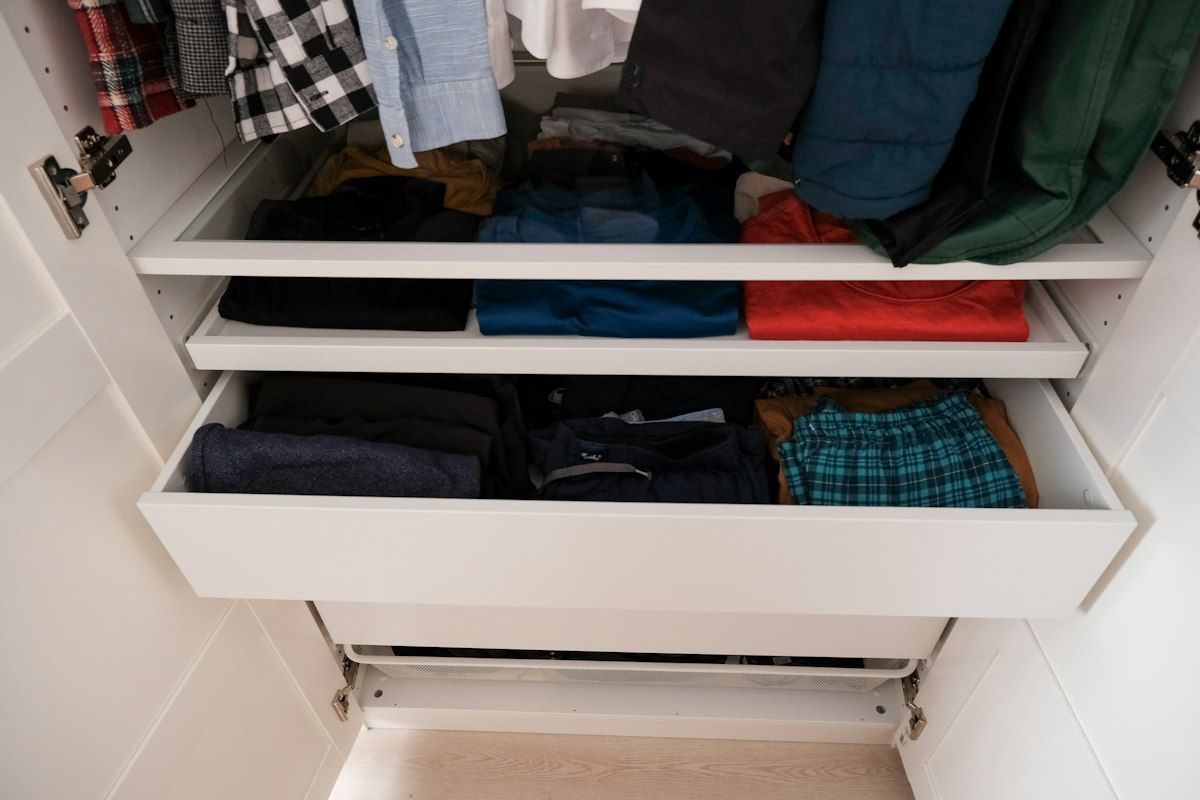
Build your closet around how you actually get dressed
A closet that looks good online can still be irritating in real life. The best setup isn’t built around symmetry. It’s built around your habits.
That means your most-used items get the easiest spots. Your routine matters more than someone else’s perfect color-coded rod. If you get dressed in a rush, grab workout clothes before sunrise, or swap between work clothes and casual clothes every day, the closet needs to support that pattern.
Create zones for daily, weekly, and rarely used items
Think of your closet in layers of access.
Daily-use items belong at eye level or within easy reach. That includes current shoes, work clothes, everyday tops, favorite jeans, regular handbags, and often-used accessories. Weekly-use items can sit slightly higher or lower. Rarely used items, like guest linens, formalwear, keepsakes, or out-of-season clothing, can move to upper shelves or closed bins.
This one shift makes a huge difference because it stops rare-use stuff from clogging prime space. Your closet should work like a kitchen. The everyday plates go within reach. The giant roasting pan does not.
Keep like items together so you can find things fast
Grouping by category cuts visual noise fast. It also helps you notice duplicates, gaps, and weird overflow. If all your black cardigans live in three different places, your closet isn’t helping you make decisions.
Keep pants together, tops together, dresses together, bags together, and workout gear together. That sounds obvious, but lots of closets drift into mixed storage over time. A shelf holds sweaters, one random clutch, pajama pants, and two hats. No wonder it feels crowded.
There’s also a money angle here. One survey found that 61% of women who struggle to find things in the closet end up buying new clothes. When you can’t see what you own, you’ll replace it.
Give “in-between” clothes a real home
This is one of the biggest reasons tidy closets fall apart.
Not dirty, not clean clothes need a dedicated place. Without one, they end up on the chair, bed, bench, or doorknob. A simple hook, valet rod, narrow rod section, or open basket solves this better than pretending those clothes don’t exist.
Keep this zone small on purpose. If it gets too big, it turns into a second laundry pile. Two or three hooks or one defined basket is usually enough to catch the jeans, sweater, or sweatshirt you’ll wear again this week.
Closet organizer ideas that fix the biggest trouble spots
Once your layout makes sense, products start helping. Before that, they mostly create clutter with good intentions.
What works best tends to be simple: systems, shelves, bins, hooks, lighting, and better storage for shoes and accessories. Not surprisingly, shelving units hold the biggest share of the closet organizer market. Shelves solve a lot of problems because they improve visibility and give awkward categories somewhere stable to live.
Install a closet system if the basic builder shelf Isn’t cutting it
A closet system is just a coordinated setup of rods, shelves, drawers, and vertical sections designed to use the space better than one rod and one shelf ever could.
If your current closet has that classic builder-grade setup, one rod across the wall and one long top shelf, you’ve already found the problem. It wastes vertical space, shoves folded items into one unstable stack, and gives accessories almost nowhere to go.
Adjustable systems are better than fixed ones because your wardrobe changes. Sweaters may take over one year. Shoes may need more room the next. An adjustable system lets you rework shelf heights, add drawers, or shift rod placement without starting over. If you’re comparing upgrade paths, it helps to understand how a store-bought setup stacks up against built-ins.
Swap bulky hangers for slim matching ones
Bulky plastic hangers steal more rod space than most people realize. Mixed hanger types also create visual clutter, snag straps, and make clothes sit unevenly.
Slim matching hangers instantly calm the rod down. Velvet hangers are popular for a reason, they’re thin and they help slippery fabrics stay put. For heavier coats, suits, or structured jackets, sturdier wood or shaped hangers still make sense. The trick is consistency where you can get it, not forcing one hanger type on every garment you own.
This is one of the fastest visual upgrades you can make. It won’t fix a bad closet by itself, but it absolutely helps.
Add shelf dividers to stop folded stacks from toppling
If folded shelves collapse every time you pull one sweater, shelf dividers are worth it. They give stacks an edge to lean against, which keeps categories separated and prevents that avalanche effect.
Use them for jeans, sweaters, handbags, tees, clutches, or even spare linens. They’re especially helpful on long shelves where categories tend to spread into one another.
Here’s the thing: smaller stacks win. Five neat sweaters are easier to maintain than a tower of twelve. Dividers help, but they can’t save a shelf that’s stuffed beyond reason.
Use baskets and bins for the awkward stuff
Bins shine when the category is real but the shape is messy. Scarves, pajamas, clutches, belts, workout gear, swimwear, off-season accessories, and lounge clothes usually fit this description.
Clear bins are useful when you want instant visibility. Opaque bins are better when the contents look chaotic and you’d rather hide the visual noise. Lidded bins work for dust protection on higher shelves, though open-top baskets are easier for everyday use. Labels help most when bins look similar or live in shared spaces.
Avoid turning every tiny category into its own container. If getting dressed starts to feel like opening twelve little boxes, you’ve gone too far.
Make the floor work harder with shoe storage
Closet floors often become wasted space or chaotic space. A good shoe setup fixes both.
Stackable shoe shelves are great for everyday shoes because you can see pairs quickly. Cubbies work well when you want each pair to have a clear spot. Drop-front boxes are better for nicer shoes, dust protection, or bigger collections you still want visible. Shoe slots can save vertical room, but they’re best for lighter, everyday pairs.
If mornings are where your closet really falls apart, start here. Dedicated shoe storage has a real effect on routine, and one study even found women with shoe racks were far more likely to be on time for work. That sounds silly until you’ve spent five minutes hunting for flats under a pile of boots.
Take advantage of the back of the door
The back of the door can be useful, but it can also become visual chaos fast.
Hooks work well for robes, tomorrow’s outfit, or a short list of frequently used items. Pocket organizers are handy for smaller accessories like scarves, belts, or costume jewelry. Narrow racks can hold hats, lightweight bags, or rolled items.
The catch is restraint. If every pocket is stuffed and every hook is full, the back of the door becomes one more clutter wall. Use it for categories you need often and can identify quickly.
Light up the closet so you can actually use it
Bad closet lighting turns everything into harder work. Dark corners hide shoes, blur navy from black, and make shelves feel more chaotic than they are.
Battery puck lights, rechargeable strip lights, and motion-activated LED bars are all easy wins. If your closet has no hardwired lighting or only one sad overhead bulb, this is one of the least glamorous and most useful upgrades you can make.
Better lighting also supports upkeep. You put things away faster when you can actually see the spot they belong in. Smart and motion-sensor options keep getting more common in storage products, but honestly, even a basic rechargeable strip can change the whole feel of the closet.
Smart shelf and drawer ideas for closets that overflow
Hanging space gets all the attention, but shelves and drawers often do the heavier lifting. Clothing and shoes are the most common clutter categories in the home, and plenty of that mess doesn’t belong on a hanger.
When hanging space alone isn’t enough, shelves and drawers create structure for folded clothes, small items, and the categories that disappear in the back of the closet.
Add more adjustable shelves instead of one giant dead zone
One tall, open cavity sounds flexible until you try storing anything real in it. Then it becomes wasted air above one unstable stack.
Shorter adjustable shelves are almost always better. Sweaters don’t need 18 inches of vertical space. Neither do handbags, jeans, or bins of accessories. Breaking one huge opening into several smaller shelves creates containment without needing a bunch of separate products.
This is especially helpful in reach-ins and older closets. Even a few added shelves can turn dead space into useful storage. If you’re dealing with a tighter layout, this is where making a small closet work harder becomes more about spacing than stuffing more inside.
Use drawer inserts for small items that get lost
Drawers are only as good as the inside. Without inserts, small items slide around, mix together, and disappear into corners.
Simple dividers or modular trays are great for socks, underwear, bras, watches, jewelry, shapewear, and smaller accessories. The goal isn’t perfection. It’s visibility. You should be able to open the drawer and spot what you need without digging.
This also makes post-laundry resets easier. Categories go back into the same zones, which means the system doesn’t rely on memory or motivation.
Try pull-out trays or baskets for deep shelves
Deep shelves waste storage because the back turns into a hidden cave. Pull-out trays and baskets solve that by bringing the contents forward.
They work well for folded tees, kids’ clothes, workout gear, clutches, accessories, and lighter sweaters. Wire or mesh baskets improve airflow. Solid trays look cleaner and keep smaller items from catching.
If you’ve ever found something in the back of a shelf and thought, “I forgot I even had this,” this is the fix.
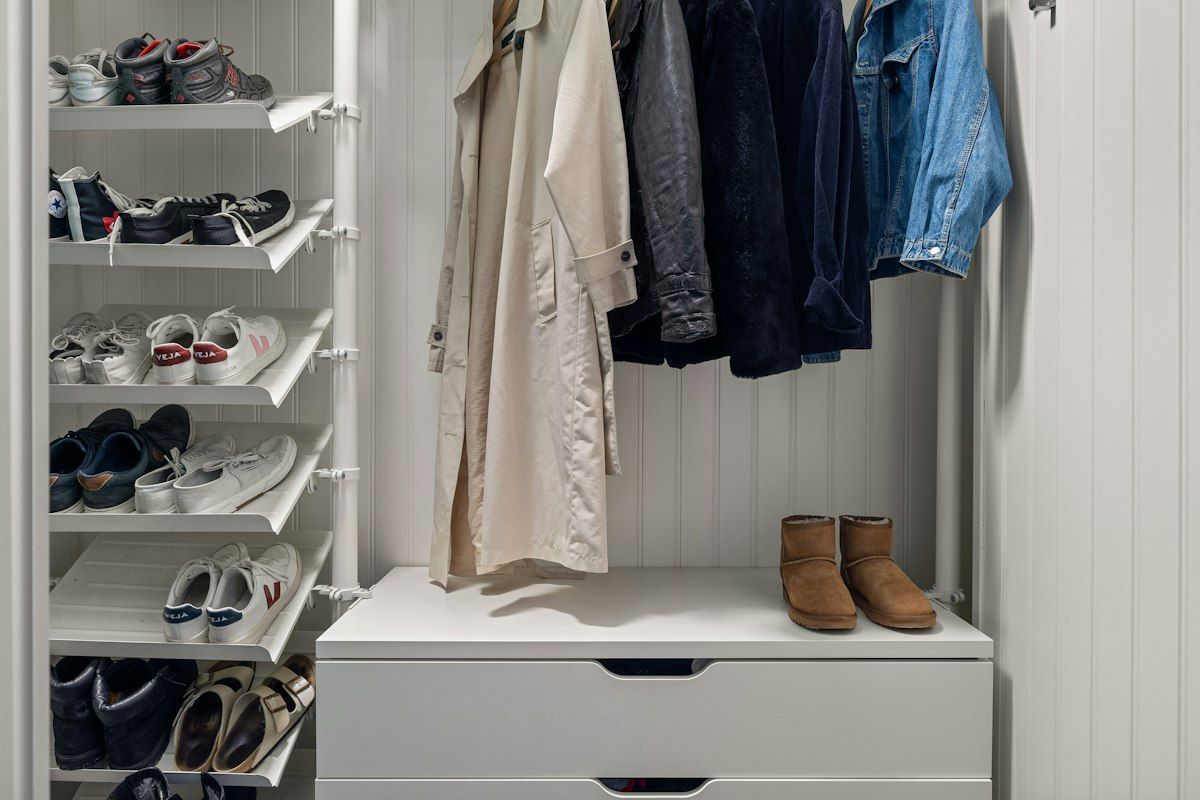
Hanging storage ideas that earn their spot
Hanging add-ons can help a lot, but they can also become floppy, crowded, and strangely annoying. The trick is using them where built-ins are missing, not layering six soft organizers into one rod until it bows.
Choose the hanging pieces that reduce effort. Skip the ones that create one more obstacle between you and your clothes.
Use hanging shelves for folded clothes in closets short on built-ins
Fabric hanging shelves are useful when your closet doesn’t have enough built-in shelves and you need a quick fix for folded items. They work well for jeans, sweaters, bags, kids’ clothes, or casual wear you want to keep visible.
They’re especially handy in rentals or temporary setups because they require almost no installation. But long term, they’re not always the strongest solution. Heavy clothes can make them sag, and overstuffed compartments get sloppy fast.
If you already know your closet layout is fundamentally lacking, treat hanging shelves as a bridge, not the final answer.
Add multi-tier hangers for pants, scarves, and tanks
Multi-tier hangers can save rod space, but only for the right categories. Pants, tanks, lightweight scarves, and some camisoles tend to work best.
Use them when vertical storage makes grabbing items easier. Don’t use them if the lower tiers make things hard to reach or if the category tends to wrinkle. A space-saving product that makes you avoid the clothes isn’t saving space in any useful way.
That’s the bigger rule with all closet organizers. If the item adds friction, it doesn’t belong.
Install hooks or a valet rod for outfit planning
Hooks and valet rods solve one of the most practical closet problems, temporary placement.
A valet rod gives you a place to hang tomorrow’s outfit, stage dry cleaning, or pull pieces together while deciding what to wear. Wall hooks or side-mounted hooks do a similar job for robes, belts, bags, or in-between outfits. This is one of those upgrades that sounds minor and ends up changing your mornings.
It also cuts down on the chair pile, which is doing unpaid labor in a lot of bedrooms.
Best closet organizer ideas for accessories
Small accessories create an outsized mess because they’re easy to lose, hard to stack, and often stored as an afterthought. Once you give them real homes, a closet gets easier to maintain almost immediately.
The key is matching the method to the item. Flexible things can roll or loop. Structured things need support. Delicate things need protection.
Store scarves, ties, and belts where you can see them
Scarves, ties, and belts usually do best in visible storage. Specialty hangers with loops work well if you want to scan options quickly. Drawer compartments or shallow bins work better if you prefer a cleaner visual look or want to protect fabric from dust.
Hanging works best for items you use often and don’t want to unroll. Rolling or folding works better when drawer space is available and the category is large. The main point is to keep all of one type together so you stop losing belts in random corners of the closet.
Give bags, totes, and clutches upright support
Bags get messy when they collapse into a heap. Upright support fixes that.
Shelf dividers are great for handbags and clutches on open shelves. File sorters can work surprisingly well for slimmer bags and pouches. Hooks are useful for totes you grab often, as long as the straps won’t stretch. Cubbies work best when you have enough room to assign one space per bag type.
For nicer bags, dust protection matters. Fabric dust bags or lidded bins are worth using for pieces that come out only occasionally. Everyday bags should stay visible enough to grab without thinking.
Use small compartments for jewelry and watches
Jewelry gets tangled, scratched, and forgotten fast when it’s dumped into one box. Small divided trays, shallow drawer inserts, hanging pocket organizers, and compact divided cases all work better.
Choose the method based on how often you wear the pieces. Daily jewelry should be easy to reach. Occasion jewelry can live in a more protective box or upper drawer. Watches do best in separated compartments so they don’t knock into one another.
Visibility matters here more than volume. If you can’t see it, you won’t wear it.
Corral hats without crushing them
Hats need different storage depending on shape. Structured caps do well on dedicated cap racks, wall hooks, or stacked shelves with enough support to keep the crown from getting flattened. Soft hats can go in open bins, shallow baskets, or dedicated hangers.
Try not to crush everything into one basket unless the hats are very flexible. If you’ve got a small collection, an upper-shelf bin works fine. If you wear hats regularly, keep them in a spot that doesn’t require unstacking five things to get one.
Closet organizer ideas for linens, bulky items, and seasonal storage
Closets often end up doing double duty. Clothing shares space with guest blankets, extra pillows, wrapping supplies, or the heavy comforter you swear you’ll put somewhere else later. That’s normal. But bulky categories need stronger boundaries because they can swallow a shelf in one afternoon.
Store blankets and pillows without turning shelves into a landslide
Bulky linens need containment. Large zippered bags help with dust and keep soft items compressed just enough to stack cleanly. Open shelf baskets work when you want easier access. Compression bags can be useful for true off-season storage, but use them carefully for natural fibers or anything that wrinkles badly.
Upper shelves are usually the right spot here because blankets and guest pillows aren’t daily-use items. The trick is not to leave them loose. Loose bedding expands like it’s trying to take over the whole closet.
Rotate seasonal clothing instead of storing everything at eye level
You do not need swimsuits beside wool coats in the same prime zone all year.
Rotate by season so eye-level space stays focused on what you’re actually wearing now. Off-season items can move to under-bed bins, upper shelves, labeled containers, or another storage area entirely. Boots, bulky sweaters, heavy outerwear, and special-event pieces often free up a surprising amount of room once they’re out of rotation.
This is also where one external resource on how to maximize space in a small closet can be useful, because seasonal rotation solves a lot of crowding before you buy a single extra organizer.
Protect rarely used items so they Don’t become closet clutter
Formalwear, keepsakes, and sentimental pieces need selective storage, not front-row closet space. Garment bags protect occasion dresses, suits, and coats from dust. Archival boxes are better for delicate keepsakes or fabric items you want to preserve.
The point is separation. Rarely used items should be protected and stored intentionally, not mixed into everyday categories where they create bulk and visual clutter. If something matters enough to keep, it matters enough to store properly.
Small closet organizer ideas that make a big difference
Small closets get blamed for everything. But plenty of small closets work fine when the setup is honest about space limits.
A small closet needs sharper choices, not just smaller bins. Every inch has to do something useful, and every organizer has to earn its spot.
Double up hanging rods to instantly gain space
Adding a second rod is one of the fastest ways to increase capacity in a reach-in closet. It works best for shorter hanging items like shirts, skirts, folded-over pants, and kids’ clothing.
Use the upper rod for one category and the lower rod for another, or split by season or person if the closet is shared. Keep one taller section for dresses, coats, or long items if needed. Not every closet can go full double-rod, but most can benefit from at least one section.
Use vertical space all the way to the top
The top of the closet is storage, not decoration. Use upper shelves, labeled bins, stackable containers, and high hooks for low-frequency items.
The rule is simple: hard-to-reach space should hold things you don’t need often. Seasonal bags, backup bedding, keepsakes, and special-event items belong up high. Everyday shoes and work clothes do not.
A step stool helps. So do labels large enough to read without dragging every bin down.
Choose narrow, stackable, and foldable organizers
Small closets need organizers that respect tight dimensions. Narrow stackable bins, slim shelf baskets, foldable hanging shelves, and shallow pull-out units usually perform better than wide, bulky containers.
Access matters more than raw storage volume. It’s better to fit less into a setup you can use than cram more into one you avoid. Narrow products also leave breathing room, which makes the closet feel more manageable and less packed to the ceiling.
Skip solutions that make a small closet feel smaller
Oversized bins, deep boxes on low shelves, too many hanging gadgets, and crowded door organizers can shrink a closet visually and functionally.
The more layers you add between you and your clothes, the more annoying the closet becomes. In small spaces, visual clutter matters even more. One easy-to-grab shelf often beats three complicated inserts. One defined basket often beats six tiny bins.
Simple usually looks better because simple is easier to keep up.
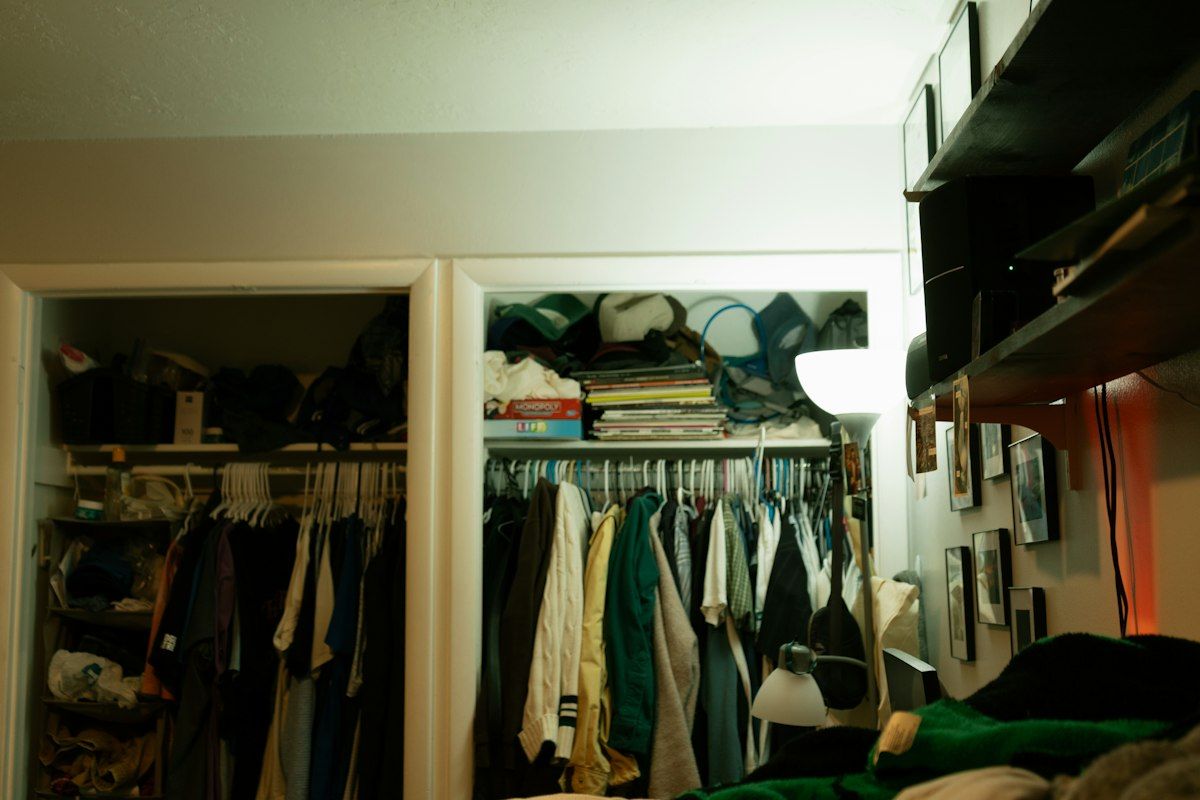
Walk-in closet organizer ideas for better flow
Walk-ins seem like they should solve everything, but plenty of them turn into oversized dumping grounds. More square footage just gives clutter more places to spread out unless the layout is intentional.
A functional walk-in should reduce steps, reduce searching, and give each category a clear zone.
Set up distinct areas for hanging, folding, shoes, and accessories
A walk-in works best when each major category has its own area. Hanging clothes should have a clear rod section. Folded items should live on shelves or in drawers. Shoes should have one dedicated area. Accessories should be grouped near where they’re used.
That kind of zoning creates flow. You stop zigzagging around the closet looking for one belt or one sweater. If the footprint is large enough, center storage like an island can help, but only if there’s still comfortable walking space. If the island turns the closet into an obstacle course, skip it.
Use open storage for everyday items and closed storage for visual calm
Open shelves are great for everyday clothes, current shoes, and frequently used bags because they’re easy to scan. Closed drawers, cabinets, or opaque bins are better for messy categories, backups, undergarments, or items that look chaotic when exposed.
This mix keeps the closet practical without making it visually noisy. It also helps with maintenance. Daily items stay accessible. Messier categories stay contained.
That’s usually the sweet spot.
Add a hamper, mirror, or bench only if it solves a daily problem
Walk-ins can absorb furniture and accessories that look nice but don’t actually help. A hamper makes sense if laundry currently lands on the floor. A mirror makes sense if the closet is where you dress. A bench makes sense if you genuinely need a place to sit while putting on shoes or setting out outfits.
If the add-on doesn’t solve a repeated problem, it’s probably just taking up useful space.
Custom vs. DIY vs. store-bought closet systems
Not every closet needs a custom company. Not every closet should be solved with a cart full of quick fixes either.
Your best option depends on whether the closet structure is basically workable, how long the problem has been going on, and whether the space needs a true redesign or just smarter parts.
When a DIY upgrade is enough
DIY is enough when the closet layout is mostly fine and the biggest problems are missing components. Maybe you need another rod, better shelf spacing, a shoe rack, drawer inserts, hooks, or lighting. Those are strong DIY wins.
This route also makes sense when you want to test what works before committing to something bigger. Add a valet hook. Swap hangers. Use shelf dividers. Install a pull-out basket. If those changes solve the friction, you probably don’t need a full overhaul.
When a modular system makes more sense
A modular system is the middle ground. It gives you more structure than random add-ons but more flexibility than a fully custom build.
This is a smart option when your closet needs coordinated shelves, rods, drawers, and shoe storage, but the dimensions are still fairly standard. Adjustable modular systems are especially useful because your needs change, and fixed layouts age badly. Not surprisingly, closet systems are the top project type for closet pros, with 79.3% of projects centered there. People keep buying them because they solve the real issue, which is poor layout.
When It’s time to call a closet company
Sometimes quick fixes have already had their turn.
If your closet has awkward angles, sloped ceilings, strange depths, one partner with dresses and another with folded casual wear, or years of failed organizer experiments, it may be time for a full redesign. The same goes for shared closets that can’t support two routines, or spaces where the built-in structure wastes too much room to patch around.
A closet company starts making sense when the problem is architectural, not just organizational. Chronic overflow, mixed storage needs, or repeated frustration are usually the signs.
Common closet organization mistakes that keep the mess coming back
A messy closet rarely comes back because you forgot how to fold. It usually comes back because the setup makes normal life harder than it needs to be.
A few common mistakes cause this over and over.
Buying organizers before measuring
Wrong-sized bins waste money and create dead space. Shelves end up blocked, drawers won’t clear the door swing, and rods get added at heights that don’t fit the clothes underneath.
Measure width, depth, height, door clearance, and shelf spacing before buying anything. Even simple products like baskets and shoe racks work better when you know exactly how much room you have.
Giving prime space to rarely used items
If formalwear, keepsakes, backup toiletries, or spare bedding live at eye level, your closet is backwards.
Prime space should go to what you use most. That means daily clothes, current shoes, and high-frequency accessories. Everything else can move up, down, back, or out.
Using too many tiny containers
Over-compartmentalizing feels organized at first. Then laundry happens. Then a busy week happens. Then every category is half-returned because putting things away takes too long.
Fewer, slightly broader categories are easier to maintain. One bin for workout gear often works better than separate mini-containers for leggings, tanks, bras, socks, and headbands. Unless a category truly needs separation, keep it simple.
Creating a pretty closet That’s hard to maintain
Styled closets photograph beautifully. But if the system only works when every sweater is folded perfectly and every accessory is color-aligned, it won’t hold up under real life.
Usable storage beats styled storage every time. Your closet should keep working when you’re tired, in a hurry, or putting laundry away while answering a text. That’s the standard.
How to plan your closet organizer setup before you buy anything
A little planning saves you from the classic mistake of buying six “space-saving” products that solve nothing together.
You don’t need a full design board. You just need the right measurements, a basic inventory, and one honest look at your biggest pain point.
Measure the closet the right way
Measure the full width, depth, and height of the closet. Then measure shelf depth, shelf spacing, rod lengths, and the height of hanging sections. Check how far the door swings and whether drawers or bins would hit it.
Also measure your clothes in broad terms. Short hanging items need less vertical room than dresses, coats, or jumpsuits. Shoes vary more than people expect, especially boots and larger sizes. A few quick notes here prevent a lot of bad purchases later.
Make a quick inventory of what needs a home
Count categories, not every single piece. How many pairs of everyday shoes need easy access? How many folded sweaters? How many bags? Do you need space for jewelry, belts, hats, or extra linens? How much long hanging do you actually have?
This is where your storage choices get practical. More folded items means more shelves or drawers. More shoes means better floor planning. More small accessories means trays, hooks, or compartments. Inventory should drive the organizer setup, not the other way around.
Prioritize changes by biggest pain point
Fix the part that annoys you most first.
If shoes cover the floor, start there. If folded stacks collapse, build shelves or add dividers. If you can never find accessories, create a single visible storage area for them. If the chair is always full, give in-between clothes and laundry a real home.
One strong fix often creates enough relief that the rest of the closet becomes easier to plan.
Easy maintenance habits so the closet stays tidy longer
A good system should not need constant babysitting. Still, a few maintenance habits keep it from drifting back into chaos.
The point is light upkeep, not another chore chart.
Reset the closet in 5 minutes once or twice a week
A quick reset does more than a huge occasional cleanup. Rehang a few items. Return shoes to the rack. Empty the chair. Straighten one shelf. Drop jewelry back into its tray.
Five minutes is enough because the system is doing most of the work. If it takes 25 minutes every time, the setup still has friction built into it.
Use labels, limits, and one-in-one-out rules sparingly but smartly
Labels help when bins look alike or when multiple people use the space. Limits help when a category tends to spread, like handbags or workout gear. The one-in-one-out rule is useful for categories that refill quickly, especially basics and impulse buys.
Use these as guardrails, not as law. Organizing should support your life, not become one more thing to manage.
Rework the system when your life changes
Closets stop working when life shifts and storage doesn’t shift with it. Work-from-home routines, gym habits, kids’ changing sizes, new dress codes, or seasonal changes all affect what needs prime space.
A good closet system should flex. Move shelves. Reassign bins. Change a hook into a hamper spot. Swap a tall boot section for folded sweaters if that’s what your life needs now.
Closet organizer ideas by problem, not product
Sometimes the easiest way to move forward is to stop thinking about products and start with the symptom. If you know what keeps going wrong, you can usually spot the fix faster.
If clothes always end up on a chair
You need a home for in-between clothing and a clearer laundry flow. Add a valet hook, a short rod section, or one open basket for worn-once items. If dirty clothes also wander, bring in a hamper closer to where you undress.
If shoes take over the floor
You need visible, dedicated shoe storage in the easiest possible spot. Try stackable racks, cubbies, a lower shelf, or drop-front boxes for nicer pairs. Keep daily shoes closest to the entrance side of the closet so putting them away feels automatic.
If folded clothes keep falling over
You need shorter stacks and better shelf structure. Add shelf dividers, convert one big cavity into multiple shelves, or use pull-out baskets for soft items that slump. The fix is usually containment, not better folding.
If accessories disappear
You need shallow, visible storage by category. Use a tray for jewelry, a hook rack for belts, a hanging organizer for scarves, or labeled bins for smaller extras. Tiny items get lost when they share space with bigger categories.
If the closet looks full but still Doesn’t work
You probably need to edit inventory, re-zone by frequency, and stop layering random add-ons into a flawed layout. A full closet isn’t always a too-small closet. Quite often, it’s an unplanned one.
One smart first step to try this week
Don’t start by buying a whole cart of organizers. Start with one trouble zone.
Clear one shelf, one shoe area, or one chair pile. Measure that specific space. Notice what keeps ending up there. Then choose one closet organizer idea that solves that exact friction point, not six products that sound useful in theory. That’s how a closet starts getting easier to live with.
Frequently asked questions
What are the best closet organizer ideas for a messy reach-in closet?
Start with double hanging rods, slim matching hangers, added shelves, shoe racks, and one small zone for in-between clothes. Reach-in closets usually improve most when vertical space gets used better and daily items move into easier reach.
Should you declutter before buying closet organizers?
Yes. Organizers work best after you know what’s actually staying. Otherwise, you end up buying storage for clothes, shoes, or accessories that don’t need prime closet space in the first place.
Are bins or drawers better for closet organization?
Both can work, but they solve different problems. Bins are great for loose, awkward categories like scarves, pajamas, or seasonal accessories. Drawers are better for small daily items like socks, underwear, jewelry, and anything that gets messy when piled.
How do you organize clothes that aren’t dirty but aren’t clean?
Give them a defined in-between zone. A valet rod, a couple of hooks, or one open basket works well. Keep that area small so it stays useful instead of becoming a second laundry pile.
What closet organizer ideas help the most in small closets?
The biggest wins are double rods, adjustable shelves, narrow stackable bins, shelf dividers, door storage used lightly, and seasonal rotation. Small closets improve fastest when you reduce wasted vertical space and stop giving daily spots to rarely used items.
When is it worth paying for a custom closet?
It’s worth it when the closet has awkward dimensions, shared storage needs, chronic overflow, or years of failed DIY fixes. If the structure itself is the problem, a custom plan usually works better than piling on more accessories.