


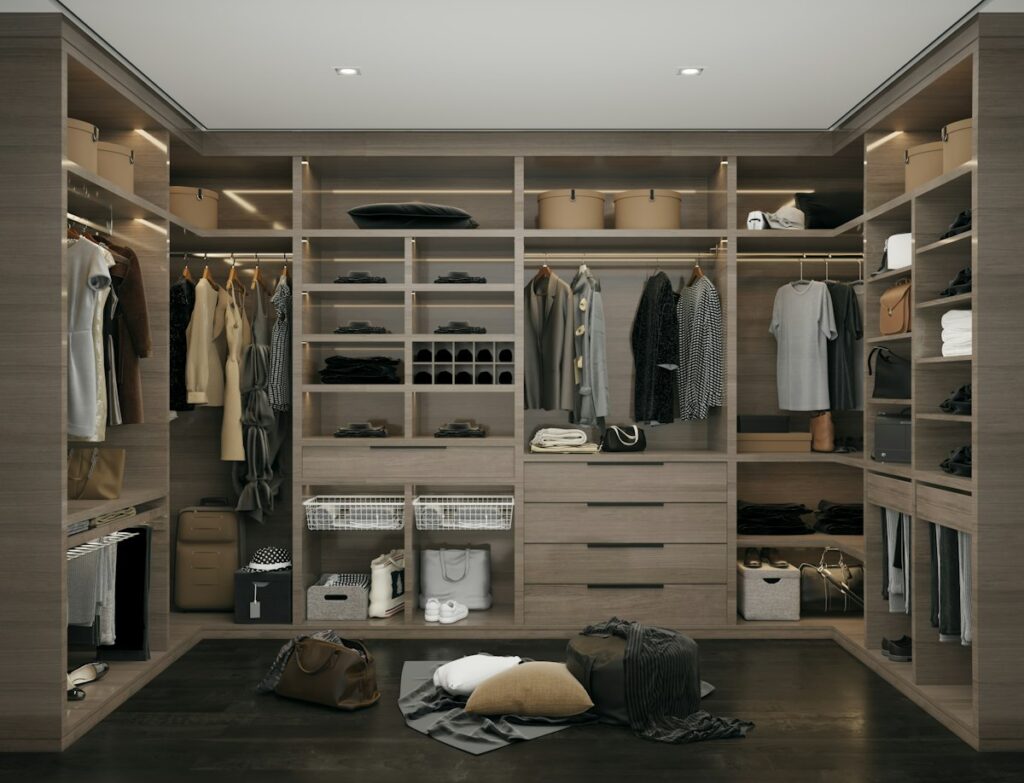
A custom closet cost usually lands somewhere between “that seems manageable” and “wait, how did it get that high?” If your bedroom chair has become a second wardrobe and every rushed morning starts with digging through piles, the good news is that closet pricing makes more sense once you see what drives it.
What a custom closet usually costs
The short answer is simple: custom closet cost is a range, not a number. A basic DIY setup from a big-box store can cost a few hundred dollars, a professionally designed reach-in often starts around $1,500, and a large walk-in with premium finishes can push well past $20,000. Those numbers sound wildly far apart because they are. “Custom closet” covers everything from a cleaner wall system to a full dressing-room build.
Typical price ranges by project type
For a professionally installed reach-in, a realistic starting point is often around $1,500 to $2,700. In many markets, a standard 6 to 8 linear foot reach-in falls more in the $1,500 to $3,500 range. Walk-ins usually land around $4,000 to $10,000, depending on size and features. Once you get into large multi-wall spaces, islands, glass fronts, and built-in lighting, costs can climb past $20,000.
If you want a quick benchmark before you go deeper, this custom closet cost guide gives a useful snapshot of how pricing tiers usually break out.
Why the price range is so wide
Here’s the thing: a low quote and a high quote may not even describe the same product. One could be open shelving in a reach-in, using standard manufactured panels and a simple rod layout. Another could include drawers, doors, trim, lighting, upgraded hardware, and a design built around every pair of shoes and folded sweater you own.
That is why closet shopping can feel a little like pricing a kitchen. On paper, both are “cabinets.” In real life, the details change everything.
What you’re actually paying for
A closet quote is not just shelves and rods. You’re paying for a system that fits your exact space, works for your actual routines, and gets installed in a way that lasts.
Design, measuring, and layout planning
Good design starts with what needs to live in the closet. Long dresses need different space than folded jeans. Shoes, bags, jewelry, laundry, and overflow bedding all compete for room unless the layout accounts for them upfront.
That planning work matters more than most people expect. A closet that looks pretty in a rendering but gives you one tiny drawer and three awkward upper shelves is not a good closet. If you want to sort out your storage before paying for custom work, it helps to look at smart ways to reduce the mess so you can spot what your new layout actually needs to solve.
Materials, finishes, and hardware
You’ll hear terms like melamine and TFL. In plain English, those are durable manufactured surfaces used on many midrange closet systems. They tend to hold up well, come in plenty of finishes, and cost less than veneer or solid wood.
Then there’s hardware. Soft-close drawer glides, better handles, thicker panels, upgraded rods, and nicer edge details add cost fast. So do decorative finishes. A clean white system with standard hardware is one price. A wood-look finish with upgraded fronts and glass inserts is another story.
Installation and job-site work
This is the part many quotes hide in the fine print. Installation includes delivery, assembly, anchoring the system securely to the wall, trimming around baseboards, leveling, and cleanup. If the space needs patching, painting, lighting, or electrical prep, that can become an extra line item.
And yes, proper installation matters. A cheap system that chips, wobbles, or pulls away from the wall is not a bargain. It is just a delayed expense.
The biggest factors that change custom closet cost
If you want to understand why one estimate comes in at $2,200 and another at $7,800, this is the section that explains it.
Closet size and layout
Size is usually the biggest cost driver. A small reach-in is the most straightforward option. A standard walk-in costs more because it uses more material and usually includes more zones. A multi-wall dressing room can get expensive quickly because every added wall brings more cabinetry, more trim, and more decisions.
Awkward spaces also raise the price. Corners, sloped ceilings, soffits, and off-square walls take more planning and more labor. A simple rectangle is easier to design and install. Most homes do not give you that luxury.
Number of drawers, doors, and built-in features
Open shelves are usually the budget-friendly choice. Drawers cost more. Cabinet doors cost more. Hampers, pull-outs, valet rods, tilt-out bins, and specialty inserts cost more.
This is where a “reasonable” quote can suddenly jump. Accessories are tempting because they look polished in a showroom. But if you add a pull-out for every little thing, the price climbs fast. The trick is to pay for features that fix real pain points, not just features that look fun to open.
Finish level and upgrades
Decorative trim, glass fronts, premium hardware, built-in mirrors, islands, and countertop surfaces all move a closet into a different price category. Lighting does too, especially once wiring is involved.
If you add lighting, 3,000K bulbs are a smart choice because they show clothing color more accurately than very warm or very cool light. That sounds minor until you’re standing in front of your closet at 6:45 a.m. trying to figure out whether navy and black actually match.
Cost by closet type: reach-in, walk-in, and luxury spaces
Most homeowners do not shop by material spec first. You shop by the kind of problem you’re trying to fix.
Reach-in closet costs
A professionally designed reach-in closet, especially one around 6 to 8 linear feet, often runs about $1,500 to $3,500. That usually buys you a much better layout, more vertical use, and a setup that stops the daily pileup without tearing apart the room.
Honestly, this is often the sweet spot. If your main problem is overflow onto the floor, dresser top, or chair in the corner, a well-planned reach-in can solve more than another round of store-bought storage fixes.
Walk-in closet costs
A midrange walk-in often falls around $4,000 to $8,000, with larger or more detailed versions running higher. That price commonly includes a mix of hanging sections, shelves, drawers, and better use of height all the way to the ceiling.
A walk-in gives you more freedom, but it also creates more opportunities to overspend. Empty wall space can invite upgrades you did not think about at the start.
High-end and fully custom dressing-room costs
Once a project includes full-wall cabinetry, islands, integrated lighting, glass doors, seating, premium surfaces, and boutique-style detailing, you’re usually in the $10,000 to $20,000-plus category. At that point, you are closer to custom millwork than basic storage.
That kind of project can be beautiful, but it should still serve your real life. If you’re comparing this level of work to a broader room update, it helps to understand what a full closet project can involve, because sometimes the closet itself is only part of the spend.
How to compare quotes without getting misled
Getting three quotes is smart. Getting three quotes for three completely different scopes is useless.
Linear foot vs. square foot vs. project pricing
Some companies price by linear foot, meaning the length of wall the system covers. Some use square foot pricing, though that may refer to cabinet surface area rather than your floor. Others just give one all-in project number.
That is why side-by-side comparison gets messy. A square-foot estimate and a linear-foot quote are not interchangeable unless the company explains exactly what is included.
What to ask so the quote is truly comparable
Ask what material is being used, how many drawers are included, what hardware level is specified, and whether doors, trim, lighting, delivery, and installation are part of the price. Confirm if patching, painting, or electrical work is excluded.
Also ask about transport, packing, and installation specifically. Some quotes include those by default. Some do not. A low number can jump fast once the “extras” show up.
Red flags in a too-low estimate
The cheapest closet often gets expensive later if it sags, chips, or stops working well. A very low quote may leave out installation, use thinner or lower-grade panels, or skip details like secure wall attachment and clean trim work.
That warning is not theoretical. Some low-end laminated products get poor marks for wobbling or chipping when quality and installation fall short.
How to set a budget that fits your real life
A smart closet budget starts with friction, not fantasy. Fix the stuff that annoys you every day first.
Start with function, not finishes
Count what needs to fit in the closet before you pick colors, handles, or fancy inserts. Separate your needs into hanging clothes, folded clothes, shoes, bags, jewelry, laundry, and overflow items. That gives you a much clearer target.
Think of it like packing a car trunk. If you know what has to fit, the layout gets easier. If you start with aesthetics, you end up forcing things in later.
Where to save and where to spend
Save on open shelving, standard finishes, and decorative extras you will barely notice after a month. Spend on drawers where clutter collects, better hardware on pieces you’ll use every day, and layout choices that remove bottlenecks.
That means fewer “nice-to-have” accessories and more space that works at arm’s reach. Function beats flash every time.
When a custom closet is worth the cost
A custom closet is worth the cost when your current setup wastes time, creates bedroom clutter, or makes a room feel like it never works right. If you’ve already tried bins, hanging organizers, shelf dividers, and stackable boxes, and the problem keeps coming back, a built-for-your-space system can be the fix.
That’s the direct answer. Some home upgrades are mostly visual. This one changes your morning.
Common questions about custom closet cost
Is a custom closet cheaper than buying a bunch of organizers?
Usually not upfront, but piecemeal organizers often add up without solving the layout problem. A custom system costs more at the start, but it is built around your actual space instead of asking you to work around the space.
How long does installation usually take?
Many standard installations take a day or two once materials are ready. More complex projects can take longer, especially if prep work, electrical changes, or lighting are involved. Fabrication can also add a few weeks before install day.
Can a custom closet help resale value?
It can. Better storage makes a home feel more functional and more finished, and some housing experts say custom storage features can help homes sell faster and at better prices. The exact payoff depends on your market, but good storage is rarely a downside.
What should you do before calling for quotes?
Measure the space, count what needs to live there, and make a short list of daily frustrations you want the new closet to fix. Do that first, and every quote gets easier to judge. Try that one step before anything else.