


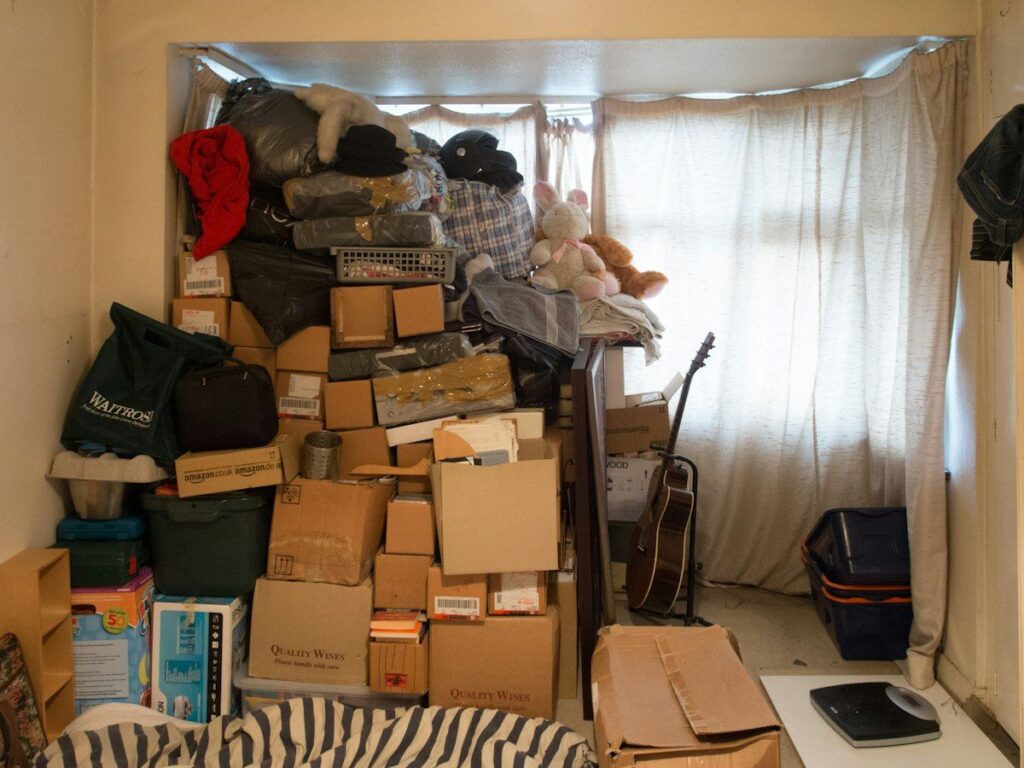
If your bedroom chair has become a second closet and the top shelf feels like a black hole, you’re not dealing with a clutter problem alone. The best closet organization ideas fix daily friction, so getting dressed at 7:12 a.m. stops feeling harder than it should.
1. Empty the closet and sort by what your mornings actually need
A real reset starts with pulling everything out. Not shifting piles. Not buying another bin first. Everything comes out so you can see what your closet has been trying to hold, and just as important, what it has been holding for no good reason.
Once the closet is empty, sort by the life you actually live now. Work tops, jeans, layering pieces, shoes, bags, workout clothes, special occasion items. If something hasn’t been touched in a year but keeps stealing useful space, that matters.
Keep, relocate, donate, and “not sure” bins
A four-pile method keeps you moving. Keep means it earns space in this closet. Relocate means it belongs somewhere else in your home. Donate means it’s done. Not sure is the pressure-release valve that stops you from stalling over every cardigan.
The trick is to keep the “not sure” pile small and temporary. If that bin sits in the corner for six months, it’s just delayed clutter.
Look for friction points, not just clutter
Here’s the thing: clutter is only part of the story. The bigger issue is friction. Shoes shoved under hanging pants, handbags with no landing spot, long dresses blocking storage below, folded stacks toppling every time you grab one sweater.
Those pain points tell you what your closet needs. If mornings always go sideways at the same spot, that’s your design flaw.
2. Give everyday clothes the easiest spots to reach
Your best closet real estate should go to the pieces you reach for half-awake and in a hurry. Favorite jeans, everyday tops, work layers, the shoes you actually wear. If you use it constantly, it belongs where your hand naturally lands.
This one change does more than make the closet look neater. It cuts the tiny delays that add up every morning.
Use eye-level and waist-level space for daily items
The middle zone is prime real estate. That’s where everyday clothes belong because it takes the least effort to grab and put back. If your daily essentials are crammed on the floor or stuffed onto a high shelf, your closet is working against you.
Group those middle sections by category so resetting the space feels obvious. Shirts with shirts. Pants with pants. Layers together.
Move occasion wear and backups up high or out of the room
Formalwear, backup bedding, extra coats, and once-a-year items do not need front-row placement. Move them to upper shelves, guest room storage, or another closet if you have one.
If you’re comparing upgrade options later, it helps to understand what homeowners usually spend on a more tailored setup before turning a short-term fix into a bigger project.
3. Double your hanging space with a smarter rod layout
If your closet has one lonely rod stretching across the width, you’re probably wasting vertical space. A double-rod layout is one of the highest-impact fixes because it creates two usable hanging levels for shorter pieces.
This works especially well in reach-in closets that need to do more with the same footprint. No extra baskets required.
Where double rods help most
Shirts, blouses, folded-over pants, skirts, and shorter jackets all work beautifully on double rods. Instead of one tall void with shoes piled underneath, you get two organized layers of hanging storage.
That’s why adjustable systems tend to work better than random add-ons. In product testing of DIY kits, durability and layout flexibility kept coming up as the difference between a system that helps and one that sags or fights your space.
Leave one long-hang section on purpose
Don’t convert every inch into short hanging. You still need one full-height section for dresses, coats, long skirts, and anything that wrinkles easily.
A closet without a long-hang section sounds efficient until you’re draping a trench coat over a door like it’s a hotel room.
4. Use shelves for folded categories that actually stay folded
Shelves work well when each one has a job. Sweaters on one shelf, denim on another, handbags in one zone. Without category rules, shelves slowly turn into junk drawers standing upright.
That’s the catch. Open shelving only works when it’s easy to read at a glance.
Add shelf dividers to stop the leaning pile problem
Shelf dividers are simple vertical separators that keep stacks from collapsing into each other. If your sweater pile always slumps sideways by Thursday, this is the fix.
You don’t need anything fancy. You just need enough structure so pulling one item doesn’t wreck four others.
Store bulky items in clear or labeled bins
Off-season sweaters, spare linens, and sentimental pieces need containment, but they still need to be findable. Clear bins help because you can see what’s inside. Labeled bins work just as well if you prefer a cleaner look.
If you’re trying to fix things without overspending, it helps to start with organizers that pull their weight instead of grabbing a pile of random containers that all solve different problems badly.
5. Stop wasting the floor and use it as a real storage zone
The closet floor should be a storage zone, not a drop zone. That means a low shoe rack, boot tray, narrow hamper, or one defined bin, depending on your layout.
When the floor has no plan, it becomes the place where good intentions go to die.
Keep shoes visible, not buried
Visible shoes get worn. Buried shoes get forgotten. A simple low rack or open row along one side lets you scan options fast, which matters more than people admit on rushed mornings.
This is especially helpful in smaller homes, where limited space pushes closets to do more than they were built to do.
Reserve one floor section for overflow on purpose
Overflow is going to happen. Gym bags, a laundry basket, a tote you’re using all week. The solution is not pretending that won’t exist. The solution is giving it one defined home.
Once overflow has a boundary, it stops spreading across the entire closet.
6. Add drawers or drawer-style bins for small things that create big mess
Socks, underwear, belts, scarves, sleepwear, and workout gear create an outsized amount of visual chaos. Closed storage helps because it hides the noise and keeps small things from drifting into every corner.
This is where drawer space earns its keep.
Use simple inserts inside drawers
Drawer inserts are just small compartments that divide a drawer into usable sections. Nothing complicated. One area for socks, one for underwear, one for belts or accessories.
That tiny bit of structure saves you from rummaging, which is usually how neat drawers become messy in the first place.
If built-in drawers aren’t possible, fake it with pull-out bins
If your closet doesn’t have built-in cabinetry, use pull-out bins on a shelf. The effect is similar. Small items stay contained, and you can slide the bin out instead of digging through a basket from the top.
For some closets, this is enough. For others, years of failed add-ons point to a bigger layout issue, which is when reading through what to budget before a larger closet overhaul starts to make more sense.
7. Use the door and side walls for vertical storage
The back of the door, side panels, and narrow wall sections are easy to ignore, but they can carry a surprising amount of storage. This is extra space that doesn’t eat into your main hanging area.
Used well, it makes the closet feel smarter, not more crowded.
Over-the-door pockets for accessories and shoes
Over-the-door pockets work best for lighter items: flats, scarves, clutches, or small accessories. Not heavy boots. Not bulky handbags.
Think of this as support storage. It handles the categories that float around otherwise.
Hooks for grab-and-go pieces
A few hooks can solve the daily pileup fast. A robe, tomorrow’s outfit, your most-used handbag, a work tote. Done.
This is one of those small fixes that pays you back immediately.
8. Match the storage system to how long you plan to stay in the home
Not every closet deserves the same level of investment. If you plan to move soon, a flexible setup makes sense. If you’ve been fighting the same bad closet for ten years, a stronger system may finally be worth it.
There is no universal perfect solution. The right one fits your timeline, layout, and how much frustration you’re done tolerating.
Freestanding systems for flexible, lower-commitment fixes
Freestanding systems are good when you want to test a layout or avoid installation. They’re easier to move, easier to change, and better for lower-commitment fixes.
The tradeoff is that they often leave vertical space underused.
Modular and wall-mounted systems for a better long-term setup
Wall-mounted and modular systems usually give you better use of height, cleaner lines, and more adjustability over time. That’s a big reason homeowners often get better results here, especially when daily storage needs keep changing.
In fact, wall-to-wall storage is one reason built-in style systems remain so appealing in smaller bedrooms.
Built-ins when the closet truly needs a redesign
Sometimes the problem is not the baskets. It’s the layout. If your closet has fought you through every organizer, shelf insert, and stackable bin you’ve tried, built-ins may be the real answer.
That move costs more, but it solves more too.
9. Choose fewer, better organizing tools instead of more containers
More bins won’t fix a bad layout. That’s the truth most overflowing closets prove every day. A few solid tools beat a patchwork of organizers that compete for the same inches.
Start with the basics that improve function right away.
Upgrade the basics first
Slim matching hangers, one reliable shoe solution, shelf dividers, and one consistent bin style will usually do more than a cart full of novelty organizers.
Matching hangers alone can free up hanging space and make the closet easier to scan. Small change, big payoff.
Avoid organizers that create hidden clutter
Deep unlabeled bins, stacked mystery boxes, and oddly shaped containers create hidden clutter. The closet looks cleaner for a minute, but your access gets worse.
If you have to excavate an item, the system is failing.
10. Add lighting so you can actually see what you own
A dark closet makes everything harder. You miss pieces you already own, colors blur together, and maintenance slips because the space feels annoying to use.
Lighting is not just cosmetic. It’s practical.
Best spots for simple closet lighting
Battery puck lights work well under shelves. LED strips help in long hanging sections. Motion-sensor lights are especially good near the closet door or on dark upper shelves.
That kind of upgrade is becoming much more common, with LED lighting and sensors showing up in better-designed closet systems for a reason.
Why visibility is an organization tool
You maintain what you can see. Better visibility helps you find things faster, match colors more accurately, and notice when a section is starting to drift into chaos.
Honestly, a motion light can feel absurdly helpful for something so small.
11. Organize by type first, then by color if it helps you keep it up
Color order looks pretty, but type matters more. If dress shirts are mixed with sweaters just because the colors line up nicely, getting dressed still takes too long.
Function first. Style second.
Category-first examples
Keep shirts with shirts, pants with pants, dresses together, everyday shoes in one area, bags in another. These simple groupings make the closet easy to reset because every item has an obvious home.
That’s the part most systems miss. The best layout is the one you can maintain when you’re tired.
Use color as the finishing layer, not the whole system
Once your categories are solid, color can help you scan faster and keep things looking calmer. But color alone is decoration, not organization.
If rainbow order falls apart in a week, it was never your real system.
12. Build in one maintenance habit so the chaos doesn’t come right back
A good closet still needs one small routine. Not a full weekend reset. Just enough maintenance to keep the chair from becoming a second closet again.
Five minutes is usually enough.
Do a quick Sunday reset
Take five minutes on Sunday night and put back what drifted. Rehang the clothes that landed on the chair. Return shoes to their row. Clear the floor before Monday morning starts asking too much from you.
That quick reset works because it catches the mess early.
Try one “one in, one out” rule for crowded categories
Pick one crowded category, shoes, sweaters, or handbags, and make it one in, one out. Not for everything. Just for the area that keeps overflowing.
Try that one rule first. If it sticks, your closet will feel lighter without another shopping trip.
Frequently asked questions
What is the best way to organize a small closet?
Use vertical space, keep everyday items at eye level, and avoid deep bins that hide things. A small closet works best when categories are clear and access is easy.
Are bins enough to fix a messy closet?
Usually not. Bins help only after the layout makes sense. If hanging space, shelves, and daily access are wrong, more containers just hide the problem.
Should clothes be organized by category or color?
Start with category. Shirts together, pants together, shoes together. Add color only after the categories are working well.
Is a custom closet worth it?
If you’ve spent years trying add-ons and the closet still fails you daily, it can be worth it. Custom systems make more sense when the issue is the layout itself, not just a lack of bins.
What kind of closet system is best for a long-term home?
Wall-mounted or modular systems usually make the most sense because they use vertical space better and can be adjusted over time. Built-ins are best when the closet needs a full redesign.
How do you keep an organized closet from getting messy again?
Use one weekly reset and one simple rule for crowded categories. The easier it is to put things back, the longer the system lasts.